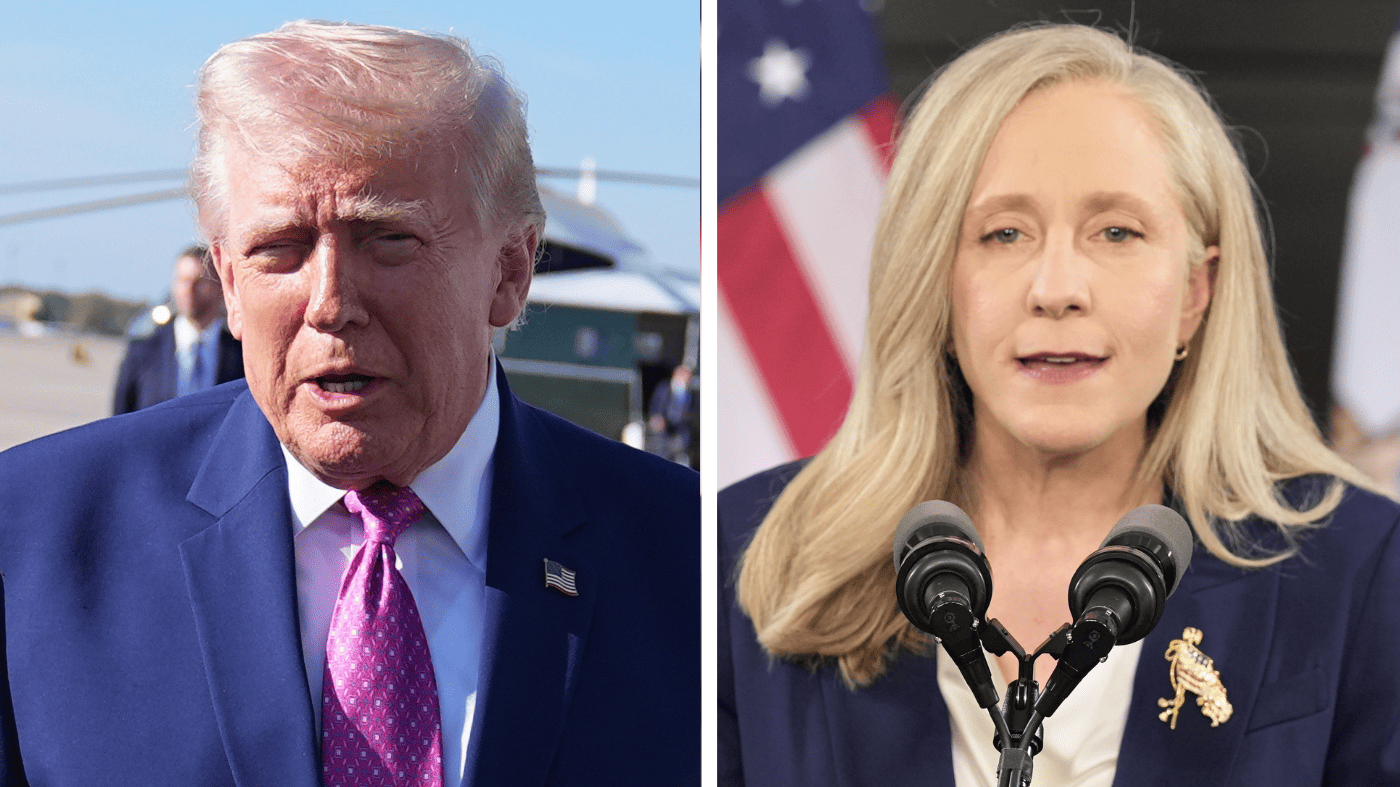
Former President Donald Trump targeted Virginia's Democratic Governor Abigail Spanberger in a series of posts on his Truth Social platform Saturday, asserting the state has deteriorated economically under her leadership. The criticism came as Trump traveled to his Virginia golf club following a fundraiser for his super PAC, MAGA Inc., in Charlottesville.
Economic Allegations Without Evidence
Trump claimed Virginia "has lost its Energy, Vitality, and Strength" since Spanberger took office, blaming her for "adding so many Taxes" and suggesting residents are fleeing as a result. He further alleged, without providing substantiation, that businesses recruited by his Republican predecessor, Glenn Youngkin, are now seeking to exit their Virginia contracts. "This went from a thriving and powerful place, once envied by all, to a Commonwealth run by a person who has no concept of Low Taxes and Economic Strength," Trump wrote.
The broadside represents an escalation in the political rivalry between Trump and Spanberger, who delivered the official Democratic rebuttal to his State of the Union address earlier this year. In that speech, she accused Trump of lying and scapegoating while offering "no real solutions" to national challenges. This dynamic reflects the broader ongoing tension within the Democratic Party regarding how to counter the former president's influence.
Governing Challenges and Policy Backlash
Spanberger, Virginia's first female governor, won election on a platform centered on affordability, pledging to address rising costs for housing, goods, and energy. However, some of her early policy moves have faced political headwinds. Notably, her push for Virginia to rejoin the Regional Greenhouse Gas Initiative (RGGI) has drawn criticism, with analysts warning it could increase, rather than decrease, energy prices for consumers.
"Affordability is a great campaign theme, but almost an impossible governing one given the limited tools that a governor has to affect prices," Mark Rozell, dean of George Mason University's Schar School of Policy and Government, told The Washington Post. He added that public disappointment is likely when the broader economic environment remains challenging despite specific policy proposals. The debate over energy costs echoes national discussions, as seen when the EPA chief promoted regulatory relief during a period of sharp price increases.
Political Timing and Redistricting Battle
Trump's attack coincides with the start of early voting on a significant redistricting referendum in Virginia. The April 21 measure, which seeks to redraw congressional district lines, could potentially secure four additional U.S. House seats for Democrats. The initiative is viewed as a countermove to redistricting efforts underway in several Republican-controlled states, setting the stage for a high-stakes battle over the political map ahead of the midterm elections.
The former president's focus on a state-level executive also underscores his continued role as a dominant voice within the Republican Party, willing to engage in races up and down the ballot. This influence persists despite internal party debates, such as when figures like Marjorie Taylor Greene have questioned Republican identity following breaks with Trump.
Governor Spanberger's office has not issued a formal response to Trump's latest comments. The exchange highlights how state-level governance, particularly on economic and energy policy, remains a fertile battleground for national political figures seeking to define contrasting visions ahead of critical elections.