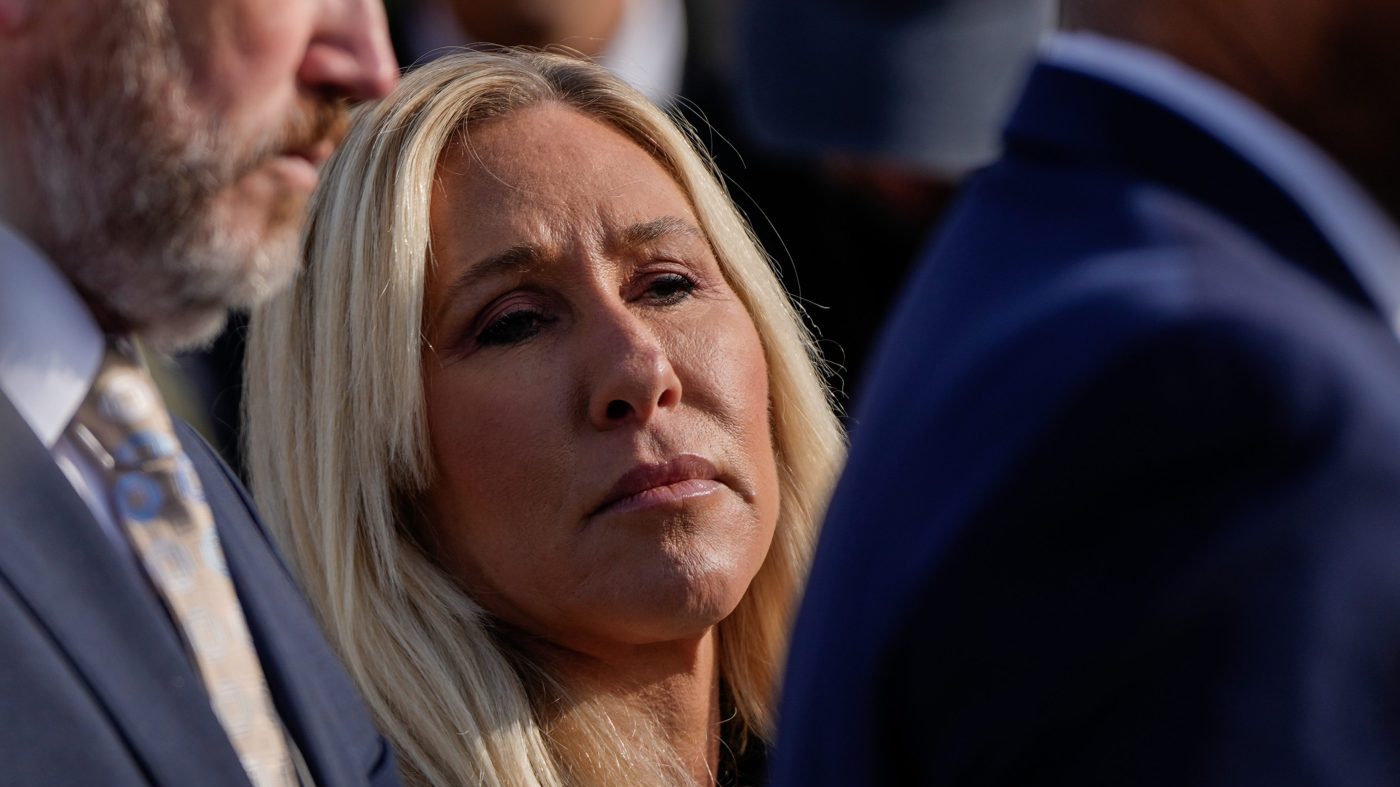
Former Georgia Congresswoman Marjorie Taylor Greene has publicly questioned her continued affiliation with the Republican Party, signaling a potential break from the political identity that defined her controversial congressional career. In an interview with Politico, Greene expressed uncertainty about her partisan loyalty following months of escalating conflict with former President Donald Trump and the party establishment.
"I don't really know if I do consider myself one right now," Greene told interviewer Dasha Burns. "I would say I'm definitely leaning more toward calling myself an independent. I haven't changed yet. But I will probably think pretty deeply about doing that."

A Decade-Long Alliance Fractures
The comments mark a dramatic shift for Greene, who built her political brand as one of Trump's most vocal and uncompromising defenders during her time in Congress. Her relationship with the former president has deteriorated significantly since his return to the White House, with Greene growing increasingly critical of both Trump's leadership and the broader Make America Great Again movement she once championed.
Greene has recently described the MAGA movement as a "lie," accusing Trump of prioritizing the interests of wealthy supporters over the populist agenda that initially attracted her allegiance. This criticism culminated in a remarkable statement during an appearance on conspiracy theorist Alex Jones's Infowars program, where Greene declared, "The truth is, look, you may have supported President Trump for 10 years, like I did and like you have, but this is not the same man. This is not the same man that we supported."
Iran Policy Becomes Breaking Point
The most immediate catalyst for Greene's disillusionment appears to be Trump's handling of escalating tensions with Iran. Following joint U.S.-Israel strikes on Iranian targets in late February, Greene repeatedly condemned American involvement and specifically targeted Trump's rhetoric regarding the strategic Strait of Hormuz.
When Trump warned that "a whole civilization will die tonight, never to be brought back again" if Iran failed to meet a deadline to open the vital oil shipping route, Greene responded with extraordinary force. She demanded Trump's removal via the 25th Amendment, describing his comments as "evil and madness" in a social media post that read, "25TH AMENDMENT!!! Not a single bomb has dropped on America. We cannot kill an entire civilization."
Her position placed her at odds with many congressional Republicans, who have generally supported Trump's Iran approach despite some internal reservations about the potential for broader conflict. House Republicans recently blocked a Democratic effort to limit the president's military authority regarding Iran, demonstrating continued institutional support for Trump's foreign policy direction.
Political Consequences and Future Direction
Greene's break with Trump has already produced tangible political consequences. The former president rescinded his endorsement of Greene during her reelection campaign last year, publicly labeling her a "traitor" amid their growing disagreements. Greene subsequently announced her resignation from Congress in November, and a Trump-backed Republican candidate secured her former seat in a special election this week.
The public nature of Greene's doubts about her Republican identity reflects broader tensions within the party as it navigates Trump's third presidential campaign. While most Republican officials have maintained loyalty to the former president, Greene's declaration that Trump has fundamentally changed echoes concerns voiced by some former allies who have grown critical of his recent rhetoric and policy decisions.
Greene's potential departure from the Republican Party would remove one of its most recognizable—and polarizing—figures from active partisan politics. Her evolution from far-right firebrand to Trump critic illustrates the ongoing realignment within conservative politics as the MAGA movement enters its second decade with uncertain ideological cohesion.
As Greene contemplates her political future, her statements raise questions about whether other prominent Republicans might similarly reconsider their affiliations amid policy disagreements and personal conflicts with Trump's leadership. Her case demonstrates how international crises, particularly involving volatile regions like the Middle East, can create unexpected fractures within political coalitions that once seemed unbreakable.