Iranian negotiators are in Qatar this week as the United States pushes for a diplomatic end to the nearly three-month-long conflict and a reopening of the Strait of Hormuz. President Donald Trump signaled Monday that a deal could be near, but warned that failure would mean a return to a larger, more intense phase of fighting.
Trump took to Truth Social to write that the talks are “proceeding nicely,” but added, “It will only be a Great Deal for all or, no Deal at all — Back to the Battlefront and shooting, but bigger and stronger than ever before — And nobody wants that!” The president and Secretary of State Marco Rubio have both indicated that a final agreement, though not settled, could be imminent. Trump said Friday night that the potential deal was “largely negotiated.”
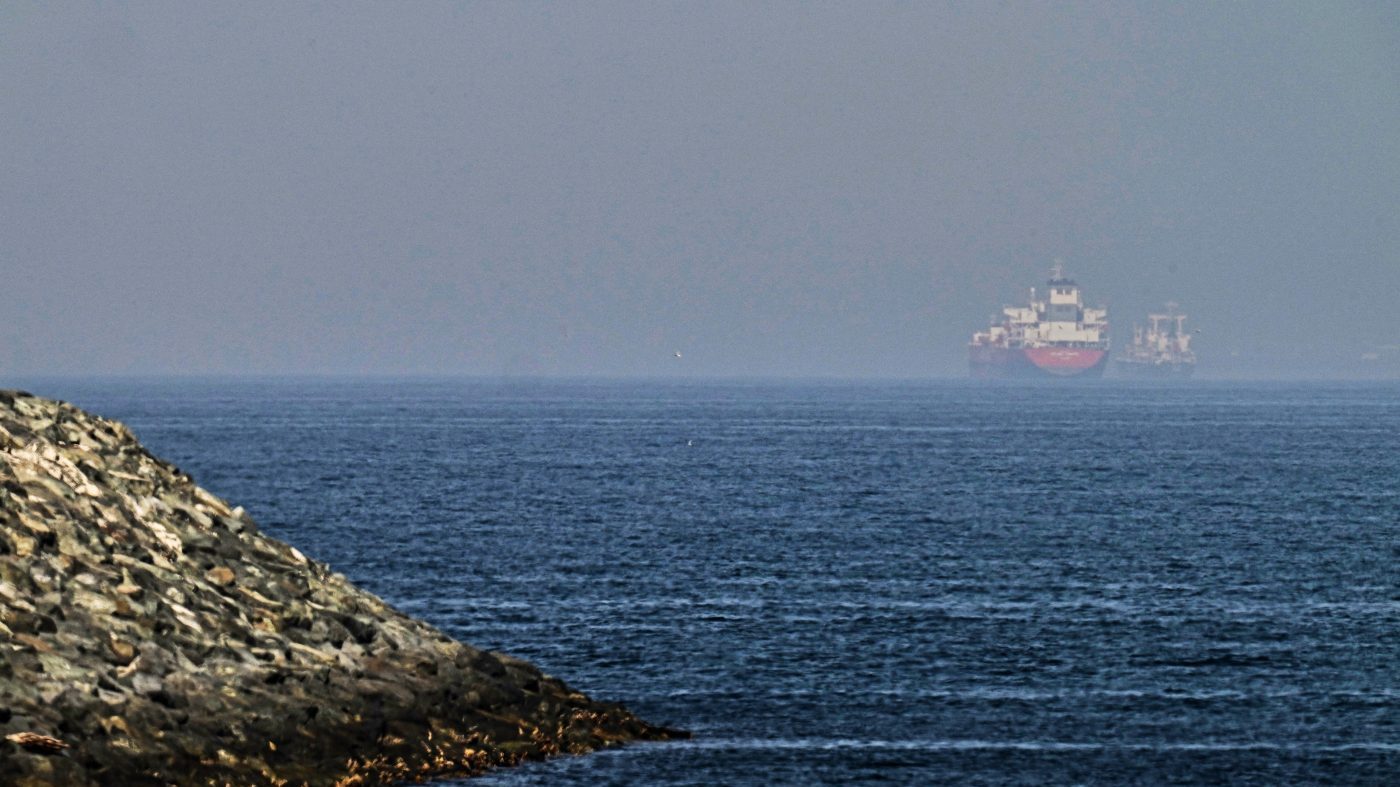
Hours after Trump’s Monday post, explosions were heard along the coastal areas of the Strait of Hormuz and near Iran’s Bandar Abbas city, Reuters reported. The cause of the blasts remains unclear. Meanwhile, Israeli Prime Minister Benjamin Netanyahu confirmed Monday that the Israel Defense Forces carried out new attacks in southern Lebanon, despite a ceasefire that has held since April 17 as part of the U.S.-Iran truce.
Little is known about the talks in Doha. Iran’s parliamentary Speaker Mohammad Bagher Ghalibaf is leading the delegation, which met with Vice President JD Vance in April. Iranian Foreign Ministry spokesperson Esmaeil Baqaei indicated that a final deal could be reached but described the emerging proposal as a preliminary framework rather than a comprehensive memorandum of understanding, according to The New York Times. “The focus of the negotiations is on ending the war and at this stage, there is no discussion about nuclear details,” Baqaei said Monday, referring to Iran’s nuclear program, which the Trump administration has insisted must be terminated as a condition for ending the conflict.
The potential deal would require Iran to give up its stockpile of enriched uranium. The specifics of that removal would be worked out in future talks during a 60-day extension of the ceasefire. Trump wrote Monday that the enriched uranium “will either be immediately turned over to the United States to be brought home and destroyed or, preferably… destroyed in place or, at another acceptable location, with the Atomic Energy Commission, or its equivalent.”
Iran’s nuclear program has been the central issue of the conflict. The U.S. has long argued that Tehran cannot be allowed to possess or develop a nuclear weapon, citing the threat to Israel and American interests. Trump and his administration have repeatedly labeled Iran an “imminent nuclear threat,” echoing similar claims from Netanyahu.
The deal would also gradually reopen the Strait of Hormuz, which Iran’s closure has sent global energy prices soaring. The national average for gas in the U.S. dipped slightly to $4.50 per gallon on Monday, according to AAA, up from $3 in February before the conflict began. The strait would reopen as the U.S. lifts its naval blockade in the region, which Trump imposed to stop Iranian oil tankers from exporting cargo. In return, the U.S. would issue sanctions waivers allowing Iran to sell oil and unfreeze billions of dollars in assets.
Republican lawmakers and former Secretary of State Mike Pompeo have criticized the emerging deal, arguing it lacks sufficient detail on de-nuclearizing Iran. Netanyahu backed Trump on the memorandum of understanding but stressed the importance of “dismantling [of] Iran’s nuclear enrichment sites and removing its enriched nuclear material from its territory.”
Trump lashed out at critics from both parties. “I laugh at all of the Dumocrats, RINOS, and Fools who know nothing about the potential deal I am making with Iran, things that haven’t even been negotiated yet,” he wrote on Truth Social. Trump has also targeted GOP critics of the talks as negotiations continue. The potential agreement has also drawn attention to broader regional diplomacy, including efforts to expand the Abraham Accords amid the crisis. Meanwhile, oil prices have slid as markets react to the possibility of a Strait of Hormuz reopening.