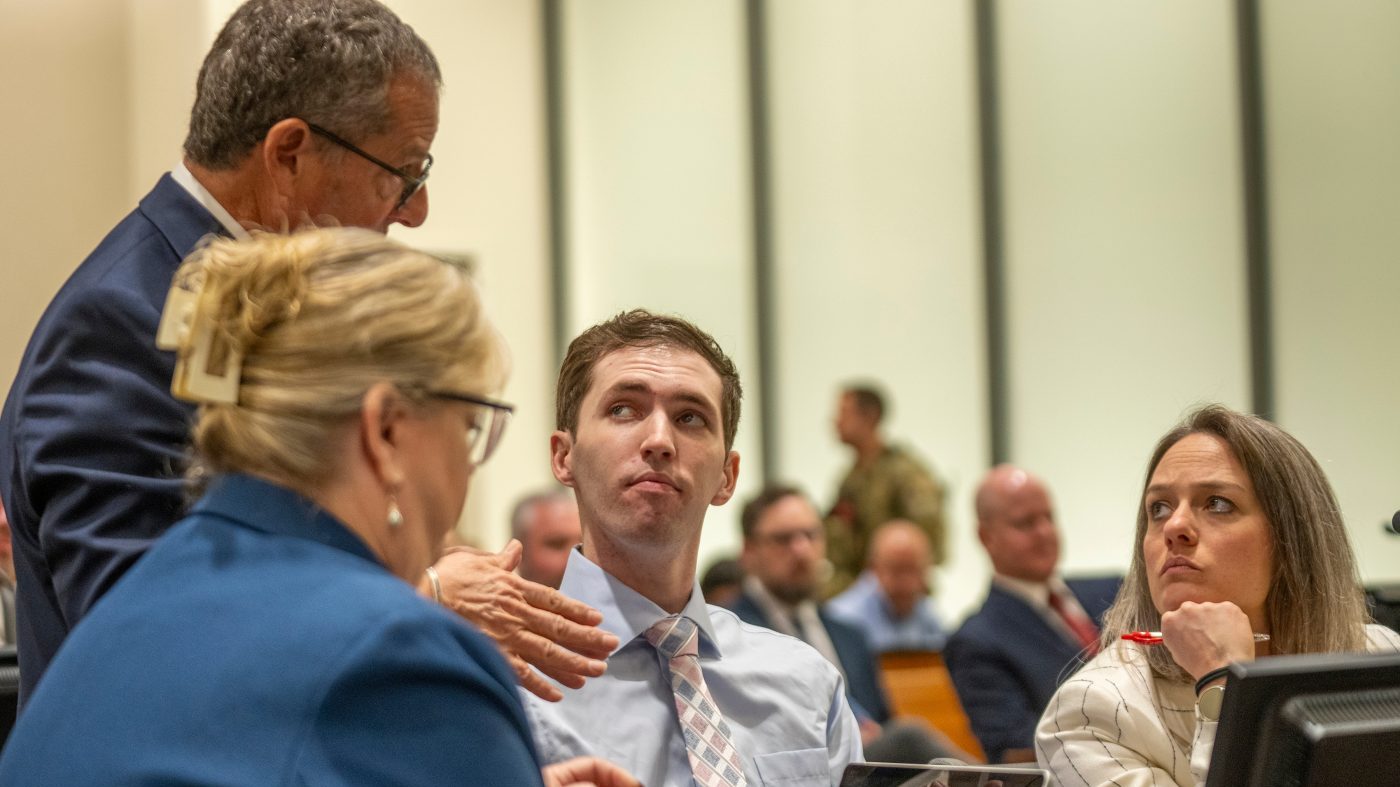
Prosecutors in the murder trial of Tyler Robinson unveiled a handwritten note during a Thursday hearing that they say amounts to a confession in the killing of conservative commentator Charlie Kirk. The 23-year-old defendant allegedly wrote the letter to his roommate and romantic partner, Lance Twiggs, who was previously known as Luna.
The note, shown as a screenshot in court, began: “Luna, If you are reading this per my text, then I am so sorry. I left the house this morning on a mission and sent an auto-text. I’m likely dead or facing a lengthy prison sentence.” It continued with a direct admission: “I had the opportunity to take out Charlie Kirk, and I took it.” The letter closed with an emotional plea: “Please try and find joy in this life. I love you always, Tyler.”
Robinson’s case has drawn national attention after Kirk was shot in the neck during a campus speech at Utah Valley University last year. The incident, captured on video, went viral and sparked intense political debate. Robinson faces seven charges, including aggravated murder—prosecutors allege he targeted Kirk because of his political beliefs—as well as felony discharge of a firearm causing serious bodily injury, obstruction of justice for allegedly hiding the rifle and clothing used in the shooting, and witness tampering for pressuring his roommate to delete incriminating text messages.
Erika Kirk, now a widow and single mother of two, appeared in the Provo courtroom alongside her attorney and Sen. Mike Lee (R-Utah). Her presence followed a Wednesday filing in which she demanded that every exhibit entered into evidence be visible to all in the courtroom. Her attorney, Jeffrey Neiman, cited a Utah law protecting crime victims and their representatives, arguing the family was “denied the very thing their presence was meant to secure: the ability to meaningfully observe.” The Kirks had traveled from out of state and sat through parts of the hearing where evidence was admitted but hidden from their view.
Judge Tony Graf ruled against the motion, deciding to maintain the court’s current process for evaluating how evidence is displayed as the trial proceeds. Graf previously said the court is walking a “fine line” between balancing public transparency and Robinson’s constitutional right to a fair trial.
Prosecutors are also relying on forensic evidence and witness testimony. Twiggs previously told law enforcement that Robinson said “he wishes he hadn’t done it” a day after the shooting. Additionally, prosecutors say Robinson posted “it was me at UVU yesterday” in a Discord chat room. DNA matching Robinson was found on the bolt-action rifle used in the killing, though defense attorneys have attempted to cast doubt on the FBI’s analytical findings during earlier hearings.
The case has drawn parallels to other politically motivated attacks, and security concerns have been heightened given the high-profile nature of the defendant and victim. In a related development, a former officer testified earlier about a so-called “sniper pad” evidence found near the crime scene, which prosecutors say supports their theory of premeditation. Defense attorneys have signaled they may seek to avoid trial, but no plea agreement has been announced.
The trial is expected to continue over the coming weeks, with both sides preparing to present extensive evidence. The court’s handling of evidence visibility may remain a point of contention, as the Kirks continue to advocate for full transparency. The case underscores ongoing debates about political violence and the rights of victims in the judicial process.