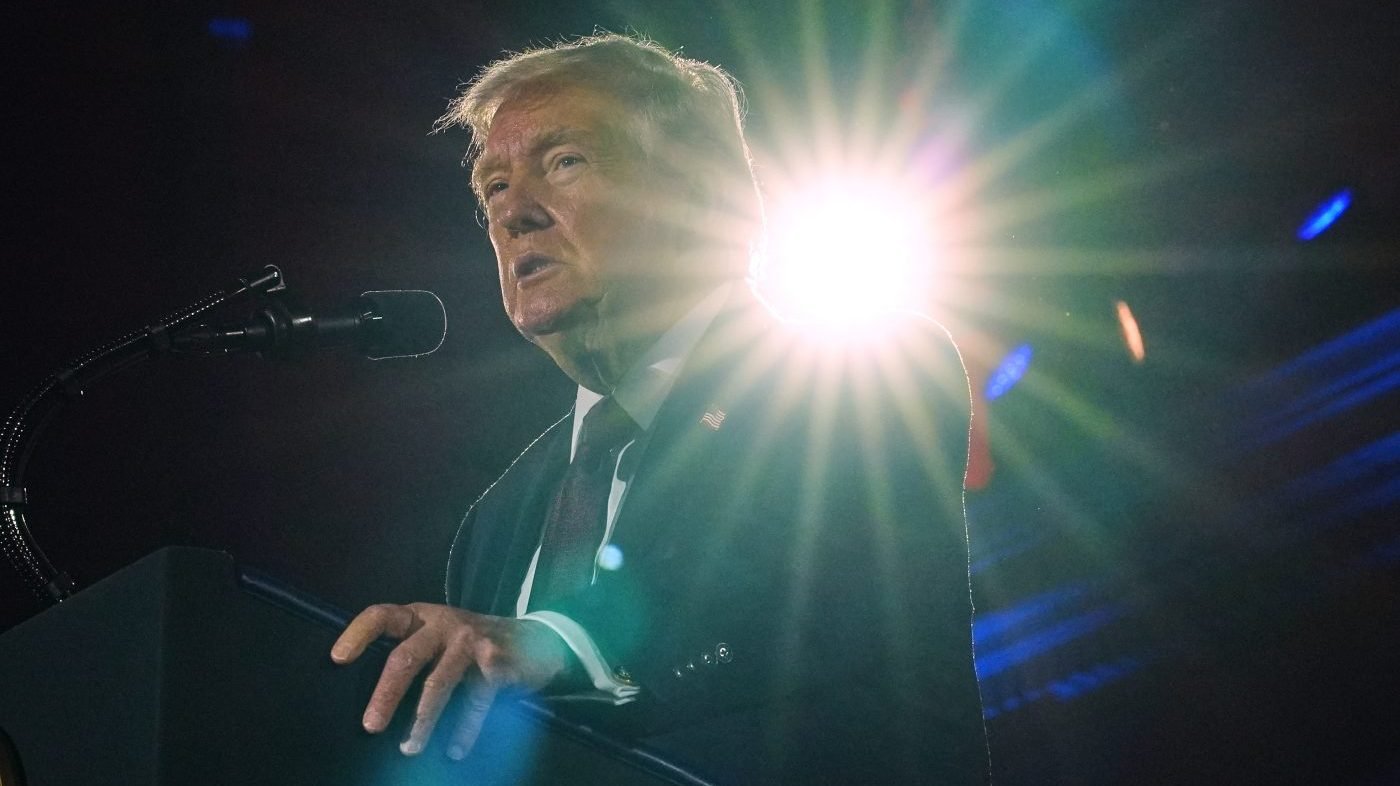
President Donald Trump explicitly connected his rhetorical choices to constitutional constraints Wednesday night, telling Republican lawmakers he intentionally avoids describing ongoing hostilities with Iran as a "war" because that terminology triggers requirements for congressional authorization.
Speaking at a National Republican Congressional Committee fundraiser in Washington, Trump stated, "I won't use the word 'war' because they say if you use the word 'war,' that's maybe not a good thing to do. They don't like the word 'war' because you're supposed to get approval. So, I'll use the word 'military operation,' which is really what it is. It's a military decimation."
Constitutional Showdown Over War Powers
The president's remarks highlight the ongoing constitutional tension between executive and legislative branches regarding military engagement. While the Constitution grants Congress sole power to declare war, successive administrations have relied on the commander-in-chief authority for military actions. This conflict has intensified since U.S. and Israeli strikes began against Iranian targets last month.
Democratic lawmakers have repeatedly argued the administration must seek congressional approval before escalating military force. "The administration has not given enough evidence to show that Iran was an 'imminent' threat to the U.S.," one senior Democratic aide told The World Signal, echoing widespread concerns on Capitol Hill.
Senate Rejects War Powers Resolution
The political divide crystallized Tuesday when the Senate rejected the latest Democratic-led effort to constrain presidential military authority. Only one Republican, Senator Rand Paul of Kentucky, joined Democrats in supporting the measure. Notably, Senator John Fetterman, a Pennsylvania Democrat, voted with Republicans to defeat the resolution.
This vote followed similar failed attempts earlier this month, demonstrating solid Republican support for the administration's position that the president possesses inherent constitutional authority to conduct military operations against Iran without specific congressional authorization.
The White House maintains that ongoing ceasefire and nuclear negotiations justify its current approach, despite Tehran's recent rebuffs of diplomatic overtures. Administration officials argue preemptive strikes were necessary to prevent Iran from obtaining nuclear weapons, a position Trump emphasized during his remarks.
Trump's Justification for Military Action
"Nobody has ever seen anything like we're doing in the Middle East with Iran," Trump told the GOP audience. "Every president should have gone into Iran to stop them from building a nuclear weapon."
He framed the conflict in existential terms: "Iran would long ago have had a nuclear weapon if it weren't for us, the entire world would be under mortal threat, and the prospects for peace in the Middle East would be absolutely shattered forever. Forget the Middle East, we would have had a cloud over us too."
The president's comments come amid increasingly complicated ceasefire negotiations and reflect a broader administration pattern of asserting expansive executive power in national security matters. This approach has sparked not only congressional resistance but also legal challenges on other fronts, similar to California's recent lawsuit over use of the Defense Production Act.
As hostilities continue, the fundamental question of congressional war powers remains unresolved, setting the stage for continued political and constitutional conflict over the scope of presidential authority in military engagements.