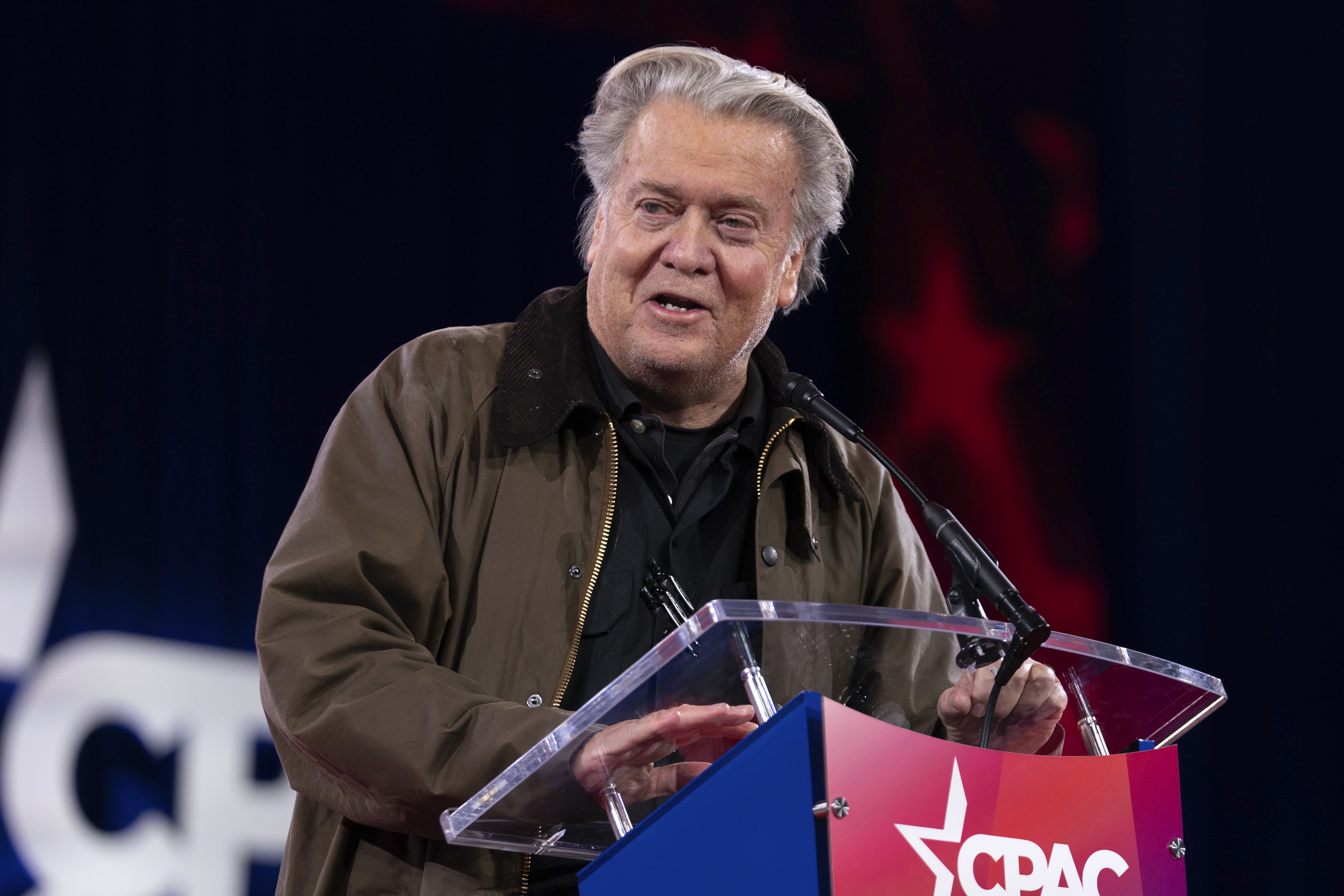
The Supreme Court on Monday cleared the path for the dismissal of Steve Bannon's criminal conviction for contempt of Congress, declining to hear his appeal and instead sending the case back to the trial court. The Justice Department has already moved to dismiss the indictment, meaning Bannon's 2022 conviction for defying a subpoena from the House select committee investigating the January 6 Capitol attack is likely to be erased.
Prosecutorial Discretion Ends Case
In a brief order, the justices granted Bannon's petition only to vacate a lower court's ruling and remand the case to U.S. District Judge Carl Nichols. This procedural move follows the Justice Department's February request to dismiss the two-count indictment filed against the former Trump adviser nearly five years ago. Solicitor General D. John Sauer told the Court last month that "the government has determined in its prosecutorial discretion that dismissal of this criminal case is in the interests of justice."
A federal jury in Washington, D.C., convicted Bannon in 2022 after he refused to appear for a deposition or provide documents demanded by the January 6 committee. He was sentenced to four months in prison, but Judge Nichols allowed him to remain free pending appeal. Bannon ultimately served that sentence in 2024.
Legal Strategy and Executive Privilege
Central to Bannon's defense was his claim that he was following his attorney's advice to delay compliance with the congressional subpoena until executive privilege disputes between former President Trump and the committee were resolved. His attorney, Michael Buschbacher, argued to the high court that "the government acknowledges that Petitioner's criminal prosecution was unjust." This reasoning appears to have influenced the Justice Department's decision to abandon the prosecution.
The Supreme Court's action reflects a pattern of sending legally complex cases back to lower courts for reconsideration, as seen in a recent surveillance case involving state secrets. It also echoes other instances where the Court has allowed prosecutions to end, similar to its handling of a pardoned official's bribery case.
Contrast with Navarro Case
Bannon was the second former Trump adviser imprisoned for evading the January 6 committee. Peter Navarro, a former White House trade advisor, served a four-month sentence after a separate conviction on identical contempt charges. However, Navarro's legal situation differs significantly. His appeal remains ongoing, even as the Justice Department has dropped its defense of the conviction, creating a complex legal limbo for his case.
The divergent paths of these two prosecutions highlight the discretionary power of federal prosecutors and the nuanced application of contempt statutes. Legal experts note that while both men advanced similar executive privilege defenses, procedural differences and the timing of Justice Department decisions led to different outcomes at this stage.
Political and Legal Implications
The dismissal of Bannon's case carries substantial political weight, removing a criminal conviction from a prominent MAGA figure and former White House strategist. It also raises questions about the enforcement of congressional subpoenas against executive branch officials and advisers claiming privilege. This development occurs as Bannon remains an influential voice in conservative politics, recently warning CPAC audiences about national security threats.
More broadly, the Supreme Court's handling of this appeal signals its continued reluctance to immediately resolve certain contentious appeals, opting instead for remand. This comes as the Court prepares to hear other high-stakes matters, including a landmark birthright citizenship case with profound implications. The Bannon decision underscores how prosecutorial discretion and procedural maneuvers can determine the fate of politically sensitive cases, even after conviction and sentencing.