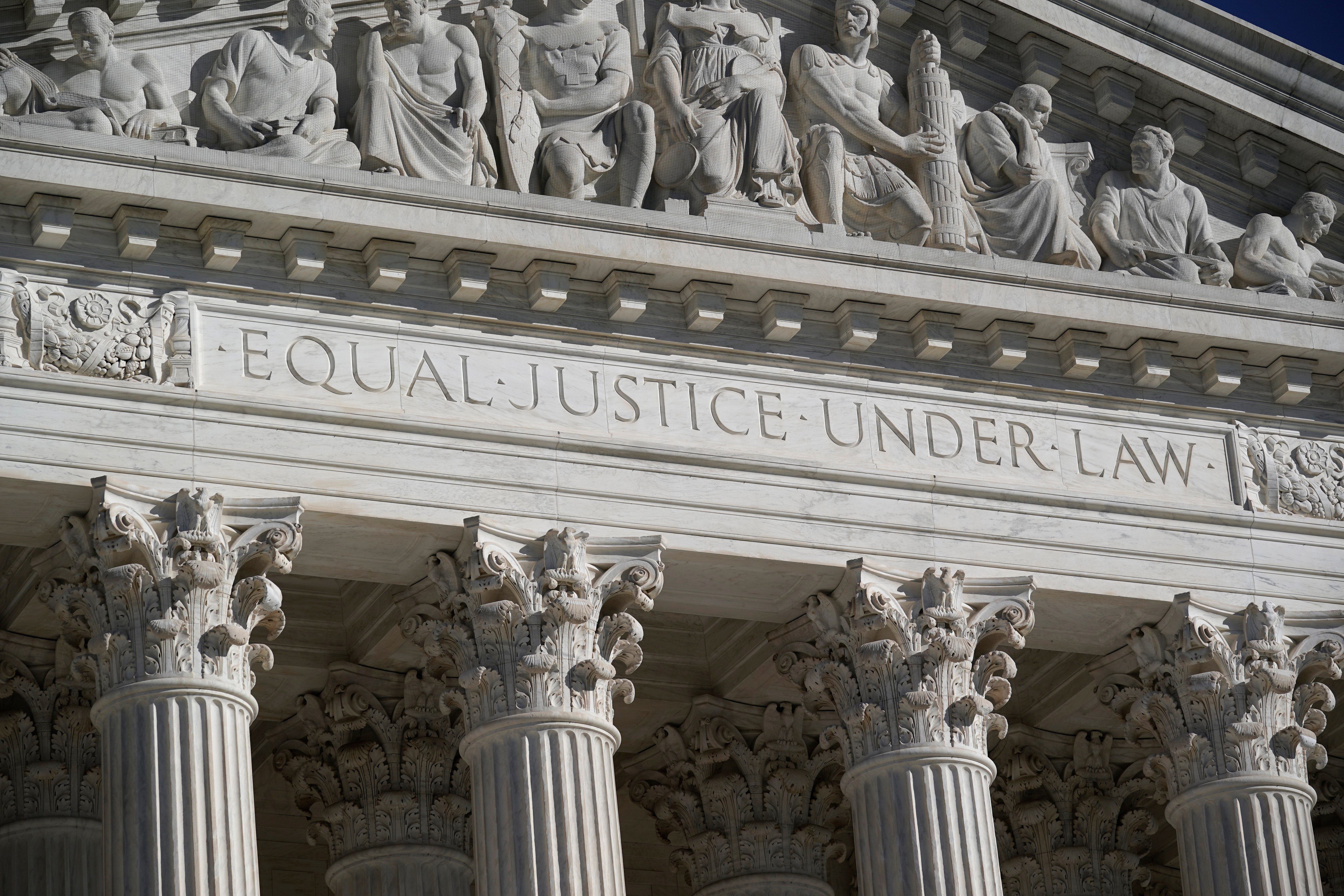
On April 1, the Supreme Court will consider arguments in what legal scholars describe as one of the most significant immigration cases in a generation. The central question before the justices is whether an executive order issued by President Donald Trump that seeks to restrict birthright citizenship can withstand constitutional scrutiny.
A Foundational Principle Under Threat
For more than 150 years, the Citizenship Clause of the Fourteenth Amendment has guaranteed that nearly all individuals born on U.S. soil are American citizens. This constitutional guarantee, established after the Civil War to secure the status of formerly enslaved people, has been a bedrock principle of national identity. The Trump administration's order represents a direct challenge to this longstanding interpretation, seeking to alter its application through executive action rather than constitutional amendment.

The order would direct the federal government to deny automatic citizenship to children born in the United States if their mother was present in the country without authorization, or even legally but on a temporary visa such as a student or work permit, and if the father was neither a citizen nor a lawful permanent resident. This policy shift would create a novel class of individuals born on American soil who are not recognized as citizens, potentially rendering some stateless.
Far-Reaching Consequences for Legal Residents
The implications extend far beyond undocumented immigrants. Consider a scenario where a highly skilled worker from India, legally residing in the U.S. on an H-1B visa with an approved green card petition, faces the multi-year backlog common for applicants from that country. Under this order, any child born to that worker and their spouse during the waiting period would be denied citizenship despite being born on American soil.
Furthermore, the order imposes a new burden on all parents, including U.S. citizens and green card holders. They would be required to produce documented proof of their own citizenship or immigration status at the time of their child's birth for that child to be recognized as a citizen. A recent analysis by the Brennan Center for Justice indicates that at least 3.8 million American citizens currently lack any standard documentary proof of citizenship, such as a birth certificate or passport. For these individuals, establishing their child's citizenship would become impossible under the proposed framework.
Bureaucratic and Legal Quagmire
The implementation of such a policy would force fundamental changes to core civic institutions. Hospitals, which typically report births to state agencies without inquiring about immigration status, would be compelled to act as frontline adjudicators of complex immigration law. State vital records offices would be entangled in the same legal thicket, requiring a complete overhaul of the nation's birth registration system.
The order also ventures deeply into family law with potentially unforeseen consequences. It defines a child's parents exclusively as the "immediate biological progenitors," disregarding established legal doctrines like the marital presumption of parentage. This language could strip citizenship from children born to same-sex couples, families using donor eggs or sperm, or those formed through surrogacy arrangements. Ironically, a child born abroad to the same biological parents might still qualify for citizenship under current statutes, while their sibling born in the U.S. would not.
The administration has framed the measure as a necessary action against illegal immigration, part of a broader suite of controversial immigration operations. However, its mechanism would inevitably ensnare the children of citizens, permanent residents, and long-term legal workers. It would transform birthright from a constitutional guarantee into an administrative obstacle.
Legal experts warn that a ruling in favor of the executive order would not create a more orderly system but would instead foster profound national uncertainty. The principle that birthplace, not parentage, determines national membership would be replaced by a regime requiring perpetual proof of belonging. The court's decision will resonate through American society, potentially redefining what it means to be born an American. This case arrives as the Trump administration faces scrutiny on other fronts, including its strategic approach to international conflicts and internal staffing shifts, such as a senior advisor moving from a tech-focused role to a White House position.