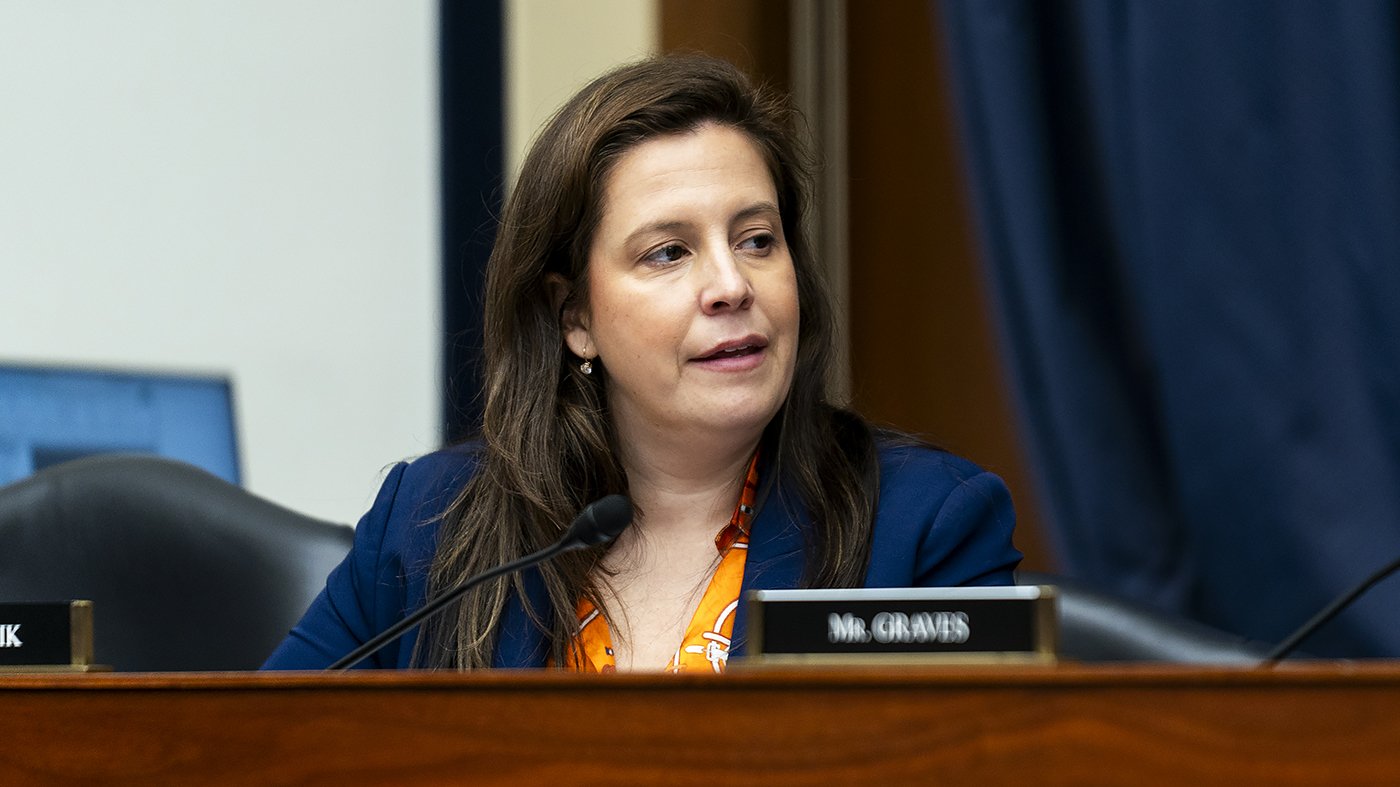
Republican Congresswoman Elise Stefanik publicly defended President Donald Trump's sharp criticism of Pope Leo XIV this week, framing the president's combative response as a predictable reaction to political engagement from the pontiff. The defense comes after a weekend of escalating rhetoric between the American president and the first American pope, centered on U.S. military actions and global leadership.
A Defense of Political Response
During an interview on CNN, Stefanik, a Catholic lawmaker, argued that Pope Leo XIV had entered the political arena. "I don't want to see the Pope as a politician," Stefanik stated. "The president—we know his leadership style. He's going to stand strong for the American people. Of course he's going to engage in politics when he's politically attacked. I don't want to see the Pope get involved in domestic politics." Her comments position Trump's verbal assault as a justified counterpunch rather than an unprompted offense.
The controversy ignited after Pope Leo issued a public message on Saturday urging world leaders to avoid warfare and the idolatry of power. Trump responded forcefully on his Truth Social platform, calling the pope "terrible" for foreign policy and "weak" on crime. In a notable personal dig, Trump praised the pope's brother, Louis, as "all MAGA," while asserting, "I don't want a Pope who thinks it's OK for Iran to have a Nuclear Weapon... I don't want a Pope who thinks it's terrible that America attacked Venezuela."
Republican Leadership Echoes Support
Stefanik's stance aligns with other top Republicans who have questioned the pope's foray into geopolitical commentary. House Speaker Mike Johnson said he was "taken aback" by the pontiff's original remarks, suggesting that wading into political waters invites a political response. This pattern of defending Trump's confrontational tactics is consistent with the Speaker's broader posture, which critics argue has enabled significant executive overreach during the administration.
Vice President J.D. Vance also urged the religious leader to steer clear of politics. The unified front from Trump's allies highlights a strategic choice to defend the president's aggressive style, even when it targets a globally revered figure. This approach mirrors defenses offered for other contentious policies, such as when officials justified massive defense spending increases paired with deep domestic cuts.
Internal Criticism and Electoral Calculus
Despite the defense from leadership, some conservative Catholics expressed dismay at Trump's rhetoric. Ashley McGuire of the Catholic Association warned of potential political fallout, noting the critical role Catholic voters played in the 2024 election. "It doesn't make sense politically for Trump to be attacking the pope," McGuire said, questioning the "gratuitous" nature of the attack on the leader of 1.4 billion faithful.
Democratic operative Christopher Hale, publisher of a newsletter focused on the pope, suggested Trump might "regret these remarks politically." The internal dissent points to a tension within the coalition Trump relies upon, a dynamic also visible when the administration faces foreign policy setbacks abroad.
The Vatican's Measured Response
Pope Leo XIV, traveling in Africa, offered a conciliatory but indirect response to the controversy. He emphasized coexistence, stating, "We have different beliefs, we have different ways of worshipping, we have different ways of living, we can live together in peace." He added that promoting this image of tolerance was something "the world needs to hear today." The response avoided direct confrontation, maintaining the Vatican's diplomatic tone.
The episode underscores the ongoing friction between Trump's transactional, America-first worldview and the moral universalism of the papacy. It also reflects the president's consistent pattern of confronting critics head-on, a strategy his defenders like Stefanik characterize as a core component of his leadership. As the administration continues to pursue a robust national defense posture, clashes with international figures advocating for peace appear likely to persist.