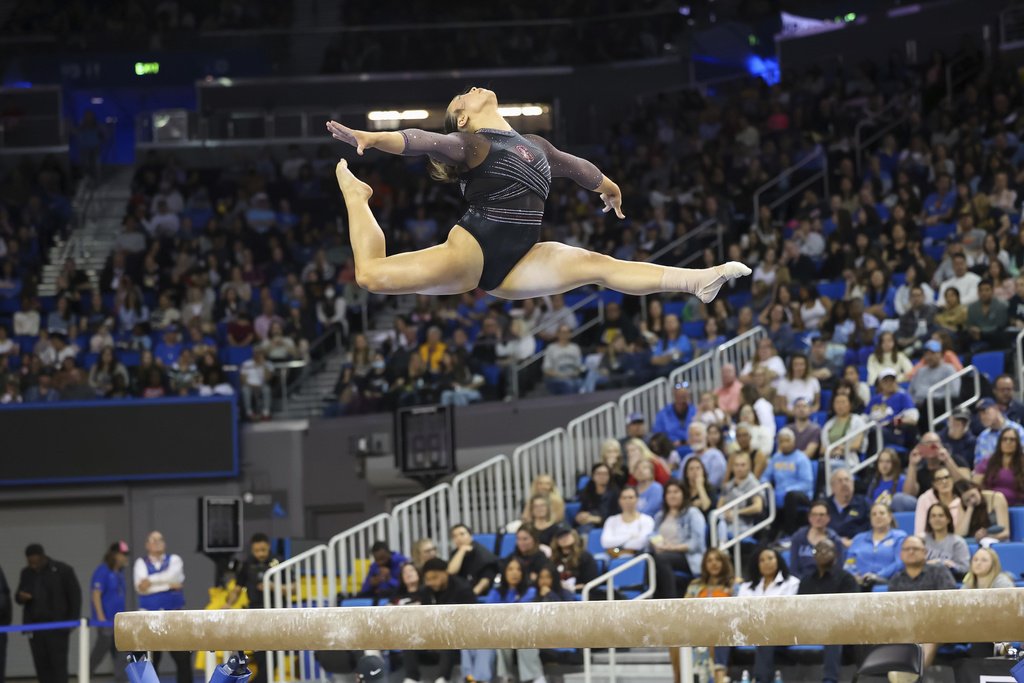
Stanford gymnast Temple Landry is adding her voice to a growing chorus of college athletes urging Congress to establish a national set of rules for collegiate athletics. In a detailed appeal, Landry argues that the current patchwork of state laws and conference regulations is undermining the stability of non-revenue sports and leaving athletes without consistent protections.
Drawing on her experience as a Division I gymnast and co-president of Stanford's Student-Athlete Advisory Council, Landry says the sport she loves is being reshaped by financial pressures that no single institution can manage alone. "College athletics runs on its own unglamorous infrastructure—scholarship lines, training budgets, and a governance structure that's supposed to hold it all together," she writes. That infrastructure, she warns, is cracking under the weight of roster limits, revenue sharing, and an unregulated transfer portal.
Landry points to the increasing influence of money in decisions that were once about fit and academics. "More athletes are faced with the decision between a bigger revenue-share number somewhere else and loyalty to a school that invests just as heavily in what happens after their eligibility runs out," she notes. Stanford, which sponsors 36 varsity sports and has not missed a year without a national championship since the 1970s, is feeling the strain even if it has avoided cuts so far.
The uncertainty is already affecting recruiting and retention. Landry describes recruits who decommit for higher offers and athletes who accelerate their graduation to cash in before rules shift. "While we have been fortunate to not see any programs cut, the impacts show up in a recruiting class that goes elsewhere for more money or an athlete who leaves a year early," she says.
The problem extends beyond Stanford. Non-revenue sports—the Olympic pipeline sports like gymnastics, swimming, and track—are often the first to be slashed when athletic departments need to fund revenue-sharing obligations, a situation that has intensified since the House settlement. Landry argues that this tradeoff is short-sighted: "The sports that build the U.S. Olympic teams are the first line item cut when a department needs cash fast."
Landry is backing the Protect College Sports Act, which would require high-revenue programs to maintain 2024-25 roster and scholarship levels for Olympic and women's sports. It would also standardize transfer and NIL rules, replacing the current state-by-state patchwork. She argues that the absence of a federal framework is causing as much damage as a bad one might: "Currently, the absence of a framework is doing almost as much damage as a bad one eventually could."
While athletes in revenue sports are finally being compensated, Landry stresses that the problem is not the money itself but the lack of governance. "Nothing governs how much or where it comes from," she says. She calls the act "the closest thing to the national framework we desperately need that actually has a chance in Congress."
Landry's advocacy comes as lawmakers weigh a range of higher education and labor policies, including academic reforms and workforce regulations. She hopes the bill will provide a stable foundation for future athletes, concluding: "As a student athlete who desires to see future generations of student athletes receive the same opportunities I have been given, I want to see this bill signed into law."