Sotomayor Raises Alarm Over AI Predicting Supreme Court Decisions
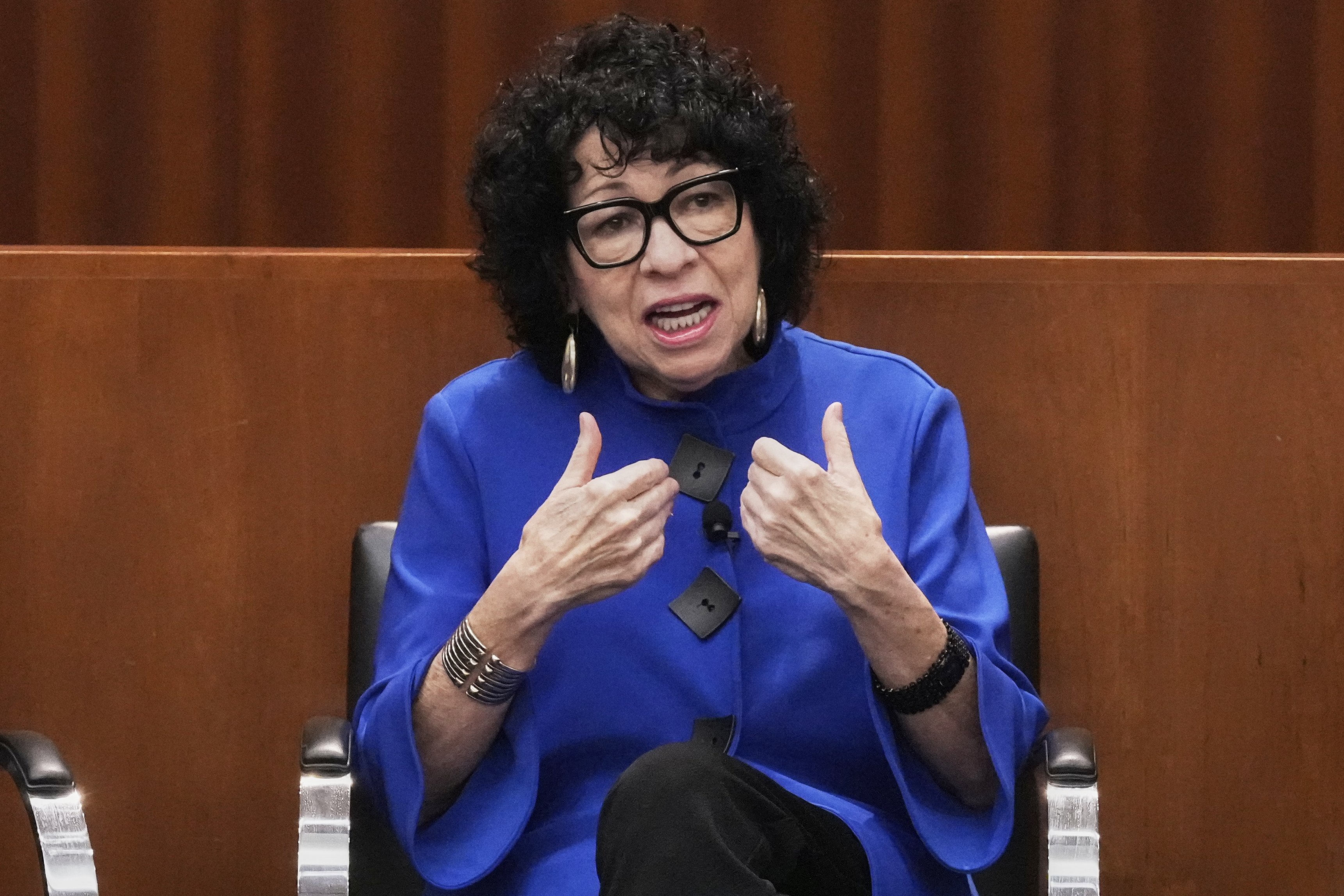
Supreme Court Justice Sonia Sotomayor issued a sharp critique of artificial intelligence systems designed to forecast the Court's rulings, labeling their demonstrated accuracy as a troubling sign of judicial predictability. Speaking at the University of Alabama School of Law on Thursday, the senior liberal justice suggested that if algorithms can reliably anticipate outcomes, it may indicate the justices are not venturing beyond conventional legal reasoning.
'A Very Bad Thing' for Judicial Independence
"It shows we're way too predictable," Sotomayor told students, responding to a professor's question about AI's role in the judiciary. She elaborated that such predictability could signal a failure to "step out of our normal thinking and open our minds to new ideas enough." While not specifying which predictive model she referenced, Sotomayor noted a colleague had informed her of systems claiming high success rates in forecasting decisions.
The justice presented a nuanced view of AI's dual nature, describing it as "a sophisticated human" whose outputs reflect both the best and worst of human input. This acknowledgment comes as the judiciary grapples with AI's expanding footprint. Sotomayor revealed that recent conversations with former law clerks now at major firms indicated new associates are universally expected to utilize AI tools. She advised every law student to master AI before graduating, recognizing its inevitable integration into legal practice.
AI Creeps Into the Court's Orbit
Sotomayor's remarks represent some of her most detailed public comments on artificial intelligence, a topic gaining attention among the justices. Chief Justice John Roberts dedicated his entire 2023 year-end report to examining AI's implications for the judicial system. The technology is also appearing in the Court's docket, including a recent decision where the justices declined to hear an appeal concerning copyright protections for AI-generated art without a human creator.
The issue surfaced again last week during oral arguments, when Justice Samuel Alito quipped to attorney Adam Unikowsky, a noted AI advocate, "Just out of curiosity, do you think we should ask Claude to decide this case?" Unikowsky demurred, affirming his confidence in the Court's judgment. This exchange underscores how AI discourse is permeating even the Court's formal proceedings.
The development of predictive AI models intersects with broader debates about judicial transparency and consistency. Some legal analysts argue that predictability is a virtue in a stable legal system, while others, echoing Sotomayor's concern, warn it could indicate ideological rigidity. This tension emerges as the Court faces scrutiny over its decision-making processes, including recent rulings that have reshaped legal landscapes, such as a decision threatening numerous state occupational licensing laws and an 8-1 ruling striking down Colorado therapy restrictions on free speech grounds.
Broader Judicial Context
Sotomayor's commentary arrives amid significant activity across the judicial branch. In state courts, developments like the Wisconsin Supreme Court liberals expanding their majority after a judicial election highlight the political stakes of judicial predictability. Meanwhile, security concerns persist, as seen in the federal case where an Alaska man reached a plea deal over threats to Supreme Court justices.
The justice's warning about AI reflects deeper anxieties within the legal community about technological disruption. As algorithms become more capable of analyzing legal patterns, they challenge traditional notions of judicial deliberation and unpredictability. Sotomayor's call for mastering AI as a tool, while cautioning against its predictive success, captures the profession's ambivalent embrace of technological change—recognizing its utility while fearing what its accuracy reveals about human decision-makers.