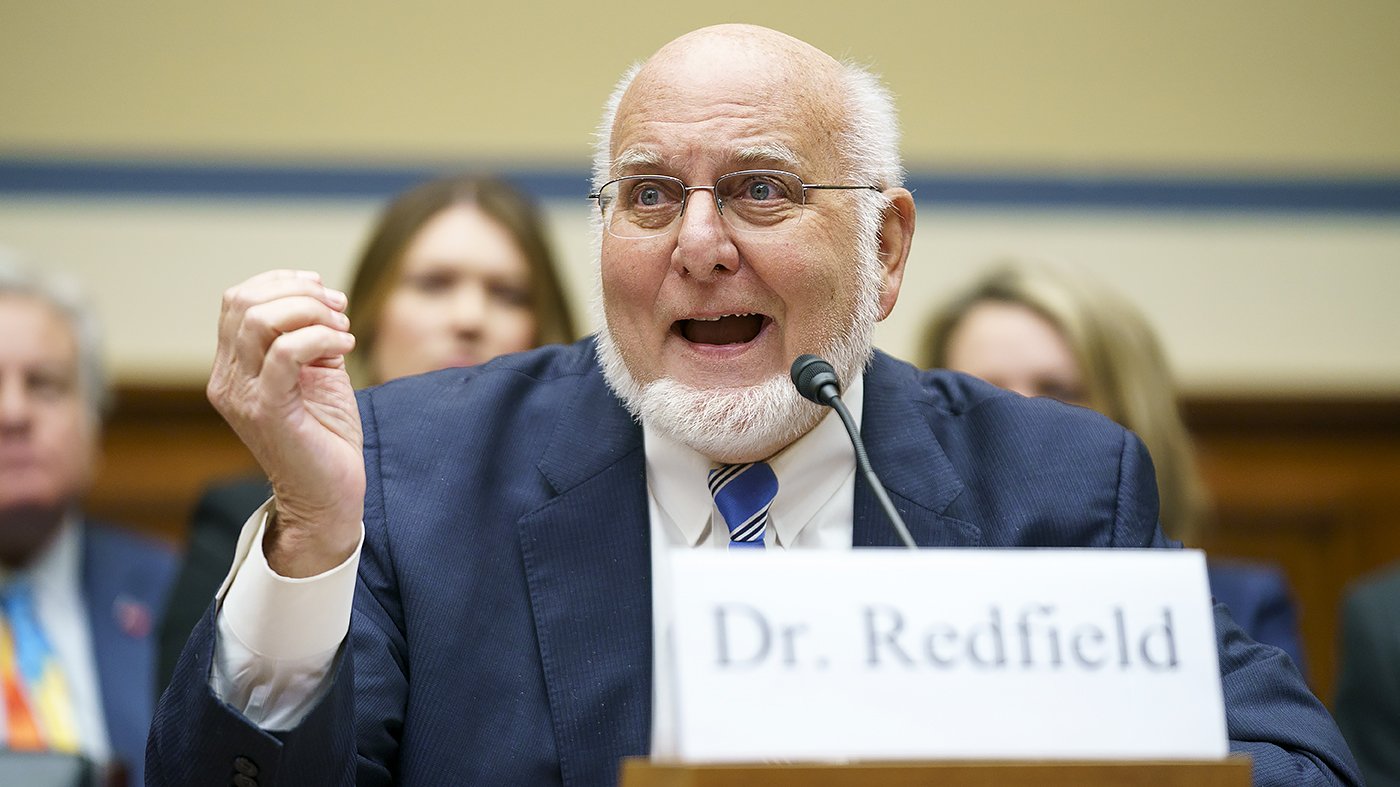
Robert Redfield, who led the Centers for Disease Control and Prevention (CDC) during the Trump administration, sounded the alarm Friday that the ongoing Ebola outbreak in Central Africa is on track to become the second-largest ever recorded. Speaking to NewsNation, Redfield noted that the outbreak has already climbed to third-largest globally, driven by the Bundibugyo virus strain in the Democratic Republic of the Congo (DRC) and Uganda.
“It’s already the third-largest outbreak of Ebola in the world,” Redfield told NewsNation’s Elizabeth Vargas. “This is something that is likely to go on unfortunately for a while. And these numbers, I won’t be surprised if this doesn’t become the second-largest outbreak that we’ve ever had.”
The largest Ebola outbreak on record struck West Africa from 2014 to 2016, infecting 28,600 people and killing 11,308, according to the CDC. Redfield oversaw the second-largest outbreak during his tenure—a 2018–2020 epidemic in the DRC that resulted in 3,470 cases and 2,287 deaths. The current outbreak, linked to the less common Bundibugyo virus, has so far confirmed 134 cases, with 18 deaths, per the World Health Organization (WHO). Most cases are in the DRC, with nine in Uganda. The WHO also reports 906 suspected cases and 223 suspected deaths in the Congo as of Wednesday.
Compounding the public health challenge, the DRC’s eastern region remains a war zone. WHO Director-General Tedros Adhanom Ghebreyesus warned earlier this month that the region “now faces a catastrophic collision of disease and conflict.” In a statement on X, Tedros said, “Frontline workers are risking everything, while attacks on health facilities make tracking cases and their contacts nearly impossible. We cannot build trust or isolate the sick while bombs are falling. We urge all warring parties to agree to an immediate ceasefire to contain this outbreak.”
The U.S. response has been marked by new travel restrictions. The CDC has imposed a temporary ban on foreign nationals and U.S. green card holders who have been in the DRC, Uganda, or South Sudan within the past 21 days. Americans returning from those countries face enhanced screening at select airports. This policy mirrors earlier moves to tighten borders amid health crises, but experts warn it could hamper aid and medical personnel movement. The Trump administration has also opened a field hospital in Kenya for quarantine purposes, as reported by The World Signal, and added JFK Airport to its screening network.
Redfield’s warning comes amid broader political tensions over the administration’s isolationist tilt. Critics argue that prioritizing border security over international health cooperation—as seen in the administration’s focus on border enforcement—could undermine efforts to contain the virus at its source. The former CDC chief had previously cautioned that the outbreak could escalate into “a very significant pandemic” if not aggressively addressed.
With 906 suspected cases still under investigation and conflict hindering contact tracing, Redfield’s prediction that this outbreak could surpass the 2018–2020 DRC epidemic in scale appears increasingly plausible. The WHO continues to call for a ceasefire, but no such agreement has materialized, leaving health workers to operate under constant threat.