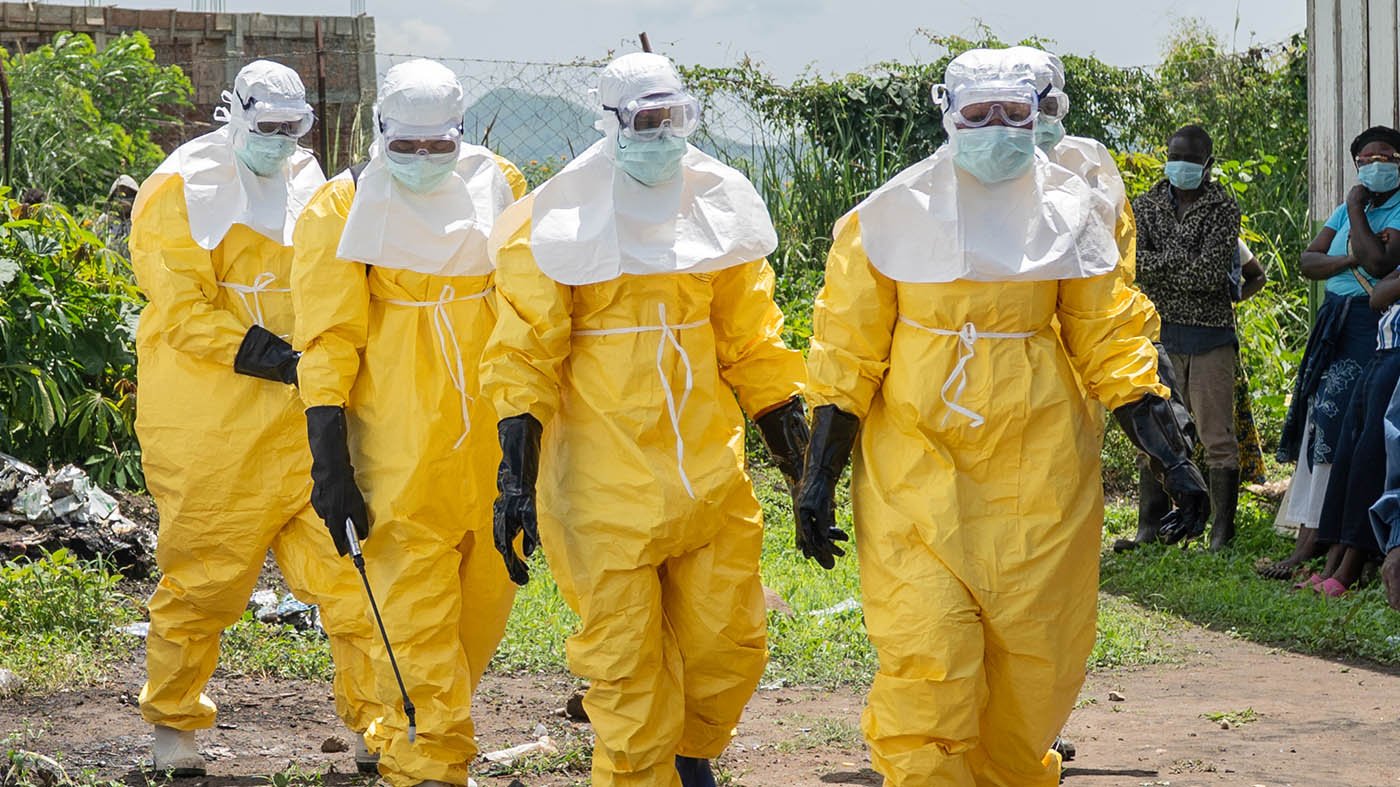
An outbreak of the rare Bundibugyo strain of Ebola in the Democratic Republic of Congo is accelerating faster than containment efforts, raising alarms in the United States about the Trump administration's preparedness and response strategy. Health experts warn this strain could prove more challenging to control than previous outbreaks, with nearly 1,000 suspected cases and over 220 deaths reported in Congo, and seven cases and one death in neighboring Uganda.
The World Health Organization has declared the outbreak a public health emergency of international concern, marking it as the third-largest in history. With no approved vaccines or treatments available, the International Rescue Committee (IRC) cautioned that without urgent global action, this crisis could become the deadliest Ebola outbreak on record.
“Increased conflict and cuts to global aid funding have dismantled defenses at exactly the wrong moment,” said Bob Kitchen, IRC’s Vice President of Emergencies. “The lesson from every previous outbreak is clear: delays cost lives.”
In response, the Trump administration is taking a hardline approach to prevent the virus from reaching U.S. soil. While the Centers for Disease Control and Prevention (CDC) maintains that the risk to the American public remains low, the administration has tightened travel restrictions and is building a quarantine and treatment facility in Kenya for Americans exposed to the virus. An administration official confirmed Wednesday that the facility, led by the State Department in coordination with Health and Human Services and the Defense Department, is designed to provide high-quality care without the lengthy transport back to the United States.
“Time is of the essence for Ebola patients,” the official said. “This facility will enable Americans in the region who contract Ebola to receive lifesaving care as quickly as possible without 12-plus hours of medevac flight time.” This marks a shift from past practice, where infected Americans were typically flown to specialized U.S. facilities. The administration has already evacuated one infected doctor to Germany and another exposed physician to Prague.
The American Foreign Service Association criticized the move as a “stark departure from how every previous administration has handled Ebola exposure.” The union urged the State Department to authorize the departure of U.S. diplomats and their families from Congo, Uganda, and South Sudan, arguing that Foreign Service employees “are entitled to the same standard of care that has always applied, including the right to come home.”
During a Cabinet meeting, Secretary of State Marco Rubio emphasized the administration’s priority: “We cannot and will not allow any cases of Ebola to enter the United States.” He added that multiple agencies are working to contain the crisis to the affected countries, particularly Congo.
Last week, the administration temporarily banned green-card holders who had been in Congo, Uganda, or South Sudan within the past 21 days from entering the U.S., escalating restrictions that previously exempted that group. The CDC also issued an urgent request for employee volunteers to serve as airport screeners at three designated hubs: Washington Dulles, Houston’s George Bush Intercontinental, and Atlanta’s Hartsfield-Jackson International airports.
As the outbreak worsens, critics argue the administration’s focus on border security and quarantine abroad may not be enough. Lawrence Gostin, director of the WHO Collaborating Center on Global Health Law, has previously warned that cutting aid and sidelining international cooperation could backfire. The IRC’s Kitchen echoed that sentiment: “The lesson from every previous outbreak is clear: delays cost lives.”