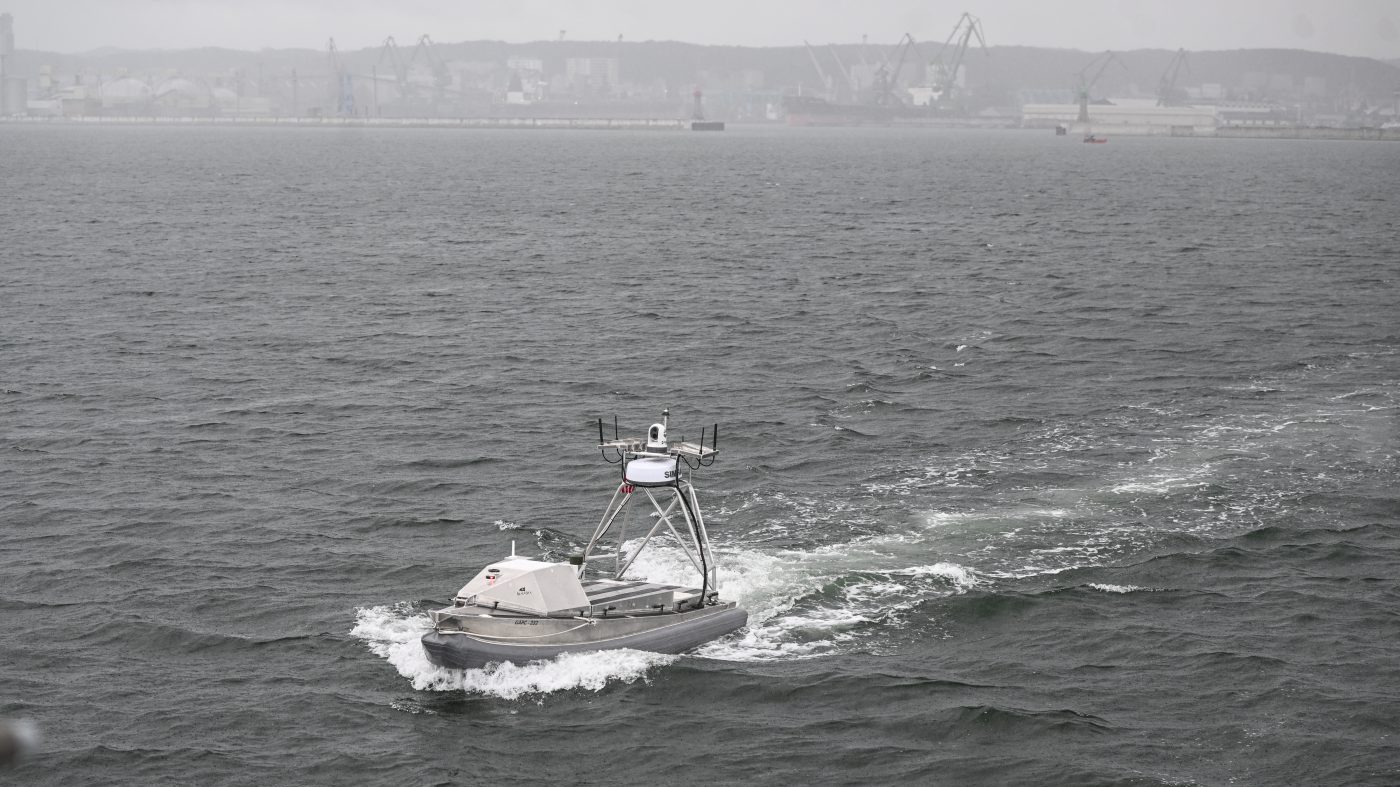
The U.S. military carried out an unprecedented operation on Sunday, deploying one-way attack seaborne drones against an Iranian port—marking the first time American forces have used unmanned surface vessels in combat.
According to U.S. Central Command (Centcom), three Corsair unmanned surface vessels struck a ship maintenance facility and a submarine at the Bandar Abbas Naval Base, which serves as the headquarters of the Iranian Navy. The strikes were part of a fresh round of attacks announced Monday.
“Last night’s strikes degraded Iran’s ability to continue attacking commercial shipping,” Centcom stated, underscoring the strategic aim of the operation.
The Corsair, a 24-foot autonomous boat built by Texas-based defense firm Saronic, can carry up to 1,000 pounds of payload and reach speeds over 35 knots. Founded in 2022, Saronic has quickly become a key player in naval drone technology. The same type of vessel was used last month to rescue a downed U.S. Army AH-64 Apache crew near the coast of Oman.
The deployment of these sea drones is part of the Navy’s artificial intelligence and drone task force, which began operating in the Centcom theater in late March. This mission signals a shift in naval warfare tactics, as the Pentagon increasingly integrates autonomous systems into frontline operations.
Saronic expressed pride in its technology’s role, stating, “We are proud that our technology supported this mission and helped to keep the brave men and women of the U.S. armed forces safe. Saronic remains committed to delivering autonomous maritime systems that strengthen the security of America and its allies.”
The operation comes amid heightened tensions with Tehran. Former President Donald Trump had previously threatened a “big attack” on Iran, and the U.S. has renewed strikes after a ceasefire collapse. Analysts have noted the ceasefire collapse was inevitable, with Trump returning to a military campaign against Iranian forces.
Iran has warned Gulf states that it has “no red lines” in response to U.S. threats, raising fears of broader conflict. Meanwhile, former Arkansas Governor Mike Huckabee has warned Iran not to test the U.S. military, echoing Trump’s rhetoric of potential “decimation.”
The use of sea drones also highlights the growing role of unmanned systems in modern warfare. This development follows recent charges against eight individuals for plotting to attack a White House event using drones, illustrating both the promise and peril of drone technology.