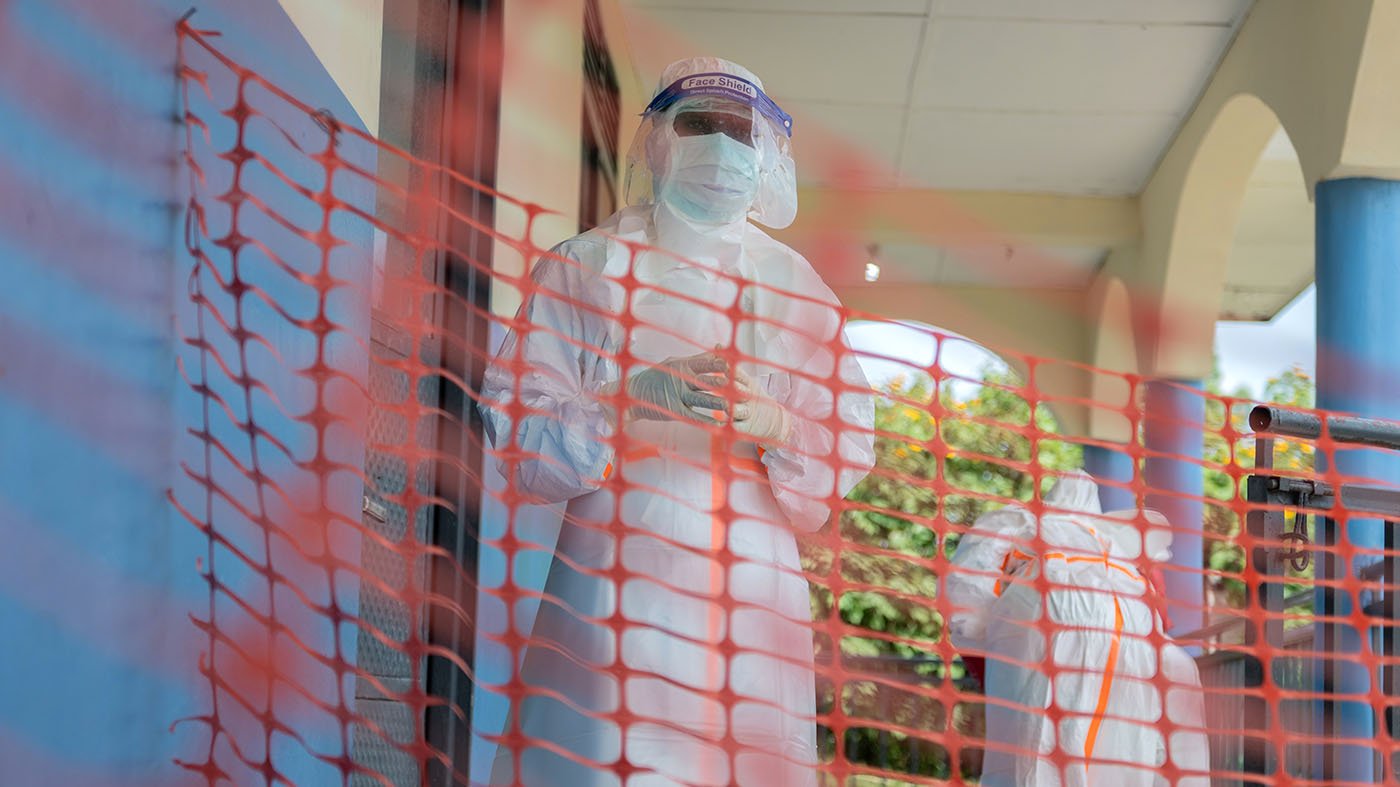
The Trump administration has adopted an inward-looking strategy in response to the escalating Ebola outbreak in Congo and Uganda, turning to travel bans and quarantine plans over a robust international response—a shift that infectious disease experts say is both alarming and counterproductive.
According to the World Health Organization, suspected Ebola cases have surpassed 1,000, with nearly 250 suspected deaths. The outbreak is accelerating, and nations worldwide have mobilized funds, personnel, and medical aid. Yet the U.S. response under President Trump has drawn sharp criticism for its isolationist bent.

The U.S. has committed more than $100 million in financial assistance to affected countries, including $80 million for personal protective equipment. The Centers for Disease Control and Prevention and the State Department say they are ensuring rapid viral testing and deploying resources in Congo and Uganda. “The most effective way to protect Americans is to stop outbreaks as quickly as possible, where they occur,” said Satish Pillai, the CDC’s Ebola response leader, during a Friday briefing.
But to veterans of past Ebola crises, the administration appears more focused on keeping the virus out of the U.S. than on containing it at its source. “The United States’ highest priority remains protecting the health and security of the American people by working to prevent the Ebola outbreak from reaching our shores,” a State Department spokesperson said Thursday, echoing Secretary of State Marco Rubio’s Cabinet meeting remarks that the administration “will not allow any cases of Ebola to enter the United States.”
Shortly after the outbreak was detected, the administration temporarily banned entry for noncitizen travelers who had been in Congo, Uganda, or South Sudan within the prior 21 days. That ban was later extended to green-card holders. “Travel restrictions may delay the introduction of a pathogen, but history has shown they rarely prevent it entirely,” said Krutika Kuppalli, an infectious disease specialist who ran an Ebola treatment center in Sierra Leone during the 2014-2016 West Africa epidemic.
Now, the U.S. plans to require any American who may have been exposed to Ebola to quarantine for 21 days in Kenya rather than return home. Those plans hit a snag Friday when a Kenyan high court blocked further construction and barred medical operations at the facility pending a lawsuit. The move, experts say, could deter skilled volunteers from deploying. “If individuals believe they may not be repatriated, should they become ill or exposed, it could affect willingness to participate in future response efforts,” Kuppalli warned.
Officials have said that Americans who contract Ebola will be sent to Europe for advanced care, even though the U.S. operates a specialized network of containment beds funded with billions in federal dollars. During the 2014-2016 epidemic, multiple Americans were safely repatriated for monitoring and treatment without any secondary cases. “There’s nothing like this in the entire world,” said Jeanne Marrazzo, CEO of the Infectious Diseases Society of America, referring to the U.S. network. “A big network of preparedness centers with capacity for intensive care, and staff who are trained—it just doesn’t exist.”
Marrazzo said the White House appears “to have completely shredded the playbook that we have used for this sort of thing, I think with very good success in the past. Nobody is really detailing a comprehensive plan.” Seven Americans exposed to Ebola in Congo were flown to Europe, including a doctor with a confirmed infection; another exposed doctor was sent to Prague.
The virus—a rare strain called Bundibugyo, for which no proven vaccines or treatments exist—spread undetected for weeks. It is fatal in about 50 percent of cases, and the WHO declared the outbreak a public health emergency of international concern just two days after it was recognized. The Trump administration, which has withdrawn from the WHO and dismantled the U.S. Agency for International Development, is signaling a retreat from global health leadership. “For decades, the United States has been viewed as a leader,” Kuppalli said, but locking down borders to foreign nationals and even American citizens sends a message that the U.S. is no longer interested in that role.