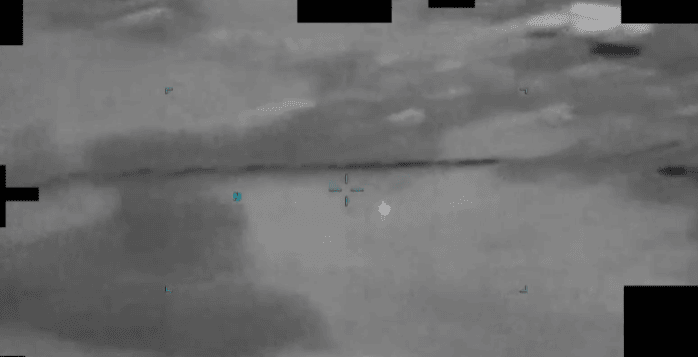
The Pentagon has released its third tranche of UFO-related files, marking another step in its stated goal of increasing transparency around unidentified aerial phenomena. The new documents include video recreations of sightings described as orbs, based on accounts from witnesses the Defense Department deems highly credible.
Among those providing testimony are federal law enforcement agents, whose professional backgrounds lend weight to the reports. The artistic renderings aim to visually capture what these trained observers claim to have seen, though the Pentagon has not confirmed the nature or origin of the objects.

This latest disclosure comes amid a broader shift in public and political attitudes toward UFOs—now often referred to as UAPs (unidentified anomalous phenomena). Polls indicate that a majority of Americans now believe intelligent life exists elsewhere in the universe, a sentiment that has pressured the government to take the issue more seriously.
The release follows earlier tranches that included declassified reports and videos from military pilots. Lawmakers on both sides of the aisle have pushed for greater openness, with some arguing that the national security implications demand rigorous investigation. The Pentagon's internal office, the All-domain Anomaly Resolution Office (AARO), continues to collect and analyze reports.
The latest batch does not include any definitive proof of extraterrestrial technology, but the inclusion of federal agents as witnesses adds a layer of credibility that previous releases lacked. Critics, however, note that artistic recreations are subjective and that the Pentagon has stopped short of releasing raw sensor data or unredacted incident reports.
Meanwhile, the Pentagon faces other transparency challenges. As Senate Republicans resist Trump's push for a third reconciliation package to fund the Pentagon, and the Senate GOP advances a bill to rename the Pentagon the 'Department of War', the UAP issue remains a rare area of bipartisan agreement on the need for disclosure.
The Defense Department has not announced a timeline for future releases, but sources suggest that more files are being prepared for public dissemination. For now, the artistic recreations serve as a visual placeholder for what remains one of the most tantalizing—and unresolved—questions in modern governance.