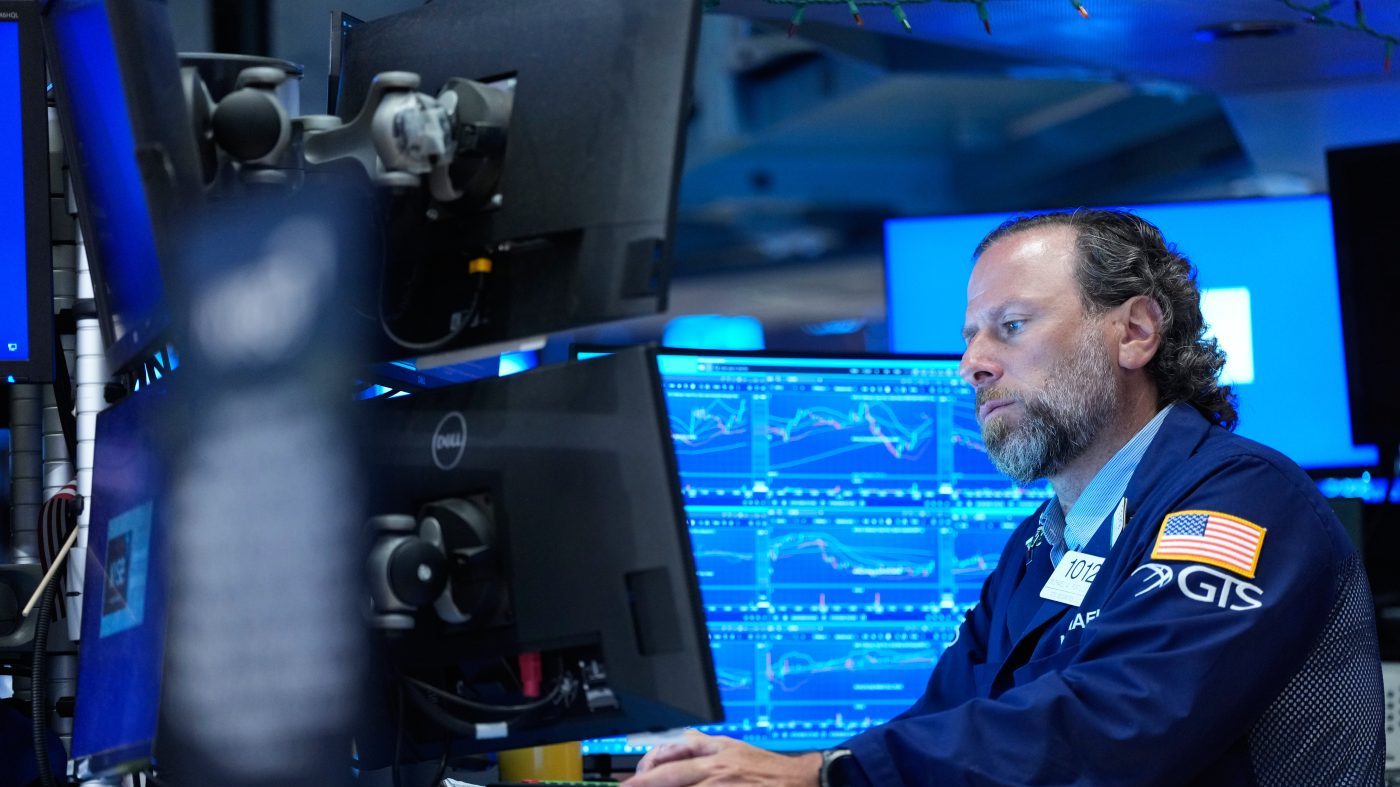
A new Gallup survey shows a marginal brightening in Americans' economic outlook, but deep pessimism persists as the midterm elections approach. The poll, conducted July 1–19, found 22% of respondents describing U.S. economic conditions as “excellent” or “good,” up from 19% in June. Meanwhile, 44% called conditions “poor”—a slight improvement from 45% last month—and 32% said they were “only fair,” down from 35%.
Despite the uptick, the overall mood remains dour. Two-thirds of those surveyed—67%—said the economy is “getting worse,” though that figure dropped from 72% in June. Just 28% see improvement, up from 23%. The survey of 1,200 adults has a margin of error of plus or minus 4 percentage points.
The findings come as tariffs imposed by President Trump inject fresh uncertainty into the economic debate. Republicans, who have long counted on a strong economy as a campaign asset, now face Democratic attacks over rising costs and trade policy. House Minority Leader Hakeem Jeffries (D-N.Y.) has made affordability a central theme, promising at a Pennsylvania rally that Democrats would “lower the cost of groceries, gas, and housing” if they retake the House.
The political stakes are high. With control of Congress on the line, both parties are jockeying over who can best address voters' economic anxieties. The Gallup data suggest that while the worst of the pessimism may have plateaued, a majority of Americans still believe the economy is on the wrong track—a vulnerability for the GOP.
Notably, the poll's fieldwork occurred before Trump's latest tariff announcement, meaning the full political fallout may not yet be captured. Democrats are already framing the trade measures as a tax on working families. Jeffries’ remarks underscore the party's strategy: tie the GOP to economic pain and offer a clear alternative.
Other recent surveys have highlighted a broader disconnect between economic indicators and public sentiment. A separate Gallup poll found that one in ten Americans now see politics as a top safety threat, reflecting the charged atmosphere. Meanwhile, the Treasury Department's new fraud screening system, which recently blocked $99 million in payments to deceased individuals, signals ongoing efforts to tighten fiscal controls.
For Republicans, the slight improvement in Gallup's numbers offers a glimmer of hope, but the persistent majority who see deterioration poses a serious challenge. As the campaign season intensifies, economic sentiment will remain a pivotal battleground.

