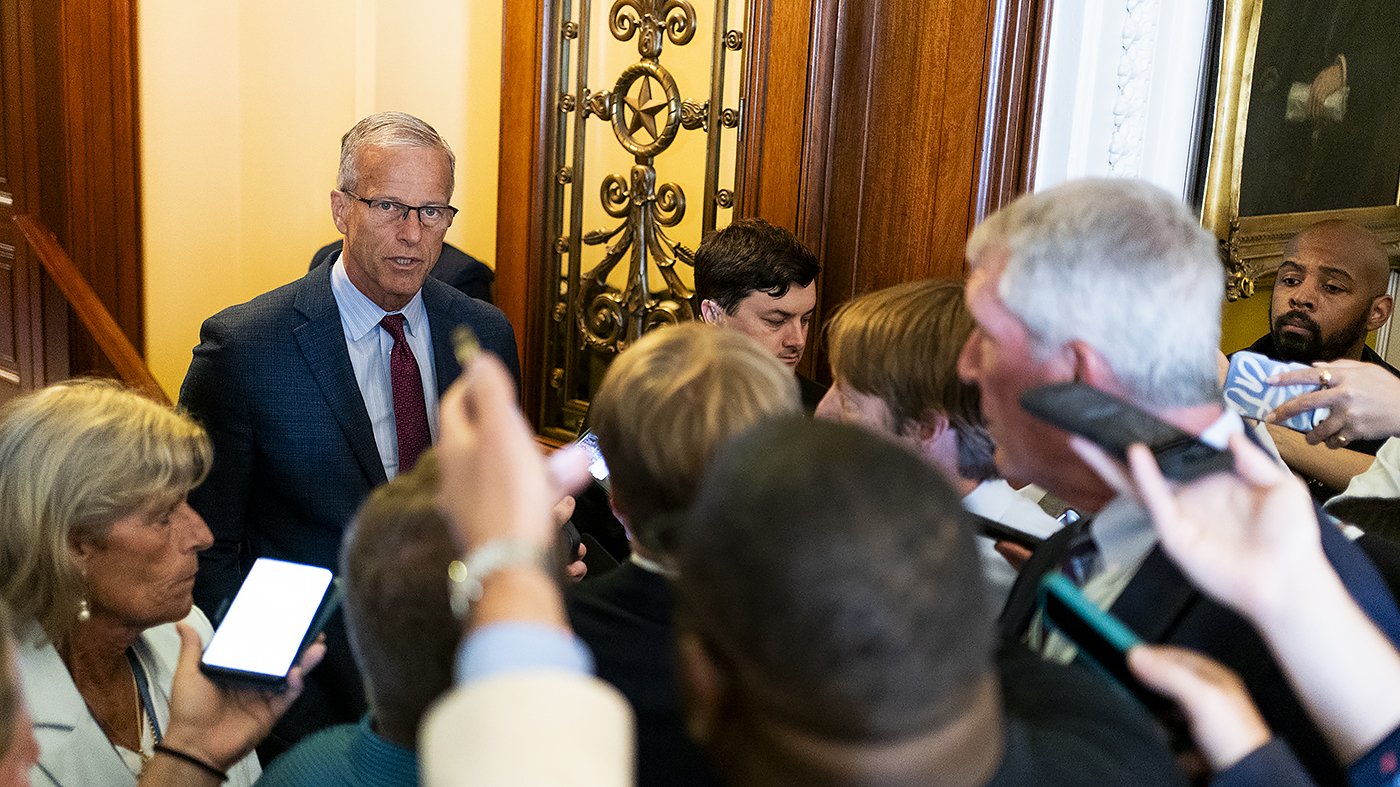
Senate Majority Leader John Thune (R-S.D.) is steering the chamber through a turbulent legislative week, juggling government funding, the National Defense Authorization Act (NDAA), a slate of Trump nominees, and a new Russia sanctions bill. The pressure is mounting from both the White House and House Republicans to fast-track a $95 billion budget resolution for a third reconciliation package, but Thune is prioritizing a stopgap funding measure to avert a shutdown before the Sept. 30 fiscal deadline.
Thune is eyeing a short-term continuing resolution to keep federal agencies at current spending levels, a move intended to buy time for negotiations on the 12 annual appropriations bills. GOP leaders are moving unusually early to avoid a shutdown fight close to the midterms, but the House-passed stopgap faces Democratic opposition over immigration enforcement demands. Sen. John Kennedy has warned that Thune's cautious approach may not work with Democrats, adding to the tension.
The Senate is also continuing work on the NDAA, a must-pass defense policy bill that has historically enjoyed bipartisan support. However, Senate Democrats have blocked its advancement due to the ongoing military conflict with Iran, casting uncertainty over its fate.
Hovering over the agenda is the budget framework passed by the House last week for a third reconciliation package. It includes $75 billion for defense and intelligence, $12 billion for agricultural aid, and $10 billion for a fund to incentivize states to adopt Trump-backed voting restrictions, such as the Safeguard American Voter Eligibility (SAVE America) Act. Thune is under siege from Trump to move quickly, but he has acknowledged the framework lacks the 50 votes needed in the Senate. Conservative hard-liners oppose the lack of spending offsets, while other Republicans are skeptical of the SAVE Act.
"As I've said before, you got to get to 50, and I can't count to 50 right now on a budget resolution," Thune said. "We'll see. We'll have those conversations with the conference. The priority is funding the government. To me that's the thing we got to keep our eyes on." Thune has suggested the reconciliation framework could serve as a fallback if bipartisan funding talks collapse, but he is holding off for now.
Trump, however, is pressing for action before the August recess. In a Truth Social post Friday, he called the budget resolution "one of the most consequential Bills in America's History" and urged the Senate to adopt it quickly. This disagreement over priorities is expected to define the coming week, with Trump pushing GOP to kill the filibuster as the rift with Thune deepens.
Beyond funding and reconciliation, the Senate will advance several Trump nominees. The Judiciary Committee is set to vote Thursday on attorney general pick Todd Blanche, whose confirmation hinges on Sens. Thom Tillis (R-N.C.) and John Cornyn (R-Texas). Both are leaving Congress at year-end and have shown independence from Trump, with concerns over Blanche's answers on the $1.8 billion "anti-weaponization" fund. Just one GOP "no" could stall his nomination in committee.
Jay Clayton, Trump's pick for director of national intelligence, is expected to get a floor vote this week after the Intelligence Committee advanced his nomination 9-8. Keith Sonderling, the nominee for secretary of Labor, also faces committee votes.
Thune is also eyeing action on a Russia sanctions bill, signaling a focus on foreign policy alongside domestic priorities. The Senate is expected to remain in session for two more weeks before its August recess, while the House has already left.