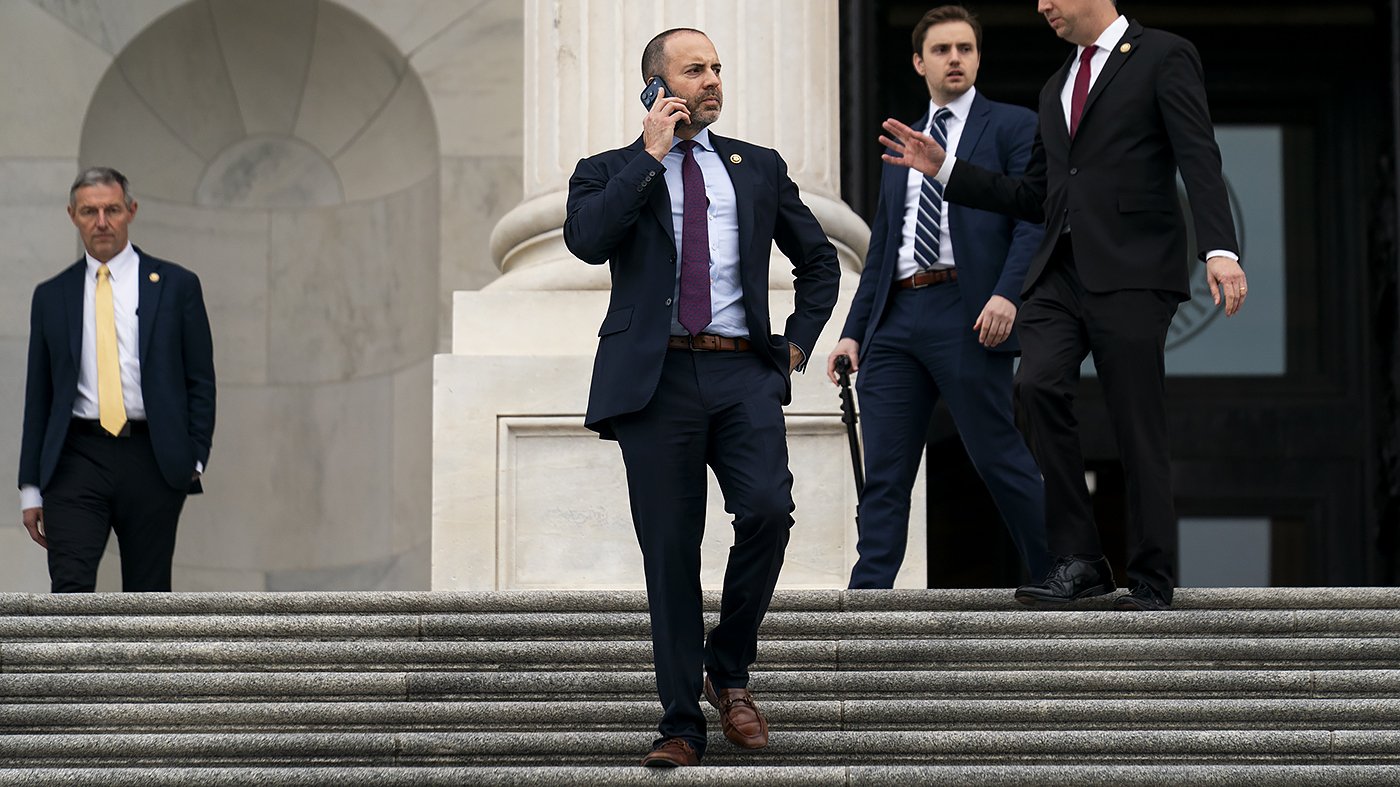
The House Ethics Committee disclosed on Monday that it has opened an investigation into Representative Lance Gooden, a Texas Republican, without specifying the allegations that prompted the probe. The panel stated it acted on a referral from the Office of Congressional Conduct (OCC), an internal watchdog that reviews potential rule violations by lawmakers.
In a brief statement, the committee emphasized that the referral and its public acknowledgment do not constitute a finding of wrongdoing. “The Committee notes that the mere fact of a referral or an extension, and the mandatory disclosure of such an extension and the name of the subject of the matter, does not itself indicate that any violation has occurred, or reflect any judgment on behalf of the Committee,” the statement read. The panel pledged to announce its next steps by November 9.

Gooden, who serves on the House Financial Services Committee, quickly pushed back against the inquiry. In comments to Fox News, he characterized the investigation as a politically motivated attack. “These are bogus spending allegations perpetrated by dishonest unelected OCC bureaucrats, and as the fifth Texas GOP ally of the President to endure one of these attacks, I am confident the House Ethics Committee will confirm their baseless nature,” he said.
The Texas congressman’s office did not respond to requests for additional comment. The probe adds to a growing list of ethics reviews targeting Republican lawmakers from Texas, a dynamic that has fueled accusations of partisan bias from within the party. However, the Ethics Committee operates with a bipartisan membership and typically keeps the specifics of its inquiries confidential until formal action is taken.
The investigation is not the first time Gooden has faced scrutiny over financial disclosures. In 2021, the Campaign Legal Center (CLC), a nonpartisan watchdog group, filed a complaint with the Office of Congressional Ethics alleging that Gooden violated the Stop Trading on Congressional Knowledge (STOCK) Act and House rules. The CLC contended that Gooden appeared to have purchased 12 assets in 2020—valued between roughly $60,000 and $376,000—without properly reporting the transactions. It remains unclear whether the current Ethics Committee probe is connected to that complaint.
The STOCK Act, enacted in 2012, requires members of Congress to disclose most stock trades within 45 days. Violations have triggered bipartisan criticism, and calls for stricter enforcement have intensified amid a broader debate over ethics in Washington. The White House has recently backed stronger ethics provisions in unrelated legislation, signaling the issue’s political salience.
Gooden’s case also arrives as ethics questions swirl around other Texas Republicans. The state’s GOP delegation has been at the center of multiple probes, and some members have alleged that the OCC is targeting conservatives. Yet the Ethics Committee’s statement offered no details on the allegations, leaving the scope of the investigation uncertain.
The panel’s timeline—with a decision on next steps due by early November—suggests the matter could move quickly, though full investigations often take months. If the committee finds substantial evidence of wrongdoing, it could recommend sanctions ranging from a reprimand to expulsion, though such outcomes are rare.
For now, the investigation remains in its early stages, with both the committee and Gooden signaling confidence in their respective positions. The outcome could have implications not only for the congressman’s career but also for broader debates about congressional ethics and the independence of internal oversight bodies.