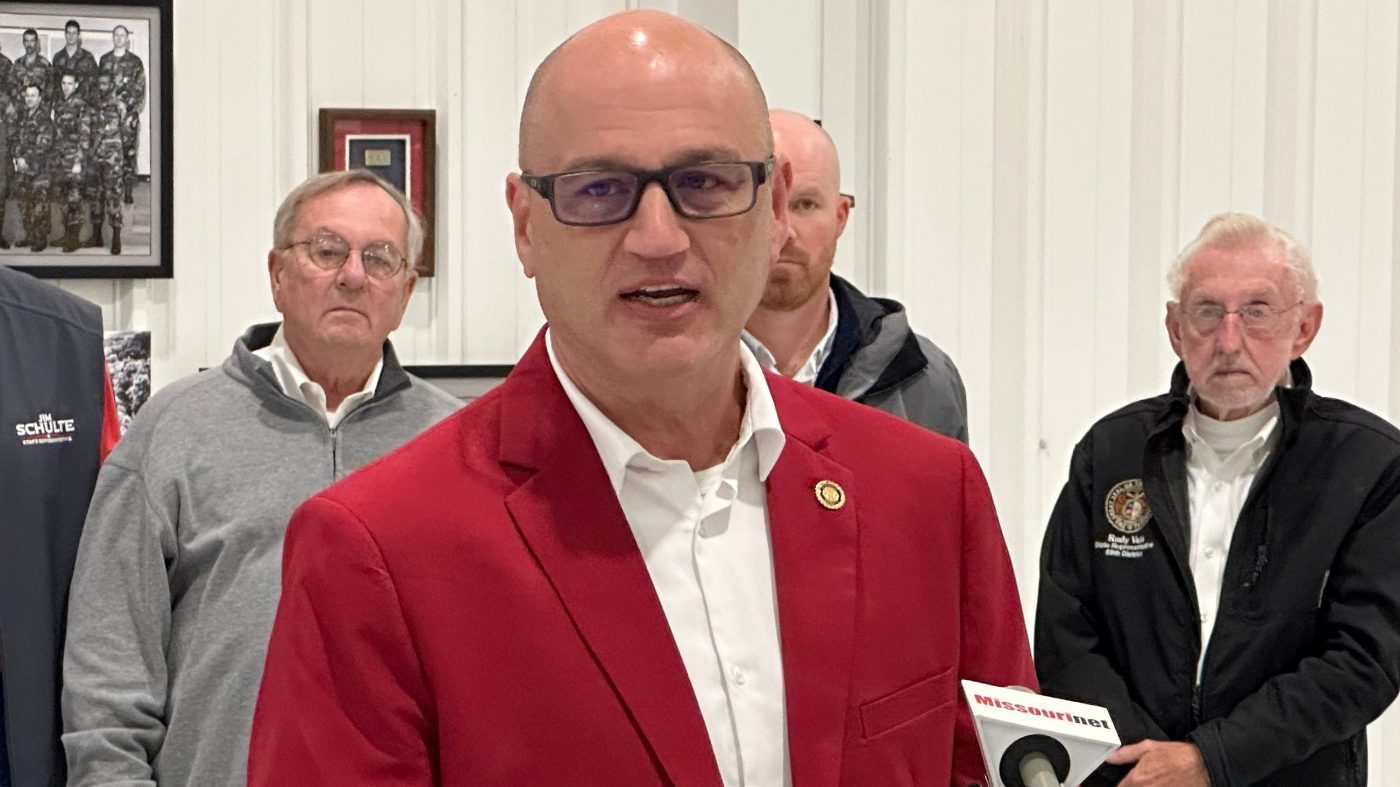
Missouri Secretary of State Denny Hoskins (R) is scheduled to appear before the state Supreme Court on Thursday, as the justices consider whether to hold him in contempt in an escalating legal battle over the state's congressional map for the 2026 midterm elections.
Late Wednesday, U.S. District Judge Stephen Clark rejected the state's emergency request to block the morning proceedings, writing that "numerous considerations" weighed against intervening in a state court's internal affairs. Clark, a federal judge, noted that enjoining a fellow sovereign's court is an "extraordinary measure" that would preempt the state court's own decision-making.
Earlier Wednesday, Missouri officials had asked Clark to intervene, arguing that his prior order—which allowed the GOP-drawn map to be used—shielded Hoskins from state punishment. Attorney General Catherine Hanaway's office contended that the federal court had authority under the Anti-Injunction Act to "protect or effectuate" its judgments, and that the federal order should supersede any conflicting state directive.
"Despite von Glahn's antics, this case is not particularly complicated," Hanaway's office wrote, asserting that the federal court's order to implement the HB 1 map for the 2026 election governs over a state court order relying only on state law.
The dispute traces back to a lawsuit filed by Richard von Glahn, who challenged the GOP-favored map as an unconstitutional gerrymander. The Missouri Supreme Court barred the use of the new map for the November contests, but Hoskins, citing a separate federal restraining order, instructed local election officials to proceed with the GOP-drawn boundaries, arguing that federal law takes precedence.
Von Glahn's attorneys countered that the state court's contempt proceeding is "fundamentally different" from the federal case. "The Missouri Supreme Court is not asking whether the Secretary has a right to use the HB 1 map—it is asking whether the Secretary is in contempt of the state's highest court," they wrote.
The GOP-drawn map would create a 7-1 Republican advantage, potentially giving the party a pickup opportunity in the midterms. Republicans had appealed to the U.S. Supreme Court, but Justice Brett Kavanaugh declined Tuesday to intervene, offering no explanation. Hours later, Clark issued a temporary restraining order in a separate lawsuit brought by Rep. Rob Onder (R-Mo.), barring state officials from using anything other than the new boundaries to avoid voter confusion.
Chief Justice W. Brent Howell ordered Hoskins to appear in person Thursday to explain why he should not be held in contempt. Hoskins, responding on social media, said he "look[ed] forward to my day in court" and reiterated his commitment to "common-sense Missouri values." He added that he would continue to abide by Clark's federal order.
The standoff highlights the growing tension between state and federal courts over election administration, a issue that could resonate in the midterm landscape. As the legal battle unfolds, it also raises questions about the limits of federal judicial power and the autonomy of state courts, a theme central to ongoing voter verification disputes.