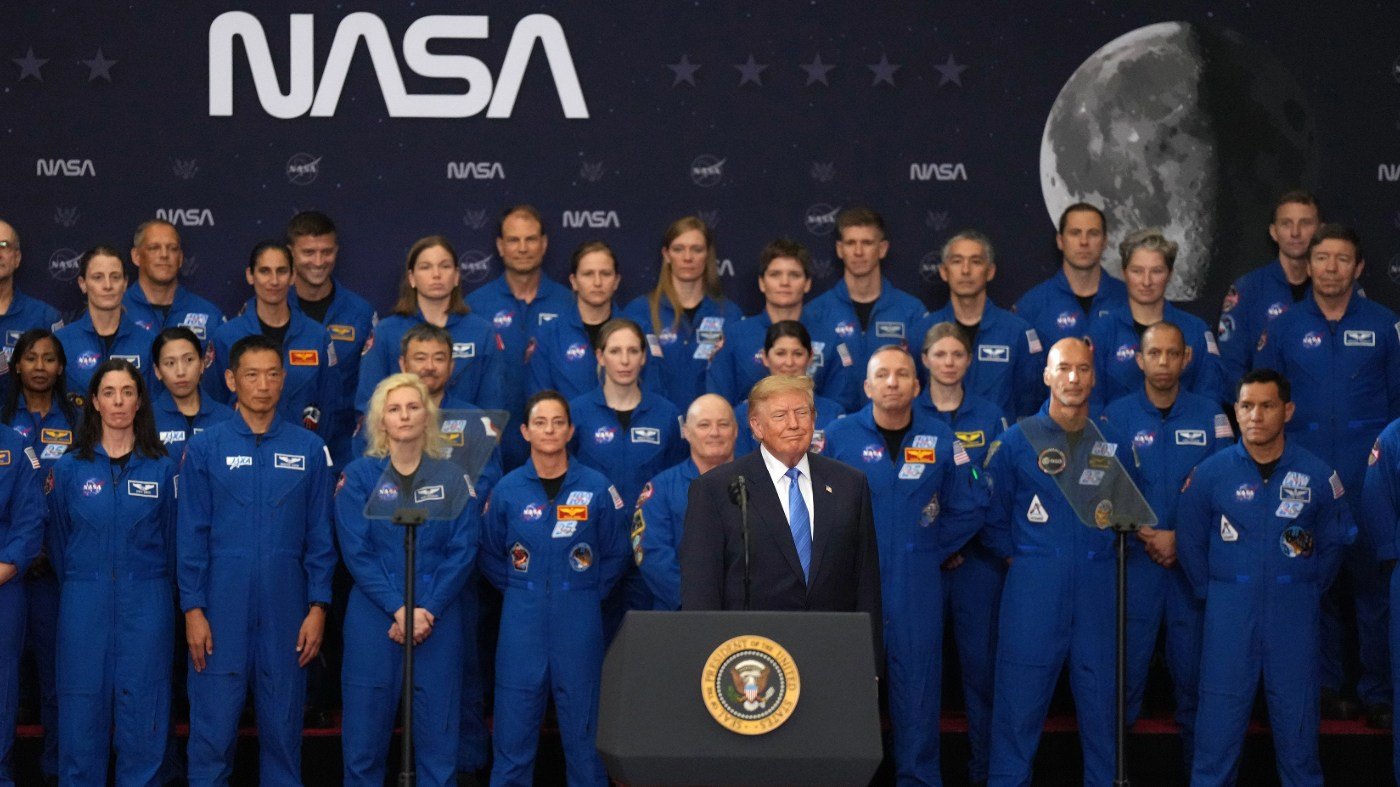
The Trump administration has quietly reversed course on two NASA Venus missions, sparing them from proposed budget cuts that would have gutted the agency's science portfolio. The decision marks a subtle but significant shift in the president's approach to space exploration, moving beyond his singular focus on the Artemis lunar program.
According to Ars Technica, the Deep Atmosphere Venus Investigation of Noble gases, Chemistry, and Imaging (DAVINCI) mission is now scheduled to launch in December 2030, a year earlier than planned. The probe will descend through Venus's atmosphere, capturing the first direct images of the planet's surface since 1982. The Venus Emissivity, Radio science, InSAR, Topography, And Spectroscopy (VERITAS) mission will follow in November 2032, mapping the Venusian surface via radar from orbit.
The greenlighting of these missions comes after the administration proposed slashing NASA's science budget by roughly half in April, a move that threatened to cancel both Venus probes as part of broader efforts to address the nation's massive budget deficits. However, Congress balked at the cuts, and the administration found savings elsewhere, including canceling the cost-overrun-plagued Mars Sample Return mission.
The situation echoes the early days of the Apollo era, when President John F. Kennedy viewed space exploration primarily as a Cold War tool, much to the frustration of NASA Administrator James Webb, who advocated for missions like the Mariner probes to Venus and Mars. Now, there are signs that President Trump is beginning to appreciate the value of space science beyond Artemis.
In August, Trump praised the launch of the Nancy Grace Roman Space Telescope on Truth Social, calling it part of "THE GOLDEN AGE OF AMERICA!" He also called into the post-launch press conference to offer additional praise. The telescope, which will hunt for exoplanets and study dark energy, had been in danger of cancellation due to the proposed budget cuts.
Trump's embrace of the mission reflects his ability to recognize a "cool thing" and pivot politically. As a practical politician, he has adapted to the political zeitgeist, championing both space science and Artemis. But the underlying fiscal pressures remain, with a $2 trillion annual deficit and a $40 trillion national debt. Still, it appears NASA will not be the primary source of savings.
This new space age is marked by broad bipartisan support for ambitious endeavors, from crewed missions to the Moon and Mars to robotic probes and space telescopes. Factors such as the rise of China, the influence of private space entrepreneurs, and the leadership of figures like NASA Administrator Jared Isaacman and former Administrator Jim Bridenstine have all contributed to this dynamic.
As the world grapples with challenges, the progress in space exploration offers a glimmer of hope. The decision to preserve the Venus missions is a testament to the enduring appeal of scientific discovery, even in an era of fiscal austerity.