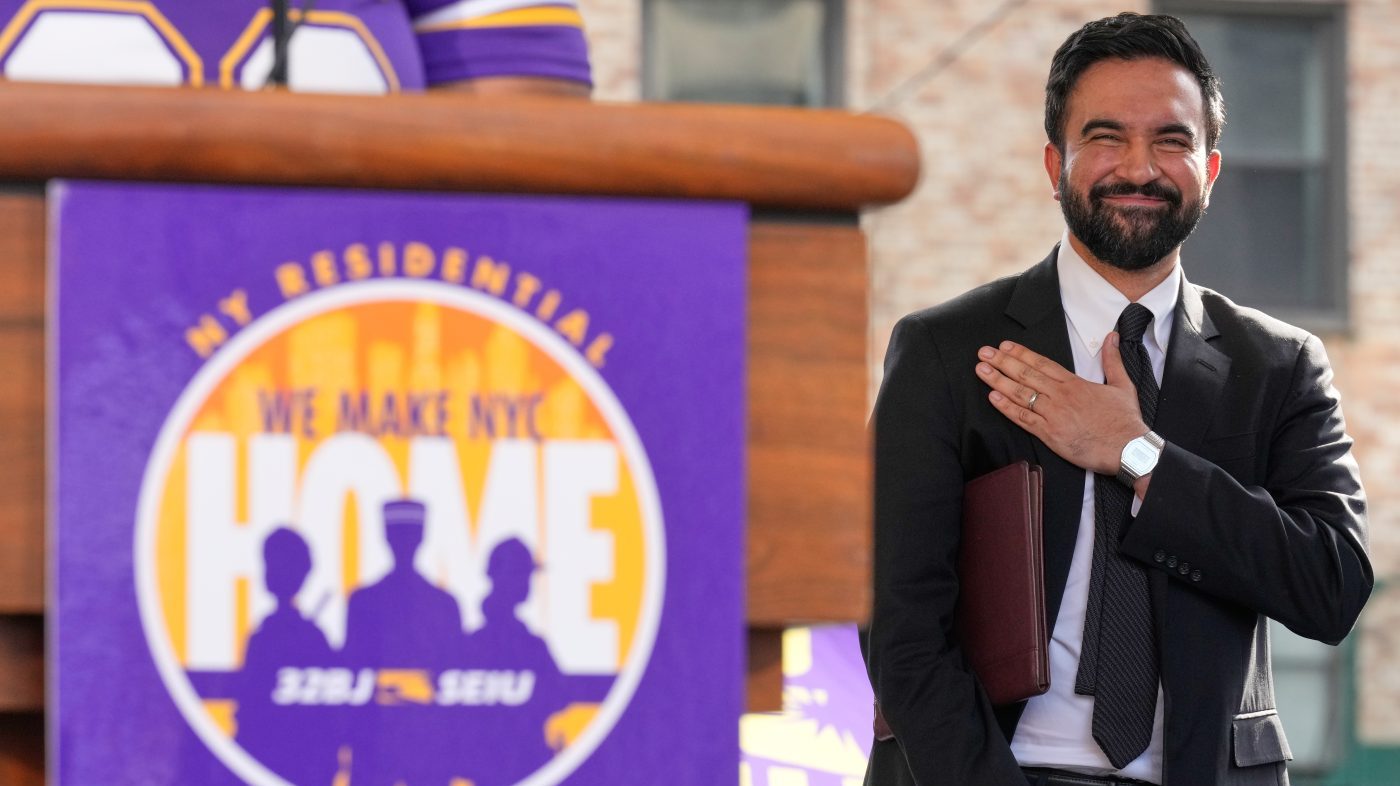
In a notable departure from their typically combative public exchanges, New York City Mayor Zohran Mamdani described his working relationship with President Donald Trump as fundamentally productive, citing their shared identity as New Yorkers as an unexpected bridge for governance.
During an appearance on NBC's 'Meet the Press' on Sunday, the Democratic mayor told moderator Kristen Welker that his interactions with the Republican president are "honest, direct, and productive." This characterization comes despite a history of mutual public attacks that have defined their political dynamic since Mamdani's rise to prominence.
A Foundation of Shared Geography
Mamdani attributed the functional working relationship to their common roots in New York City. "I'm lucky in that I have something that no one else does, which is that I'm from New York City," Mamdani explained. "And New York City holds a very special place for him, as well as for me. We're both from this same city."
The mayor emphasized that this shared connection creates a mutual investment in the city's success that transcends partisan differences. "Donald Trump is not just the president of this country," Mamdani continued. "He's also someone who's been a New Yorker for his entire life, and there is an investment in this city doing well."
Public Hostility Versus Private Diplomacy
The mayor's comments stand in stark contrast to the public rhetoric that has flowed between the two figures. Just three days before the interview, Trump had taken to social media to accuse Mamdani and New York Governor Kathy Hochul of "destroying" New York through proposed taxes on second homes, warning that "the United States of America should not contribute to its failure."
Despite this public hostility, the two have held at least two cordial meetings at the White House since Mamdani's election victory last year—one in November and another in February. Mamdani described these encounters as focused on practical governance. "Those conversations, no matter how they happen, they return back to one thing, one of the few things that we have in common, which is our love for New York City and how to deliver for this same city," he told Welker.
Policy Results from Personal Connection
The relationship has yielded tangible policy outcomes. Following their February meeting, Mamdani successfully appealed to Trump for the release of a Columbia University student detained by federal immigration authorities—a request the president granted. This incident, the mayor suggested, demonstrates the value of maintaining channels of communication even amid profound disagreements.
"I think we see in those decisions the worth of the relationship that is both honest and direct and looking to be productive," Mamdani said Sunday. "And that honesty means acknowledging places of disagreement." This pragmatic approach mirrors Mamdani's strategy on other contentious issues, such as his push for a $30 minimum wage, which has faced significant economic and political headwinds.
Broader Political Context
The mayor's diplomatic posture toward Trump occurs within a national political climate where many Democratic leaders have adopted more confrontational stances. Minnesota Governor Tim Walz, for instance, has recently accused the president of 'fascist-curious' actions and warned of democratic backsliding. Meanwhile, Trump's own rhetoric, which critics warn fuses profanity, Christian nationalism, and xenophobia, continues to polarize the political landscape.
Mamdani's approach also contrasts with that of former President Barack Obama, who recently forged a public alliance with the mayor during a Bronx preschool visit that included implicit criticism of Trump administration policies.
The New York mayor's comments reveal the complex calculus of municipal governance under a politically divisive national administration. While maintaining his progressive policy agenda, Mamdani appears to be leveraging personal connections and shared geography to secure practical outcomes for his constituents—a strategy that acknowledges the reality of divided government while navigating the turbulent waters of contemporary American politics.