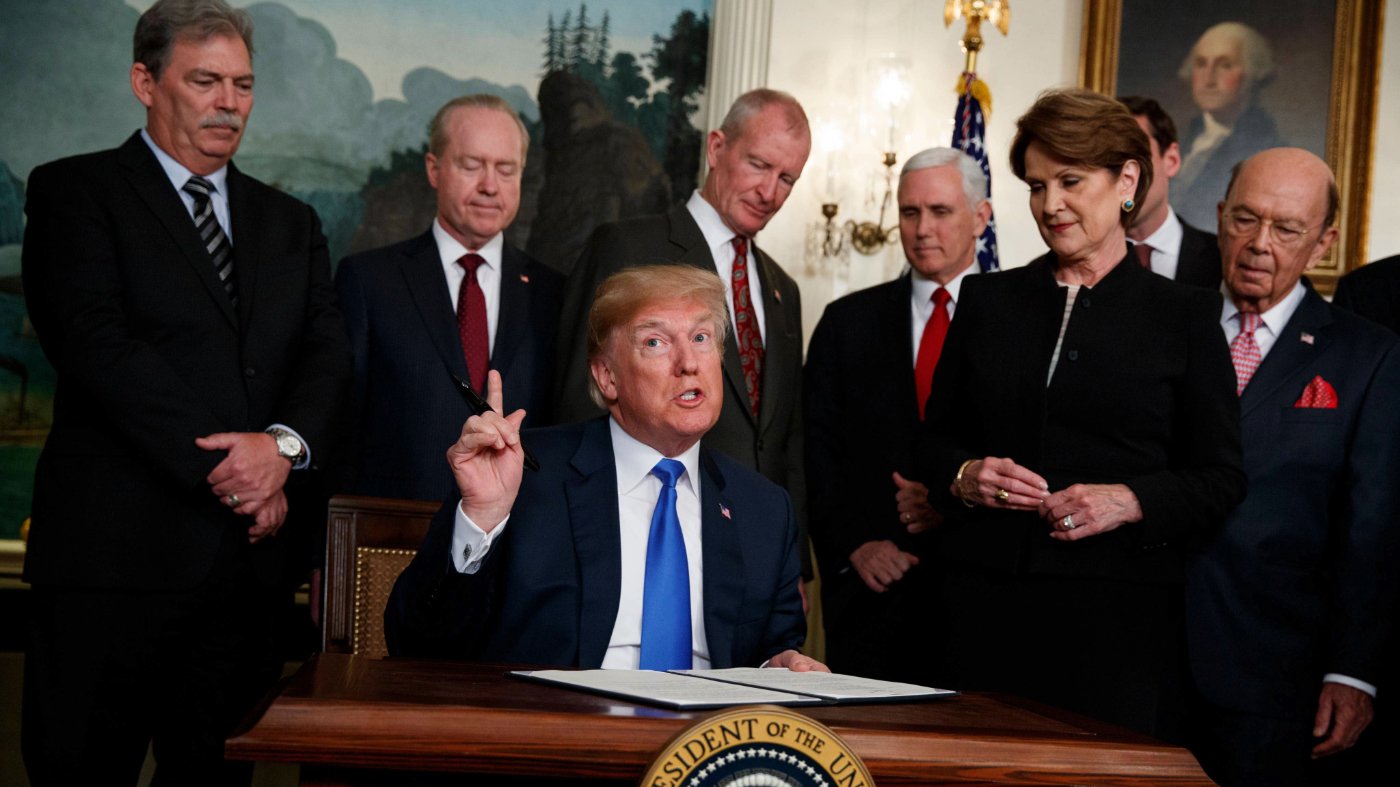
The Trump administration's sweeping use of Section 301 tariffs is facing a new legal challenge that could redefine the limits of presidential trade authority. The lawsuit, filed by the Liberty Justice Center, argues that the administration's imposition of nearly uniform tariffs on imports from 60 economies—justified by alleged failures to combat forced labor—goes far beyond what Congress intended when it enacted the statute in 1974.
At the heart of the case is a fundamental question: Is Section 301 a scalpel for addressing specific foreign trade practices, or has it been transformed into a sledgehammer for broad economic pressure? The statute's text suggests the former. It requires the U.S. Trade Representative to identify a particular foreign act, policy, or practice, determine that it burdens U.S. commerce, and explain why the chosen response is an "appropriate and feasible" way to eliminate that practice. This sequence is not a mere procedural hoop; it is the statute's limiting principle.

Congress designed Section 301 as a tool of targeted economic diplomacy. Tariffs are not the end goal but a means to induce a foreign government to abandon a specific practice. The stronger the link between the identified practice and the remedy, the more faithfully the executive branch carries out Congress's design. The latest litigation argues that this link has broken down. While no one disputes the gravity of forced labor, the question before the Court of International Trade is whether tariffs on virtually all imports from 60 nations are an appropriate and feasible way to persuade each government to strengthen enforcement.
The broader structure of U.S. trade law underscores the point. Congress never delegated tariff authority through a single all-purpose statute. Instead, it created specialized authorities for specialized problems. Section 232 addresses national security, and Section 122 authorizes temporary, across-the-board tariffs during balance-of-payments crises. Section 301 occupies a different role, targeting specific foreign trade practices. These distinctions are deliberate; Congress wanted different legal standards to govern different exercises of presidential power.
Section 122 is particularly illustrative. It grants the president authority to impose broad tariffs but with strict limits: tariffs cannot exceed 15 percent and can last only 150 days without congressional approval. These restrictions reflect a legislative judgment that economy-wide tariff authority should be temporary and politically accountable. If Section 301 can be interpreted to sustain similar tariff programs indefinitely, those limits become meaningless. A statute designed for targeted retaliation would start performing the work Congress assigned elsewhere under much tighter constraints.
Courts generally reject interpretations that render other statutes redundant. One of the oldest principles of statutory interpretation is that Congress does not legislate in vain. Statutes should complement one another, not allow one delegation to swallow the rest. That principle should guide the Court of International Trade here. The case is not about whether tariffs are good policy or whether forced labor deserves a forceful response. It is about whether courts will preserve the limits Congress placed on one of its most consequential delegations of economic authority.
If the court allows the statutory chain to be broken, Section 301 will cease to be a targeted trade remedy. It will become the executive branch's default source of tariff authority whenever other statutes prove inconvenient. That would expand Section 301 beyond recognition and erase a key limit on presidential power. As the authors of the original analysis put it, Section 301 was written to be a scalpel. Courts should not allow it to become a sledgehammer.