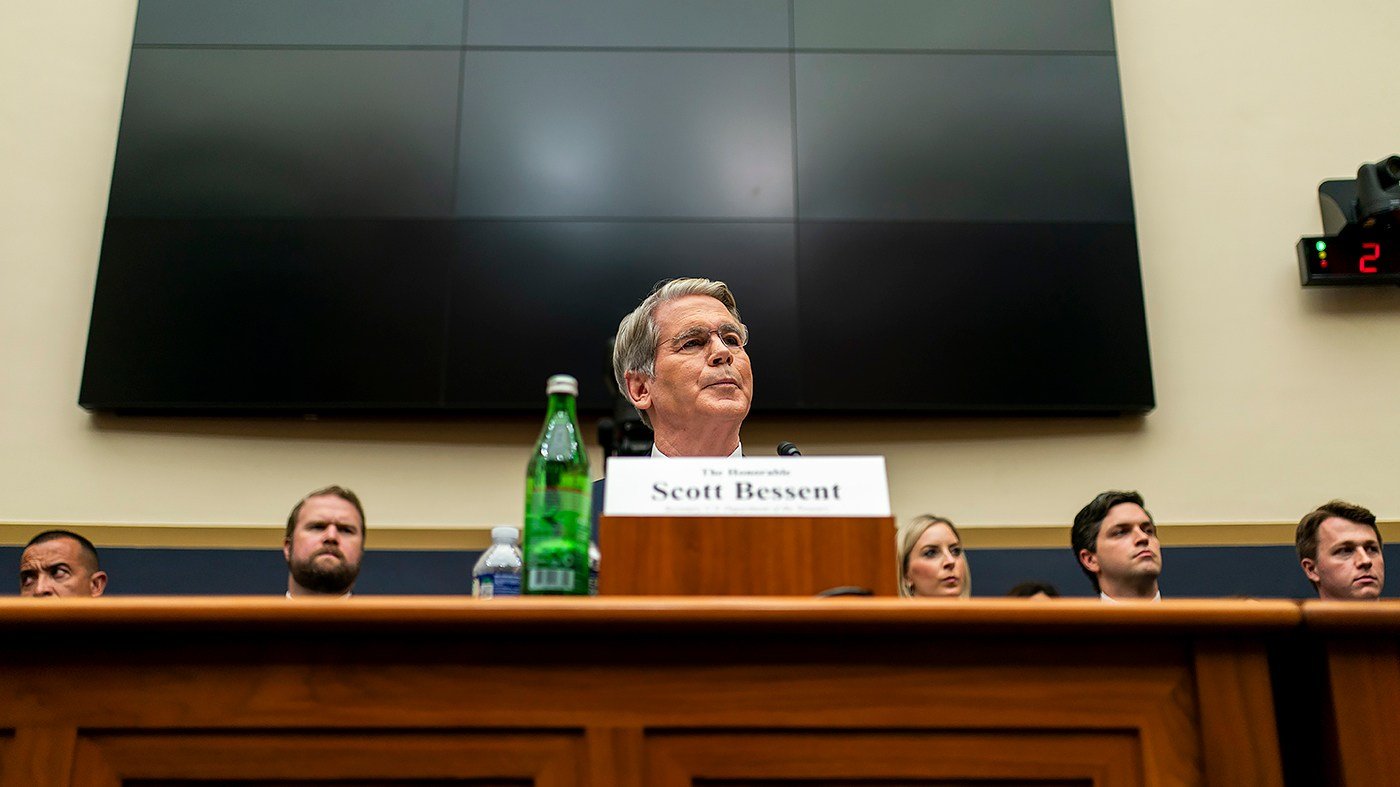
Treasury Secretary Scott Bessent on Monday voiced strong support for Federal Reserve Chair Kevin Warsh, following the central bank's decision to raise interest rates by a quarter point—a move that ran contrary to President Trump's wishes.
In an appearance on CNBC's "Squawk Box," Bessent told host Joe Kernen, "I have great confidence in Chair Warsh. More importantly, the president has great confidence in him, and we are sure that he will do the right thing to balance the inflation mandate versus the growth mandate."
The Federal Open Market Committee (FOMC), which includes Warsh, voted unanimously last week to lift the benchmark rate to a range of 3.75% to 4%. Warsh cited persistently high inflation, which has remained above the Fed's 2% target for over five years, as the rationale for the increase.
"The plain fact is that inflation is too high and has been for too long," Warsh told reporters. "This summer's inflation readings do not tell me that underlying trends have meaningfully improved."
Bessent declined to say whether he personally agreed with the rate hike, but he pointed out that core inflation—excluding volatile food and energy prices—has been "very quiescent." According to the Bureau of Labor Statistics, core CPI has stayed below 3% since last November and stood at 2.4% last month. Overall inflation, however, peaked at 4.2% in May and was 3.4% last month.
President Trump, who handpicked Warsh to replace former Fed Chair Jerome Powell, blamed the broader FOMC board rather than Warsh for the rate increase. "I'm relying on Kevin, but he's got a very tough board," Trump said in North Carolina. Notably, Trump has appointed four of the 12 FOMC members: Warsh, Powell, Vice Chair Michelle Bowman, and board member Christopher Waller.
The FOMC's quarterly projections suggest another quarter-point hike could come this year. Twelve of 18 officials forecast one more increase, with meetings scheduled for late October and early December. Four officials predicted two hikes, while two expect no change. Warsh again declined to provide his own projection, as he did in June.
The rate hike has intensified tensions between the White House and the Fed, with Trump publicly criticizing the board while shielding Warsh. The decision also comes amid broader debates over economic policy, as the Fed monitors AI's economic impact while Congress stalls on regulation.
Bessent's remarks underscore the administration's attempt to project unity despite the policy rift. His focus on core inflation suggests a potential split within the administration over the Fed's hawkish stance, even as Trump continues to pressure for lower rates.