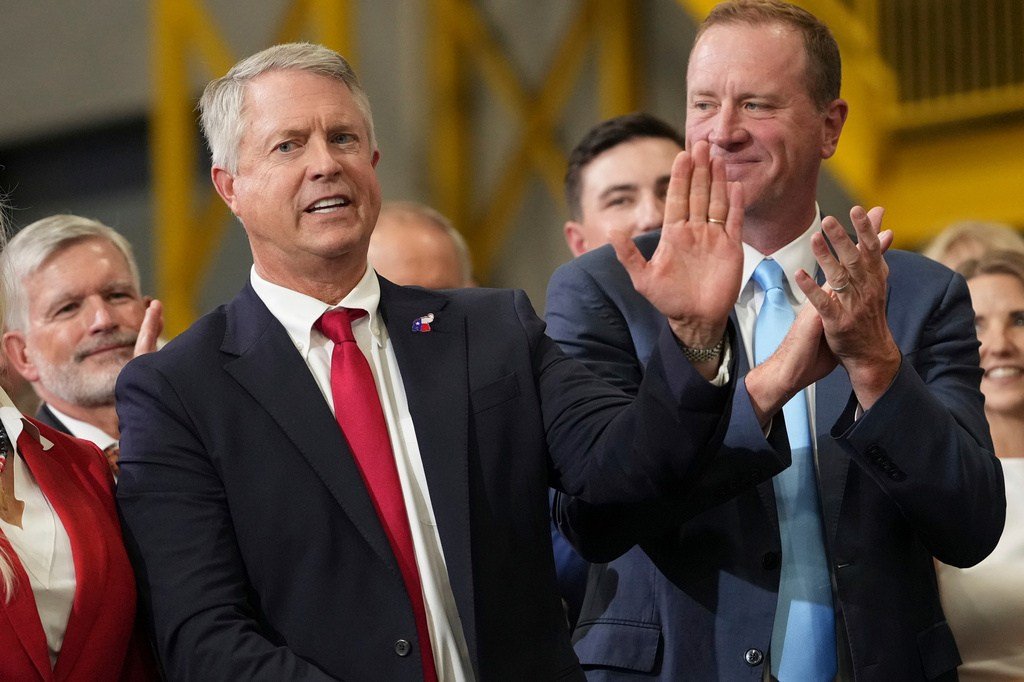
For the first time in nearly a century, Kansas Democrats see a real path to a U.S. Senate seat. The state hasn't sent a Democrat to the Senate since 1932, but this year's race between Republican incumbent Roger Marshall and Democratic challenger Adam Hamilton is dead even in recent polls. The reason isn't just a strong Democratic candidate—it's a combination of a deeply unpopular president, an economy battered by tariffs, and a Republican senator whose personal conduct has alienated even his own party.
Marshall, an obstetrician by training, has come under fire for his medical debt collection practices. Reports show that his practice sued patients—including new mothers—for bills as small as $100. At a Kansas State Fair debate, Marshall was loudly booed when he defended these lawsuits as "common business practices." One patient, Kellie Clutts, told reporters she was sued in 2015 over a $129 bill from a postpartum visit. "I had every intention to pay, I was just struggling," she said. The backlash is particularly sharp given Marshall's vocal opposition to abortion and his emphasis on Christian values.
The controversy has even cost him support from within his own party. Former Kansas Governor Bill Graves, a Republican, has endorsed Hamilton, calling Marshall a senator who "has turned his back on Kansas." Graves praised Hamilton as a "bulwark of kindness, humility and service to others."
Beyond the local scandal, the national political climate is toxic for Republicans. A recent Fox News poll found that 63% of voters—including 73% of independents—believe the Trump administration has made the economy worse. The same poll showed 62% of Americans call grocery prices a "major problem," and 61% say the same about gas prices. Opposition to Trump's tariffs has grown to 64%, up 7 points in the last year. These numbers are hitting hard in farm states like Kansas, where tariffs have raised costs for farmers and cut into exports.
Marshall's support for the Trump-backed "One Big Beautiful Bill" has also hurt him. The legislation cut federal Medicaid spending, squeezing rural hospitals—40% of which are losing money. Hamilton has hammered Marshall on this, saying, "You've got to have courage... courage is when you stand up to your president and your party, and you say, 'This is hurting people back home.'"
The turmoil isn't confined to Kansas. In Nebraska, Republican Senator Pete Ricketts is facing a surprisingly strong challenge from independent Dan Osborn, who is running to avoid the partisan label. Polls show a competitive race there. In Iowa, Republican Representatives Zach Nunn and Mariannette Miller-Meeks have broken with Trump to support legislation aimed at ending U.S. military involvement in Iran, citing the war's costs to their constituents and the farm economy.
Vice President Vance's recent trip to Kansas to campaign for Marshall underscores the GOP's concern. Two polls show Hamilton either within five points or actually leading. Decision Desk HQ now gives Democrats a 70% chance of taking the House and a 52% chance of winning the Senate. The wind is at the Democrats' backs, and Kansas—long a Republican stronghold—has become a bellwether for the 2026 midterms.
With less than 50 days to go, the question is whether Kansas voters will make history. As the political storm intensifies, the answer may hinge on whether Marshall's medical debt record and the broader economic discontent prove too heavy a burden. For Democrats, it's a chance to find their way back to the Sunflower State—and possibly to a Senate majority. For Republicans, it's a warning that even the reddest of states are not immune to a political tornado.