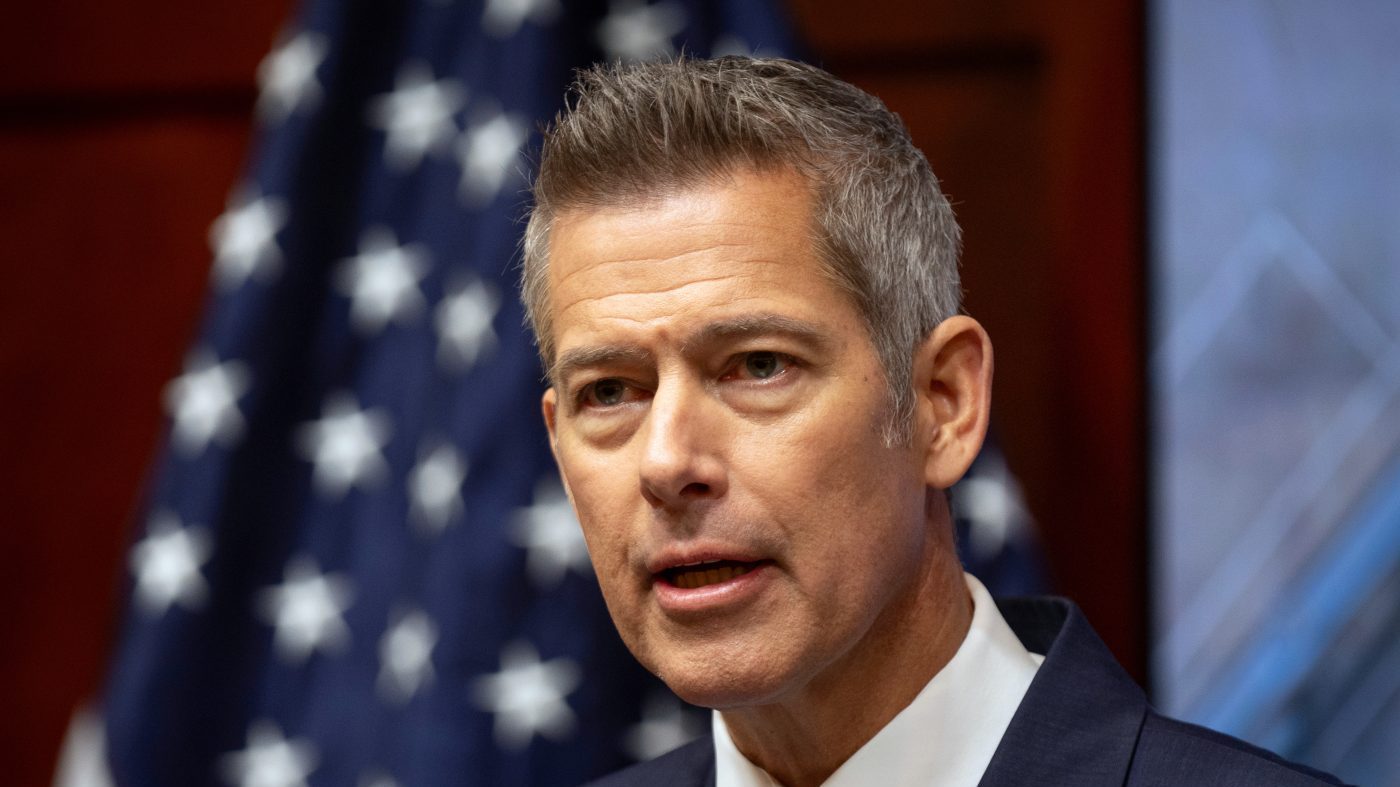
Transportation Secretary Sean Duffy is set to deliver remarks Monday as the Federal Aviation Administration (FAA) introduces a new artificial intelligence tool designed to help air traffic controllers manage congestion and reduce flight delays. The announcement comes amid a broader push by the Trump administration to modernize the nation's aviation infrastructure.
The new system, called the Strategic Management of Airspace, Routes, and Trajectories (SMART) program, will use AI to analyze air travel patterns, airport capacity, and weather conditions in real time. According to the Department of Transportation, the rollout will begin at Reagan Washington National, Dulles International, and Baltimore-Washington International airports, marking a significant step in the FAA's adoption of advanced technology.
Duffy has previously downplayed concerns that AI could replace human air traffic controllers, emphasizing that the technology is meant to assist, not supplant, the workforce. His remarks on Monday are expected to reinforce that message as the FAA navigates a delicate balance between innovation and public trust.
The press conference is scheduled to begin at 12:30 p.m. EDT, and will be streamed live for viewers. The event comes as the FAA faces increasing pressure to modernize its systems, particularly after a series of high-profile near-misses and operational challenges in recent years.
AI in aviation has been a topic of intense debate, with some experts warning about the risks of relying too heavily on automation. However, the SMART program is designed to provide controllers with better data and predictive analytics, potentially allowing them to make more informed decisions and improve overall efficiency.
The rollout at the three airports is part of a pilot phase, with the potential for wider implementation if the program proves successful. The Transportation Department has not yet provided a timeline for expansion, but officials have signaled that the technology could eventually be deployed at other major hubs across the country.
This initiative aligns with broader federal efforts to modernize infrastructure, though it also raises questions about the future of the air traffic control workforce. Duffy's comments on Monday are likely to be closely watched by both industry stakeholders and labor unions representing controllers.
As the FAA integrates AI into its operations, the agency will need to address concerns about data privacy, system reliability, and the potential for unintended consequences. The live remarks will offer a glimpse into how the administration plans to navigate these challenges.
For now, travelers at the three airports may begin to see the effects of the new system in the coming months, as the FAA works to streamline operations and reduce delays. The success of the pilot could shape the future of air travel in the United States.