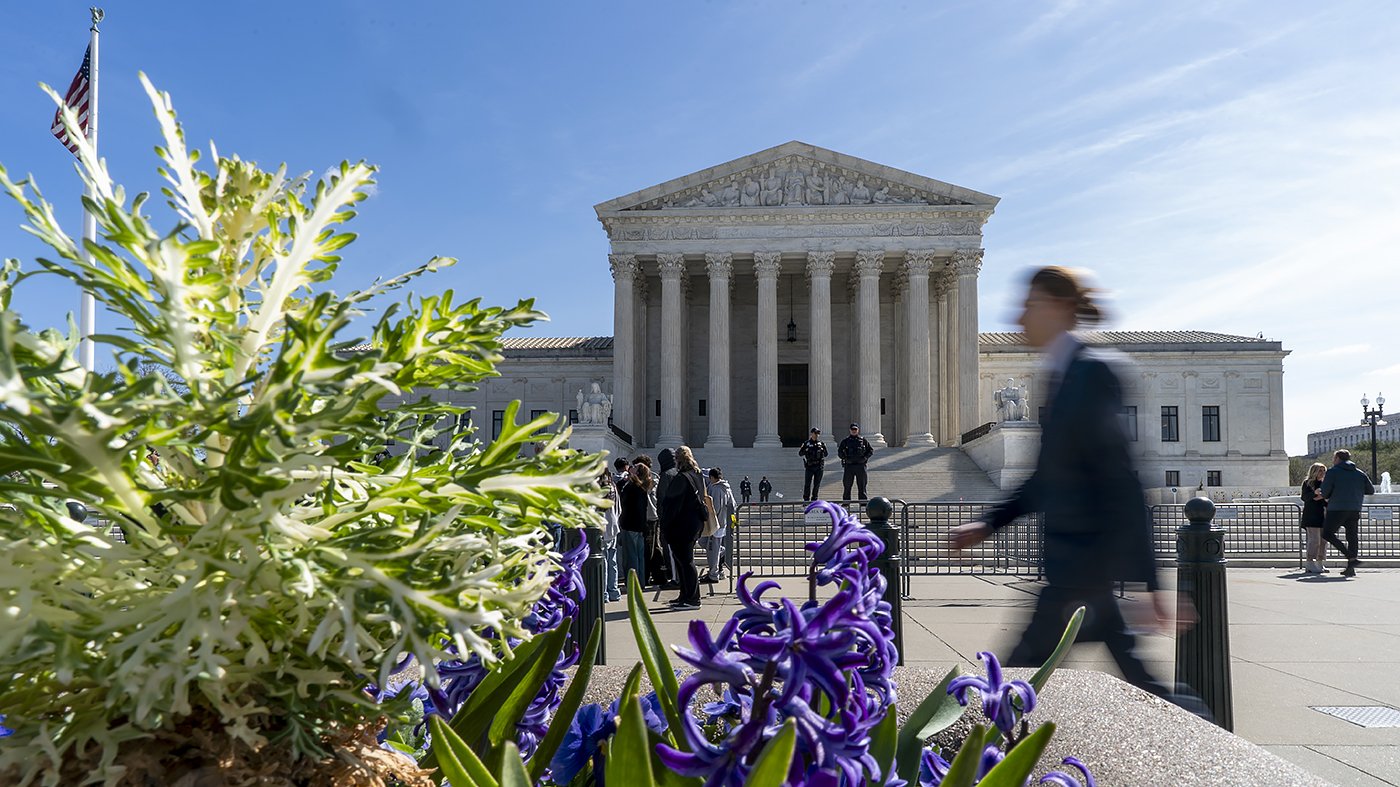
The Supreme Court on Tuesday wrestled with a fundamental question of immigration law: when exactly does an asylum-seeker "arrive" in the United States? The case centers on "metering," a border management practice where officials prevent migrants from approaching ports of entry, effectively turning them back while they remain on Mexican soil. The policy, first implemented under President Obama in 2016, was formalized by the Trump administration and rescinded by President Biden in 2021. The current administration, however, is asking the Court to affirm its legal authority to potentially reinstate the practice.
The Core Legal Dispute
At the heart of the oral arguments was the interpretation of two words in federal statute: "arrives in." The law grants noncitizens who "arrive in" the United States the right to apply for asylum. The government contends that migrants prevented from crossing the border threshold under metering have not technically arrived, thus forfeiting that statutory right. Several conservative justices appeared sympathetic to this textual argument, grappling with where to draw a logical line if physical crossing isn't required.

Justice Neil Gorsuch pressed the challengers' attorney, Kelsi Corkran of Georgetown Law's Institute for Constitutional Advocacy and Protection, on the absurdity of an overly broad definition. "So anybody at the water's edge of the Rio Grande on the Mexican side has 'arrived in'?" he asked. When Corkran clarified the international border runs through the middle of the river, Gorsuch continued, "OK, so they've got one step short of halfway through, they've arrived. But somebody who's on the water's edge has not arrived?" Chief Justice John Roberts similarly questioned whether someone at the very back of a long line at a port of entry could claim to have arrived.
Liberal Skepticism and Procedural Doubts
The court's liberal justices expressed frustration with the metaphysical debate over physical proximity. Justice Sonia Sotomayor dismissed the search for a "magical" body part, asking why a foot crossing counts but a hand or nose does not. Justice Ketanji Brown Jackson raised a more fundamental procedural issue, repeatedly suggesting the Court should dismiss the case as moot since no active metering policy currently exists. "I don't understand what we are doing other than advising the government in sort of the abstract as to whether or not this kind of thing is lawful," Jackson stated. "We don't have an actual policy." Her position did not appear to gain immediate traction with the full bench.
The case, brought by the immigrant rights group Al Otro Lado and thirteen asylum-seekers, argues that metering unlawfully allows the government to evade mandatory inspection and processing duties Congress established. "For decades, port officers followed the statutory procedures designated by Congress for inspecting and processing arriving asylum-seekers," Corkran told the justices. "It was not until 2016 that the government asserted for the first time that it can wholly avoid these mandatory duties simply by blocking asylum-seekers just as they are about to step over the port threshold."
Broader Political Context
The legal battle unfolds against a charged political backdrop. The policy has drawn support from Republican senators including Ted Cruz and Josh Hawley, who filed a brief arguing that ending metering under Biden led to a "chaotic humanitarian disaster" at the border. Conversely, the challenge is backed by dozens of Democratic lawmakers, the U.S. Conference of Catholic Bishops, and Amnesty International USA. As arguments proceeded inside, faith leaders and advocates held a vigil outside the courthouse.
This case represents another front in the ongoing legal wars over immigration authority, coming as the Supreme Court examines other border asylum policies and the Trump administration reorganizes its homeland security leadership. The government's lawyer, Vivek Suri, told the Court the administration "would like to be able to reinstate metering if and when border conditions justify," while acknowledging he could not predict future conditions or specific responses.
The Court's decision, expected by late June, will clarify the limits of executive authority at the border and define the moment an asylum-seeker's legal protections trigger. It joins a docket heavy with consequential rulings, including cases on election procedures and the scope of qualified immunity for law enforcement. The ruling will directly impact how future administrations—whether continuing current policies or, as some anticipate, pursuing more aggressive immigration enforcement—manage migrant flows at official ports of entry.