While President Trump's proposed 250-foot triumphal arch in Washington has sparked debate, another monument project—the Global War on Terrorism Memorial on the National Mall—has quietly moved forward, and it deserves scrutiny.
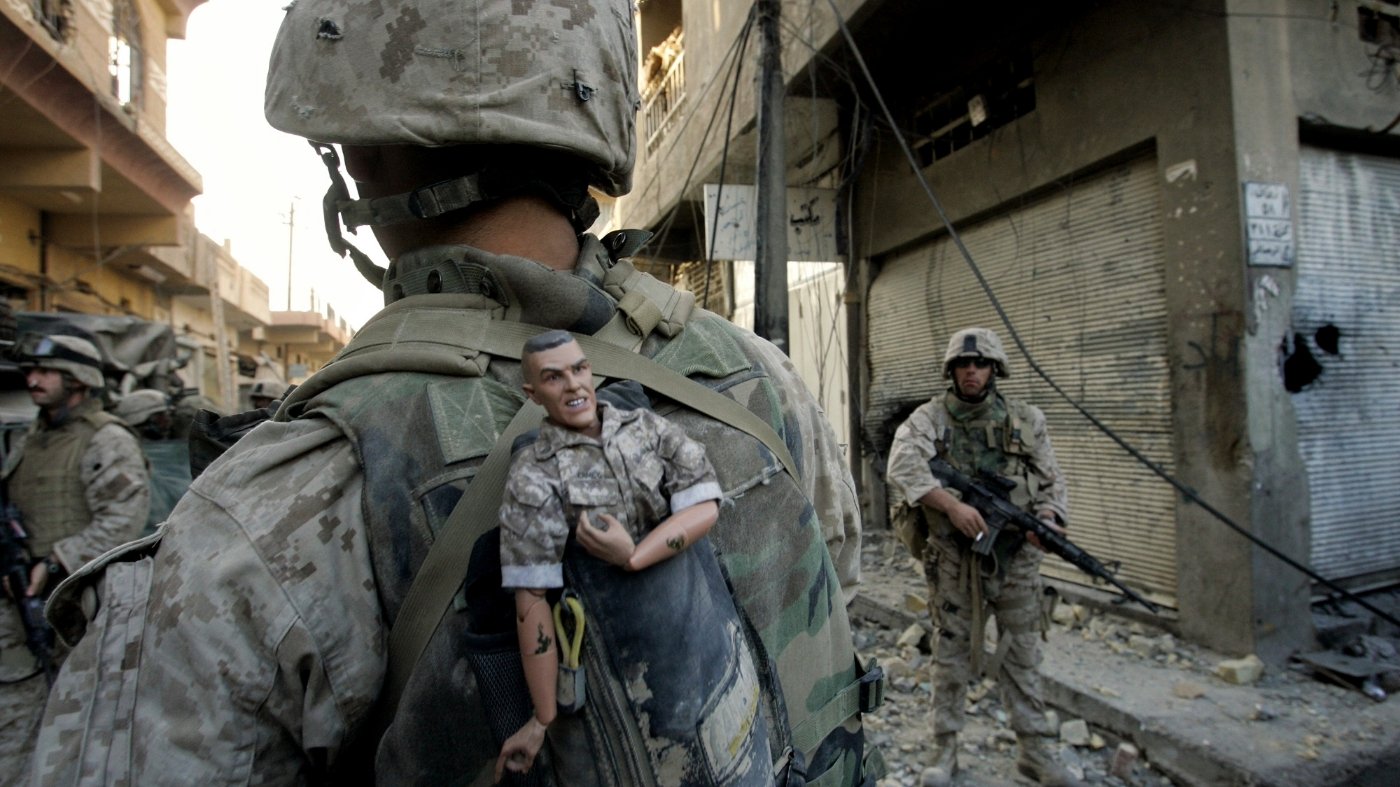
Congress approved the memorial in 2017 and its location in 2021. The design, recently unveiled, is solemn and abstract, reminiscent of the Vietnam Veterans Memorial. It aims to honor the more than 7,000 service members who died in America's post-9/11 conflicts. But beneath its respectful exterior lies a fundamental problem: its name.
The memorial's title is misleading. The majority of U.S. fatalities it commemorates came from the Iraq War (2003-2011). By subsuming that war under the banner of a 'Global War on Terrorism,' the monument permanently enshrines the Bush administration's false justifications for the invasion.
President George W. Bush, the memorial's honorary chairman, popularized the term 'war on terrorism' after 9/11. The phrase was always vague—how do you wage war on a tactic?—but the 2001 invasion of Afghanistan was widely seen as a legitimate response to al-Qaida's attacks. The Taliban harbored Osama bin Laden. The connection was clear.
But in 2002, the administration shifted focus to Iraq. The link between Saddam Hussein and terrorism was tenuous at best. Bush and officials insinuated, and sometimes flatly stated, that Iraq cooperated with al-Qaida. Polls at the time showed roughly half of Americans believed Saddam was involved in 9/11. He was not. Iraq had no weapons of mass destruction, no role in the attacks, and posed no imminent threat. The case for war relied on faulty intelligence, including from a defector known as 'Curveball.'
The war's consequences were devastating. Instead of making America safer, it fueled instability, gave rise to ISIS, and, as the Army's own study concluded, left Iran as the 'only victor.' The conflict killed over 4,000 U.S. service members and likely more than 100,000 Iraqi civilians.
By naming the memorial after the 'Global War on Terrorism,' it implicitly validates the administration's narrative—that the Iraq War was a justified act of self-defense. That is a falsehood. Those who served are not responsible for the war's origins; they deserve a place to mourn. But a memorial built on a misleading premise risks perpetuating the illusions that lead to future conflicts.
This is not just about semantics. Memorials shape how we remember history. A monument that obscures the truth does a disservice to the fallen and the nation. As Gregory Brazeal, a former Army major and author of a book on Iraq War narratives, argues, such a memorial could 'reproduce illusions that make future wars, future sacrifices, and future memorials more likely.'
The planners have an opportunity to correct course. They could rename the memorial to accurately reflect the wars it honors, or add context that acknowledges the controversy. Without that, the monument will stand as a permanent echo of a discredited policy—a tribute not to the troops, but to the flawed decisions that sent them into harm's way.