For years, U.S. intelligence and policy circles have characterized Iran as a patient, revisionist power—a regime steadily expanding its influence across the Middle East through proxy forces, asymmetric pressure, and ideological resolve. But that assessment may be dangerously outdated. A growing body of evidence suggests that Tehran's conduct is increasingly driven by desperation, not confidence, and Washington's failure to adjust its lens could lead to serious miscalculations.
Governments under sustained internal and external pressure often become more coercive, less predictable, and more willing to take risks. If the United States continues to view Iran as a stable strategic rival rather than an insecure regime focused on survival, it risks misreading the threat in ways that carry real consequences—especially in the volatile Persian Gulf and broader Middle East.
Signs of Vulnerability in the Persian Gulf
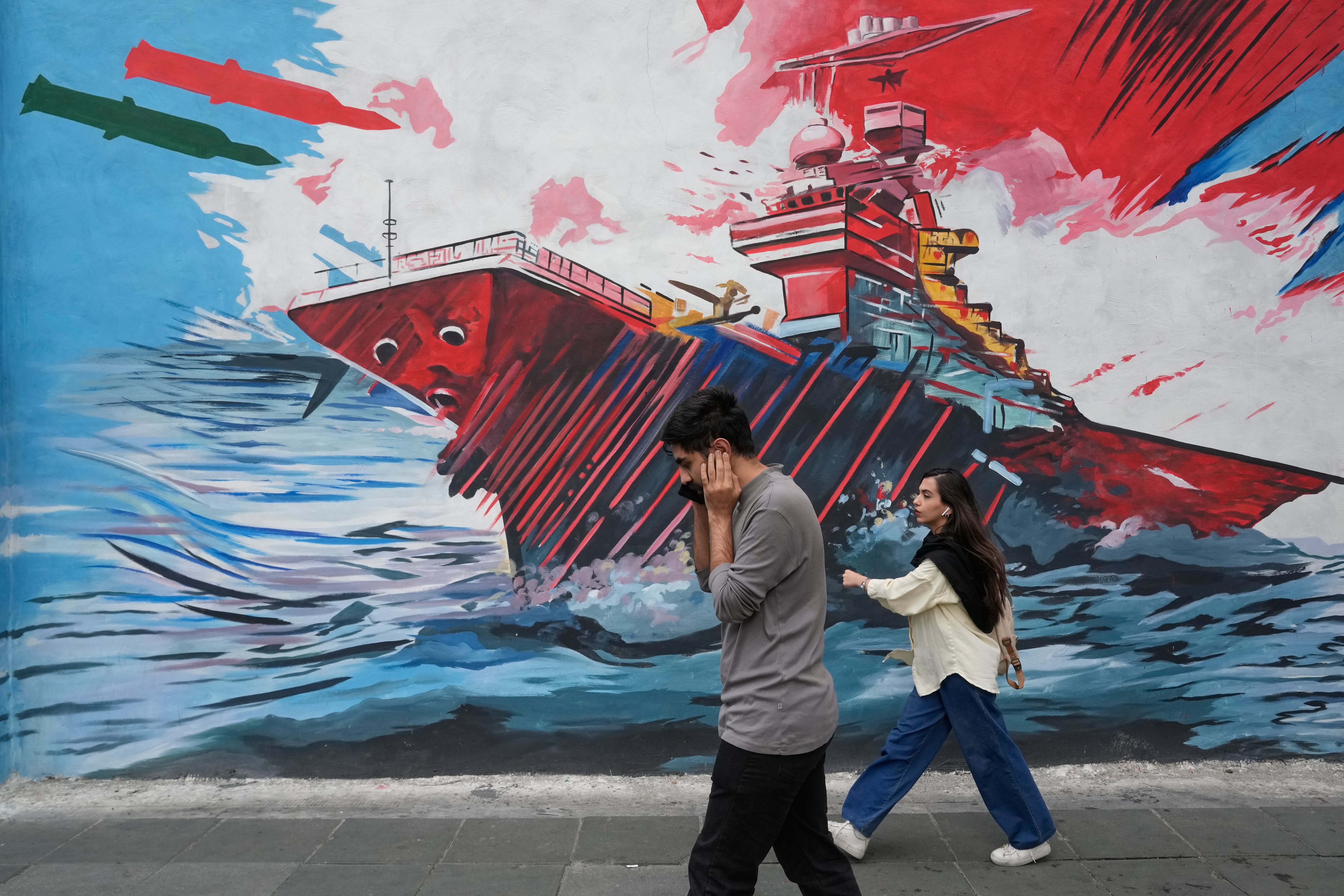
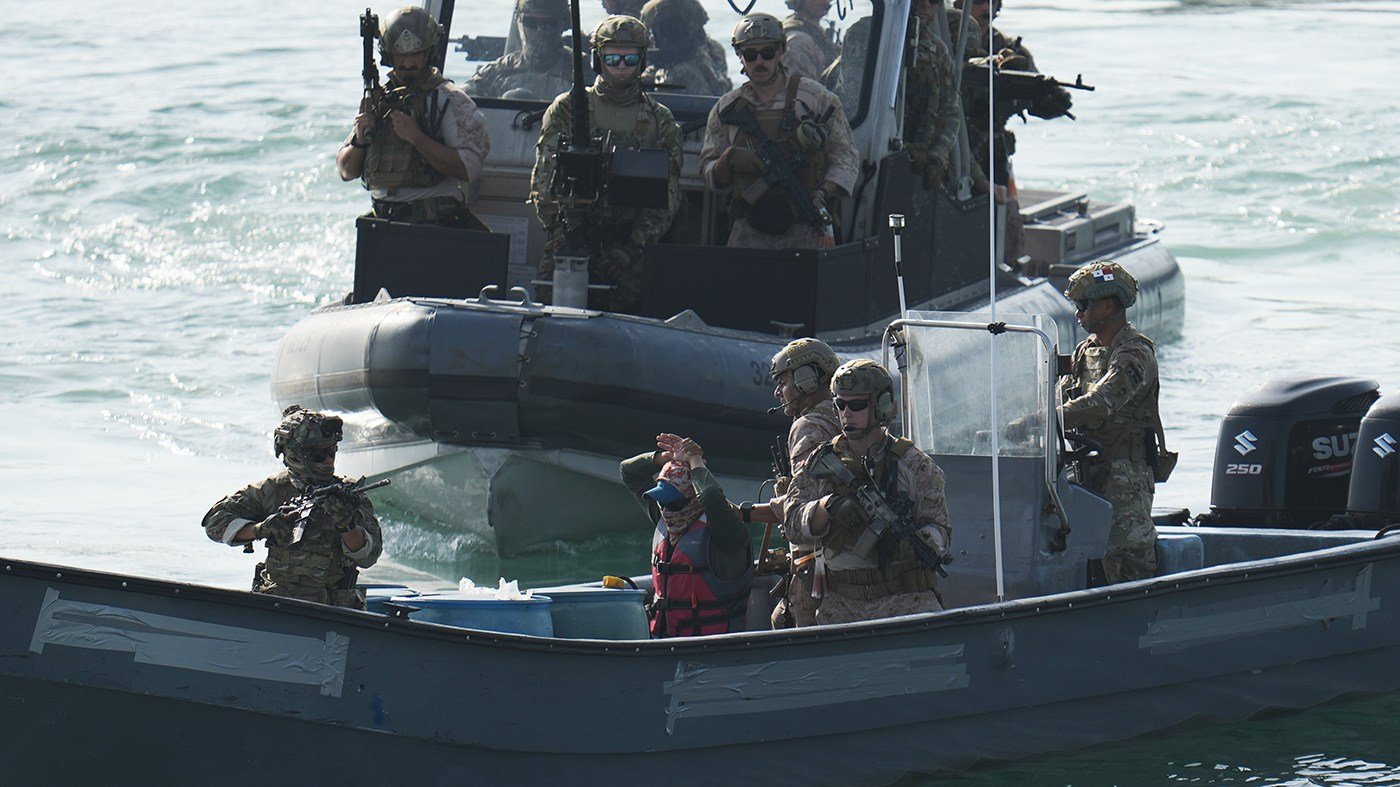
Recent Iranian behavior across the Persian Gulf, Iraq, Lebanon, and beyond points to a leadership preoccupied with preserving control at home and deterring pressure abroad. Tehran still presents itself as a revolutionary power capable of shaping the region, but many of its choices today resemble actions of a state trying to manage vulnerability, not project strength. This is particularly evident in the Strait of Hormuz, where Iranian officials frame maritime disruptions as security or regulatory measures, but the practical effect is familiar: coercion through instability. Tehran creates risk, then positions itself as one of the few actors able to contain it, relying on intimidation, legal ambiguity, and psychological pressure to raise the costs of confrontation for global markets and governments alike.
Iran also avoids direct conventional confrontation with the U.S. whenever possible, instead employing calibrated ambiguity—proxy pressure, maritime disruption, cyber activity, and regional intimidation—to impose costs while staying below the threshold of open war. These tools can be effective, but their growing centrality may reveal constraint as much as confidence. Tehran increasingly behaves like a government trying to compensate for structural weakness through asymmetric disruption.
Economic Strain and Shifting Alliances
The same pattern appears in Iran's economy, now under severe strain from sanctions, inflation, corruption, capital flight, and long-term mismanagement. Tehran's deeper reliance on China, Russia, and alternative trade routes through Iraq, Pakistan, and Asian logistical networks is often framed domestically as proof of resilience. More often, it reflects a narrowing of options. Economies dependent on sanctions evasion, opaque financial systems, and regional smuggling networks are rarely strategically healthy. This is especially striking for a regime whose foreign policy has long been built on the slogan 'Neither East nor West.' Today, Iran depends heavily on Eastern powers for economic breathing room, diplomatic cover, and strategic coordination. China and Russia may help reduce its isolation, but neither can solve the Islamic Republic's underlying domestic problems or restore its declining legitimacy at home. For more on regional dynamics, see our analysis of how Gulf monarchies are quietly rethinking their alliances with Washington.
Domestic Pressures and Proxy Dependence
Those pressures are visible inside Iran as well. The government continues to face public frustration and social exhaustion after years of economic deterioration, political repression, and recurring unrest. Iranian officials still frame hardship and repression as part of a broader national struggle against foreign pressure, but that narrative is wearing thin, particularly among younger generations increasingly disconnected from the state's ideological foundations. The Islamic Republic also relies heavily on regional proxy groups, including Hezbollah, Hamas, and the Houthis, which provide strategic depth and asymmetric deterrence. Tehran understands that losing influence across the region could shift political and security pressure back toward the Iranian interior. This creates a central contradiction: the regime portrays itself as a guarantor of stability while simultaneously supporting armed actors that many neighboring states view as destabilizing. From Tehran's perspective, these policies are defensive and necessary for regime preservation. From Washington's perspective, they increase volatility, deepen mistrust, and raise the risk of regional miscalculation. For context on how these tensions play out in U.S. politics, see our coverage of Democrats nearing a war powers win as GOP defections mount on Iran conflict.
A Brittle Regime, Not a Confident One
At home, the regime retains substantial coercive power through the Islamic Revolutionary Guard Corps, intelligence services, and broader security institutions. It can suppress dissent, control information, and preserve order. But its growing dependence on censorship, surveillance, intimidation, internet restrictions, and repression suggests a leadership more concerned with preventing internal erosion than projecting confidence abroad. Authoritarian systems do not collapse simply because they are unpopular or economically strained. They can survive for years under pressure, especially when they retain strong security institutions and invoke external threats to justify extraordinary measures. But that kind of survival can also make them more brittle—and more dangerous. States that feel cornered often become more willing to create instability for others in order to preserve themselves.
The current ruling system in Tehran increasingly prioritizes regime preservation over national stability, even at the risk of deeper internal destruction and regional escalation. Understanding the ideological and security logic driving that behavior is essential for American policymakers seeking to avoid miscalculation. As the U.S. navigates this complex landscape, it must also consider how its own actions—such as Trump's Germany troop withdrawal, which experts warn risks undermining U.S. power—can affect the balance of power in the region.