Democratic lawmakers are closing in on a legislative victory to curb President Trump's military campaign against Iran, as a small but growing faction of Republicans breaks ranks to support War Powers resolutions in both chambers.
In the House and Senate this past week, resolutions filed under the 1973 War Powers Act drew cross-party support, bringing the measures closer to passage than ever before. The latest House vote on Thursday ended in a 212-212 tie, failing under chamber rules, but three Republicans—Reps. Thomas Massie of Kentucky, Brian Fitzpatrick of Pennsylvania, and Tom Barrett of Michigan—voted with Democrats. One Democrat, Rep. Jared Golden of Maine, opposed the measure, but he has signaled he will back the next version.
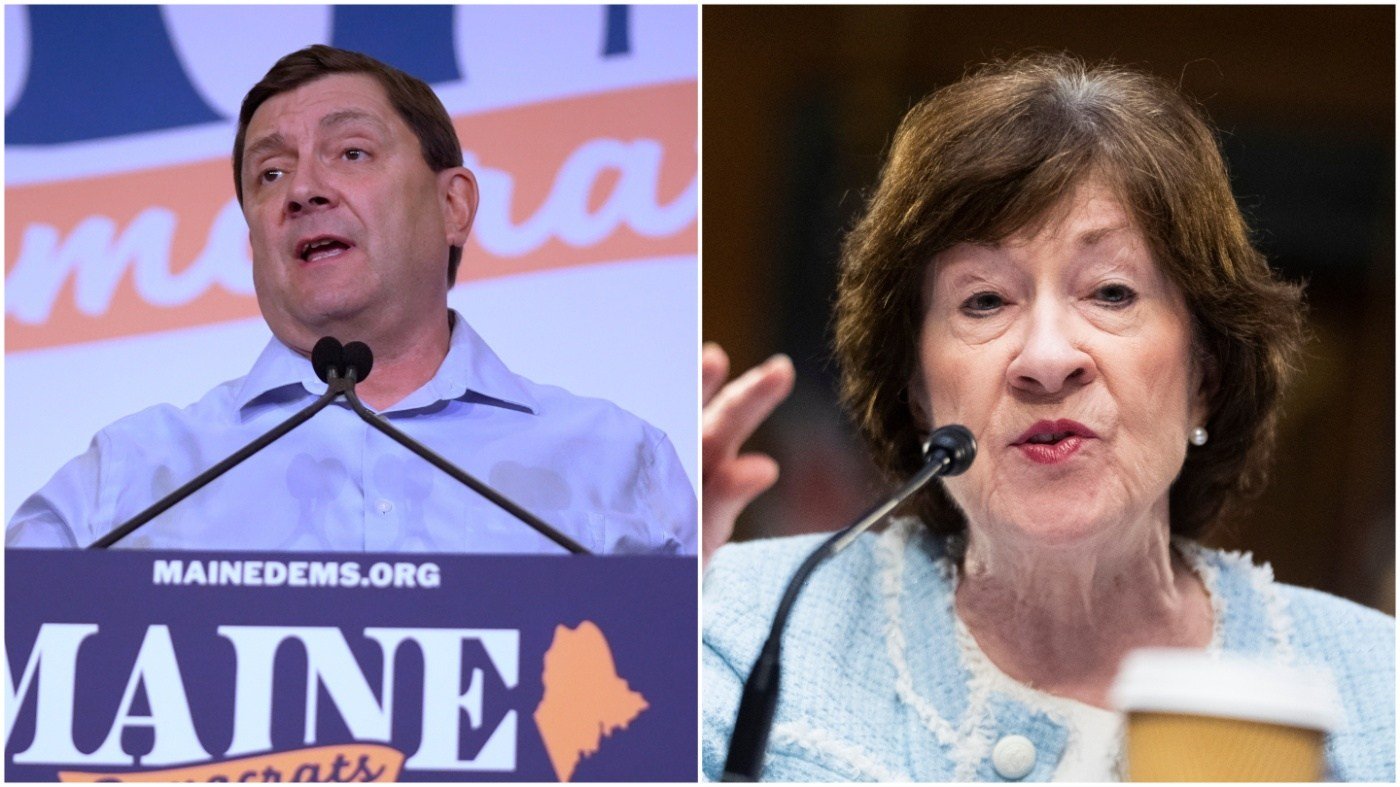
Golden, a former Marine who served in Iraq and Afghanistan, said he only rejected the previous resolution because its withdrawal deadline had already expired. “I look forward to voting for a clean, relevant resolution as soon as possible,” he said in a statement Wednesday.
The Senate saw its closest vote yet on Wednesday, with a motion to discharge a war powers resolution from the Foreign Relations Committee failing 49-50. Sen. Lisa Murkowski of Alaska voted in favor for the first time, joining fellow Republicans Susan Collins of Maine and Rand Paul of Kentucky, alongside nearly every Democrat. Sen. John Fetterman of Pennsylvania was the only Democrat to cross the aisle in opposition.
The growing GOP unease stems from mounting frustration with the administration's unclear strategy and the economic toll of the conflict. The war, which began on Feb. 28, has cost an estimated $29 billion, and the closure of the Strait of Hormuz by Iran has driven up fuel prices for constituents. At recent appropriations hearings, Defense Secretary Pete Hegseth faced pointed questions from both parties about the endgame. “It seems to me that there’s been a different plan, almost daily, with dealing with this problem,” Collins said of efforts to reopen the critical shipping lane.
Several Republican senators who have voiced concerns about the need for congressional authorization beyond the 60-day War Powers limit still voted no this week, including Sens. John Curtis of Utah, Thom Tillis of North Carolina, Josh Hawley of Missouri, and Todd Young of Indiana. Curtis has said he will not support any supplemental funding for the war without explicit congressional approval. Tillis told NBC News in late April that continuing the conflict past 60 days would be “difficult” given the lack of clear strategic objectives.
The 60-day clock under the War Powers Resolution began on March 2, when Trump notified Congress of the use of force. Democrats argue it expired on May 1. Hegseth has countered that the clock stopped when Trump announced a ceasefire in April, a claim the administration may have to defend in court if Congress passes a resolution. Both Trump and Secretary of State Marco Rubio have argued the War Powers Act is unconstitutional, setting the stage for a potential legal showdown.
Absences have also played a role in the tight votes. Rep. Frederica Wilson of Florida, a Democrat, has been out since April 17 after eye surgery but plans to return soon. Rep. Tom Kean Jr. of New Jersey, a Republican, has been absent since March 5 due to a personal medical issue. With Kean out, Republicans can afford no more than two defections on party-line votes.
Sen. Tim Kaine of Virginia, a lead sponsor of the Senate resolution, expressed optimism ahead of Wednesday’s vote. “We know what our colleagues are hearing,” he said. “We’re starting to hear doubt creep into their words.” If just one more Republican switches, the measure could pass, marking a major bipartisan rebuke of Trump's war authority. GOP lawmakers are increasingly defying Trump as election pressures mount, and this vote could be a key test of that trend.