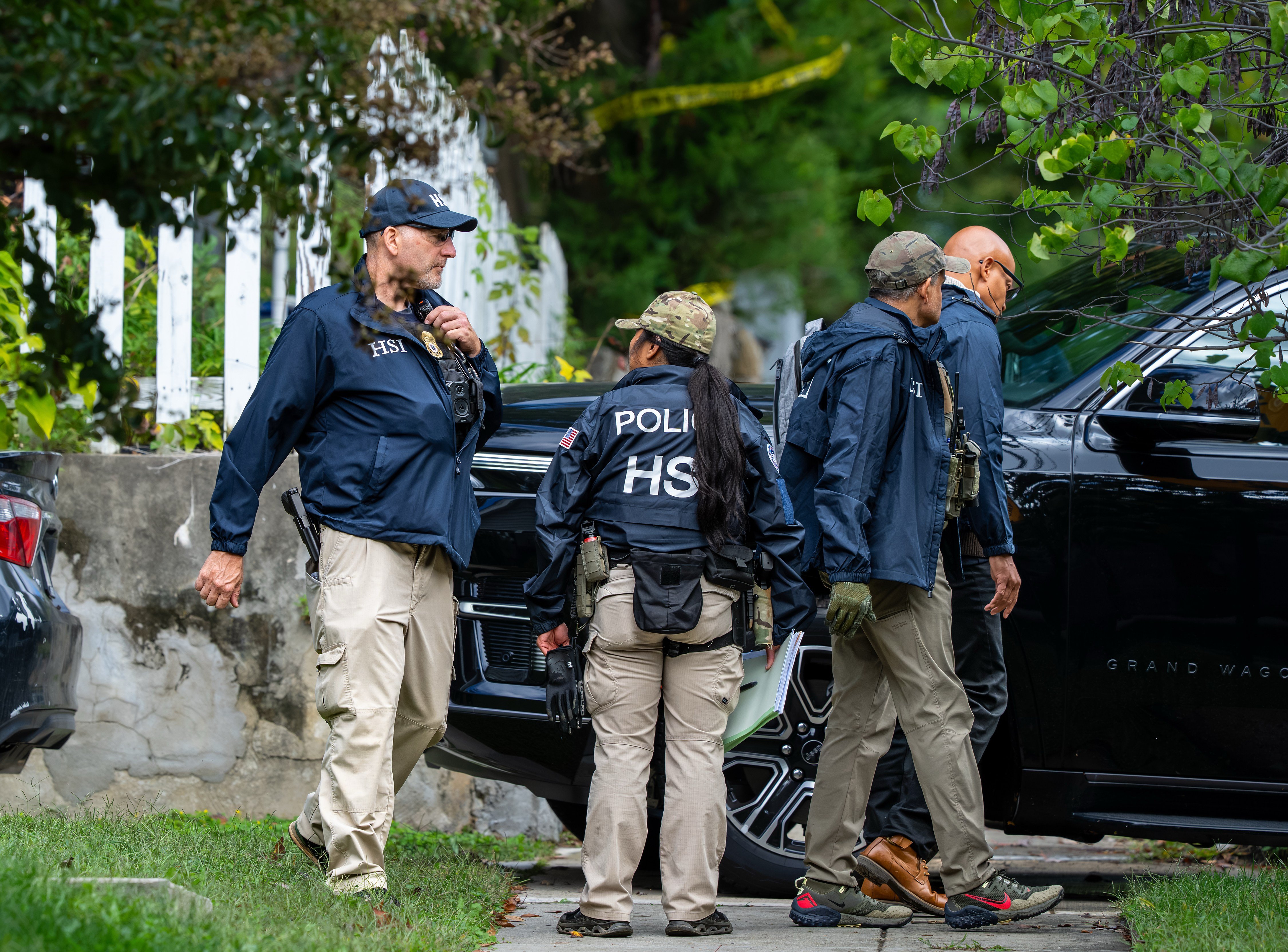
The House Judiciary Committee's Republican majority released a staff report on Oct. 9 detailing how Denver's sheriff allegedly ignored U.S. Immigration and Customs Enforcement detainers this year for individuals charged with serious crimes, including felony assault with a deadly weapon and sexual assault on a child. The report names Fernando Barrios-Ramirez, a Venezuelan national accused of sexual assault on a child and kidnapping, though he is presumed innocent. The report is a partisan document offering allegations without a victim count or judicial review.
The central question remains: Why would any jail release a foreign national with an immigration detainer facing such charges without a clean handoff to federal agents? Congress has already examined Fairfax and Arlington counties in Virginia, and now it has turned its attention to Denver and Boulder. This pattern suggests a recurring issue across blue jurisdictions with similar policies and defenses.

Elected sheriffs and prosecutors owe their primary duty to the residents who put them in office, argues the report. When a policy protects accused violent offenders from a federal handoff, officials should either defend that policy publicly with data or change it. A sheriff is not a trustee in the legal sense, but the principle applies. Marcus Aurelius wrote, "That which is not good for the swarm, neither is it good for the bee." Sanctuary politics protect one bee at the swarm's expense.
A detainer is a request from ICE, not a judge's order. Colorado law prohibits local officers from holding someone solely on an ICE detainer, so sheriffs citing the law have a point. The real fight, therefore, is over the handoff. On Feb. 28, 2025, Denver gave ICE about 60 minutes' notice before releasing Abraham Gonzalez Romero, an alleged member of the Venezuelan Tren de Aragua prison gang. Mayor Mike Johnston later testified that six ICE agents arrived to pick him up. Federal prosecutors say that as the Venezuelan national left the jail, he jumped a handrail and ran into an officer, causing both to fall. Gonzalez was charged with assaulting a federal officer; he is presumed innocent.
Rep. Jim Jordan (R-Ohio) asked why Denver had not released Gonzalez directly to ICE. He argued for a mandatory 48 hours' notice when defendants with ICE detainers are released. That is a fair request, as an arrest inside a secure jail is safer for the public than a foot chase on a public sidewalk.
The prosecutor's office is the second mole. The report says a 2019 Denver policy directs prosecutors to mitigate immigration consequences, even in violent felony cases, and that District Attorney John Walsh has continued weighing those consequences. The committee's complaint is that citizens charged with the same crime do not get plea deals shaped by their risk of deportation. Equal justice under law is supposed to mean something, and it isn't that government discriminates against citizens in favor of illegal aliens.
Boulder District Attorney Michael Dougherty, who is running for attorney general, calls the report "a political stunt." Jordan retorts that Dougherty has produced no documentation to back up his side. Louis Brandeis wrote that sunlight is the best disinfectant. If these policies protect public safety, then Dougherty should post the charging guidelines, the detainer log, the release times, and an account of what happened to each person after release.
Walsh warns that mandatory reporting would erode trust between immigrant communities and police, which matters when victims and witnesses decide whether to call. The trust concern is real for a domestic violence victim dialing 911. But it doesn't reach a jail cell, because a suspect charged with a violent felony is not a witness. A March 2025 Pew Research Center survey found that 97 percent of Democrats who favor some but not all deportations support removing illegal aliens who have committed violent crimes.
Courts won't settle this. DeShaney v. Winnebago County held in 1989 that a state's failure to protect someone from private violence does not violate the Due Process Clause. Imbler v. Pachtman gave prosecutors absolute immunity from federal civil-rights damages suits in 1976. That leaves the ballot box and Congress.
Colorado voters get the first swing on Nov. 3. Amendment 81 would require law enforcement to notify the Department of Homeland Security within 72 hours of charging someone with a violent crime, or someone with a prior felony conviction, if the person is in the country illegally or his or her status cannot be determined. It requires 55 percent to pass. The League of Women Voters opposes it over the presumption of innocence and the risk of error.
Congress can also act. It can move on the Shut Down Sanctuary Policies Act, which the Judiciary Committee passed on March 5. It would allow victims of those released by sanctuary jurisdictions to sue for damages. Federal officials can meet Colorado's law halfway, because the state limits honoring detainers unless federal officials present a judge-signed warrant or order. Seek a judge's signature in every violent case and press for 48 hours notice instead of 60 minutes.
Sanctuary officials have spent years explaining whom their policies protect. The accused, they say, are safe and welcome. Fine, but residents would like to hear who is looking after them. Congress will keep swinging at moles, because the holes are endless. The lasting fix belongs to the voters who hire these officials, and Colorado's turn comes Nov. 3.
For more on related immigration enforcement and legal challenges, see the DOJ's immigration caseload surge and Boulder's climate lawsuit.