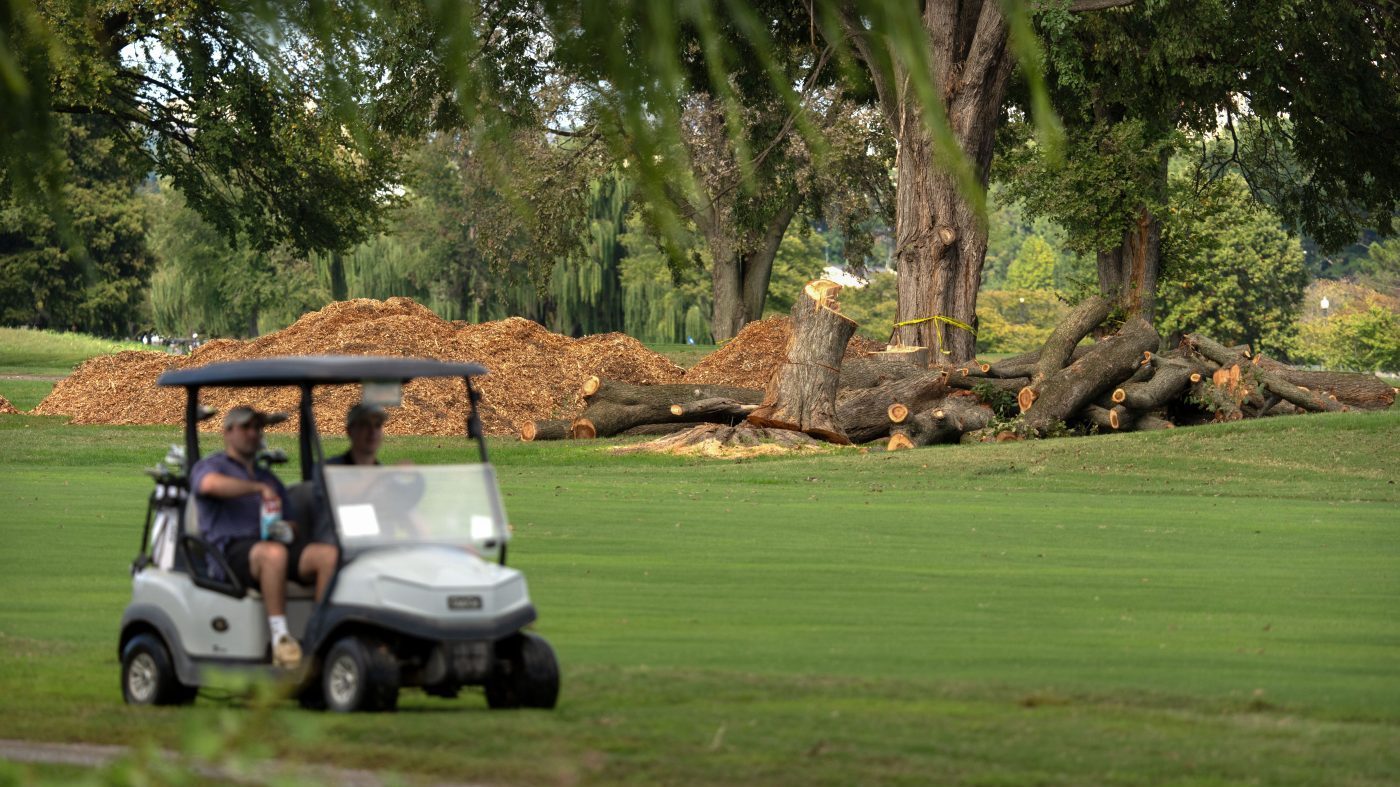
A federal judge on Tuesday ordered the Trump administration to immediately stop all work at East Potomac Park, the site of the public East Potomac Golf Links, after hundreds of trees were felled over the weekend in apparent violation of a prior court order. The ruling comes as a lawsuit seeks to block the president's ambitious redevelopment of the property.
U.S. District Judge Ana Reyes issued the temporary halt, prohibiting any further tree removal or landscaping until at least Oct. 28. The order stems from a lawsuit filed by preservationist groups, who argue the administration is reshaping public lands to suit the president's personal interests. Reyes noted that the weekend's tree cutting breached an earlier directive requiring the Department of Interior and the National Parks Service to notify the court and the plaintiffs before proceeding with any additional work.
The property, long cherished by locals and tourists for its affordable golf courses, walking trails, and open gathering spaces, has been a target of President Trump's redevelopment ambitions. Earlier this year, the National Links Trust—the nonprofit that has managed the courses since the COVID-19 pandemic—announced a deal with the administration for a major renovation overseen by the Interior Department.
Trump has enlisted the help of renowned golf course architect Tom Fazio's firm to transform East Potomac into an 18-hole championship-level facility, capable of hosting professional tournaments and even future Ryder Cups. The president has touted the project as a way to elevate the public course's status, but critics see it as an overreach that prioritizes elite golf over community needs.
East Potomac is widely recognized as a model for affordable public golf, particularly for junior and beginner players. Its reputation as an accessible venue stands in stark contrast to the high-end vision Trump has proposed, raising questions about access and affordability if the renovation proceeds.
The lawsuit, which seeks to permanently block the project, is scheduled for its next hearing on Monday. In the meantime, the court's order leaves the future of the park in limbo, with both sides preparing for a legal battle over the scope of executive authority on public lands.
This is not the first time the Trump administration has faced legal pushback over its handling of federal properties. In related moves, the administration has also sought to revisit approvals for offshore wind projects, drawing scrutiny from environmental and legal groups. Meanwhile, a recent poll suggests a majority of Americans believe the president prioritizes wealth over public interests, a sentiment echoed by the plaintiffs in this case.
As the legal proceedings unfold, the East Potomac project remains a flashpoint in the broader debate over public land use and presidential power. The court's decision to halt work—even temporarily—signals that the judiciary is willing to enforce procedural safeguards, at least for now.