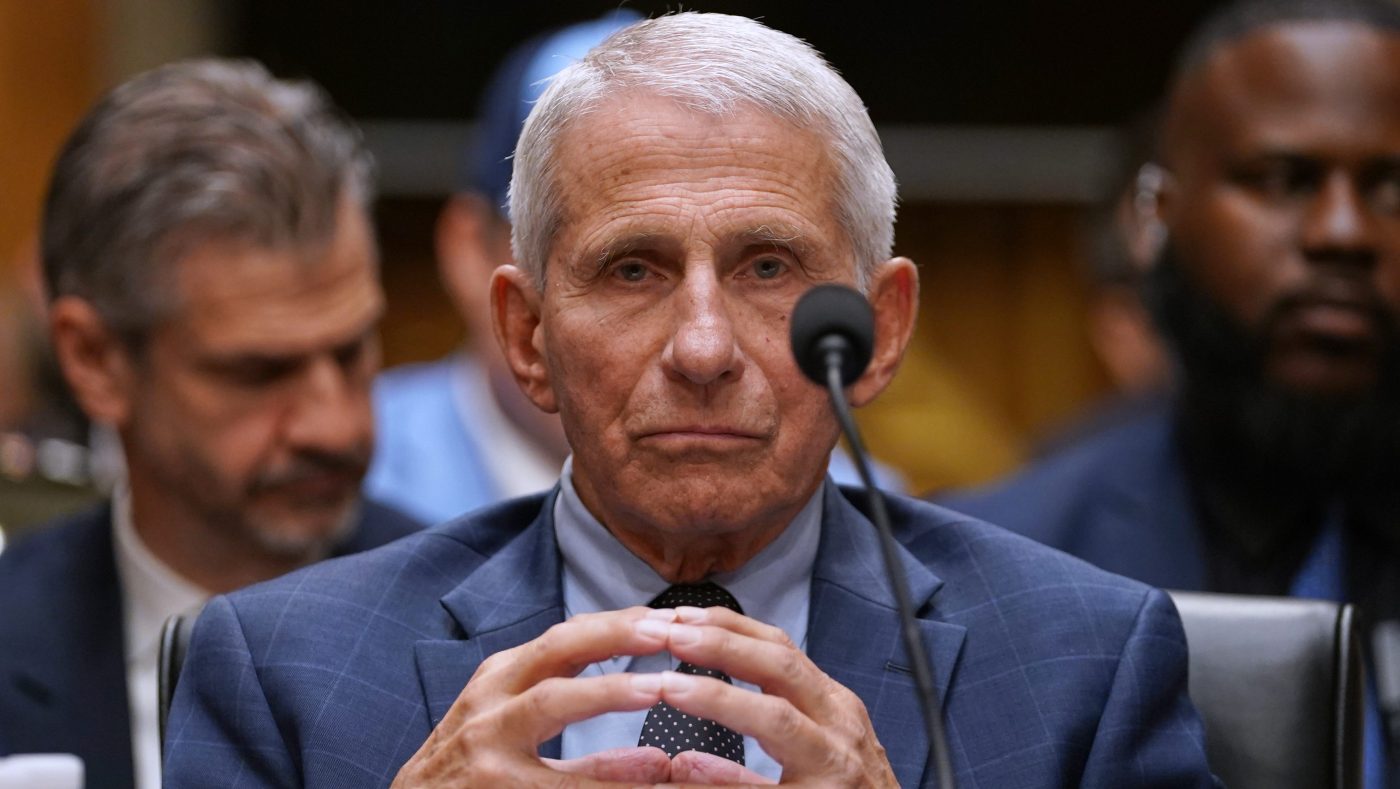
Anthony Fauci, the former director of the National Institute of Allergy and Infectious Diseases, has once again found himself at the center of a political storm. Testifying before a Senate committee this week, Fauci invoked his Fifth Amendment right against self-incrimination more than 100 times, declining to answer questions about his role in the COVID-19 response. The move came despite a preemptive pardon issued by President Biden in 2025, raising questions about what Fauci might be hiding.
Senator Rand Paul, who chaired the hearing, has long accused Fauci of concealing his agency's involvement in gain-of-function research that may have contributed to the origins of the pandemic. Documents obtained through Freedom of Information requests in 2021 showed that NIH funding flowed to EcoHealth Alliance, which then subcontracted to the Wuhan Institute of Virology for bat coronavirus research. Richard Ebright, a Rutgers biologist, noted that these documents contradicted Fauci's public claims that the NIH did not support such research.
Diaries Contradict Public Statements
Fauci's own diaries, published recently, reveal that he privately doubted the official narrative that the virus originated from a wet market in Wuhan. In a January 2020 entry, he wrote, "Now we know the market was not the source, it was the amplifier." Yet he continued to tell the public the opposite for years, even as recently as 2024. This discrepancy has fueled accusations of deliberate deception.
Additionally, Fauci's diaries show he took credit for persuading New York City and California to shut down schools in 2020, despite telling ABC News in 2022 that he had nothing to do with school closures. These revelations have intensified criticism from Republicans and vaccine skeptics, who argue that Fauci's actions caused immense harm to millions of young people and small businesses.
Political Reactions and Defense
The fallout from Fauci's testimony has deepened the partisan divide. Senator Paul has suggested a contempt vote, while Florida's attorney general has launched a probe. Meanwhile, some Democrats, like James Carville, have dismissed the diary release as pointless and defended Fauci's pandemic response. The defense of Fauci by some pundits contrasts sharply with conservative criticism.
Fauci's diaries also reveal a preoccupation with his own celebrity, with entries boasting about his fame and mentions of being invited to "Dancing with the Stars." This self-absorption, critics say, overshadowed his public health duties. Even today, liberal media outlets like The Washington Post have been accused of downplaying Fauci's deceptions, focusing instead on his clashes with former President Trump. Fauci's Fifth Amendment gambit has only sharpened these divisions.
Broader Implications
The controversy extends beyond Fauci himself. Former CDC official Deborah Birx noted that public anger over the COVID response persists, and the anger among the public shows no signs of abating. Meanwhile, Fauci's defenders point to his long career in public service and the challenges of managing an unprecedented pandemic. But for many, the diaries and his silence in court have sealed his legacy as a figure who prioritized his own image over transparency.
As the political and legal battles continue, the question remains: what was Fauci so afraid of revealing? With a pardon already in place, his refusal to testify suggests that the truth might be more damaging than any legal consequence. The Republican scrutiny of Fauci shows no signs of letting up, and the issue is likely to remain a flashpoint in American politics for the foreseeable future.