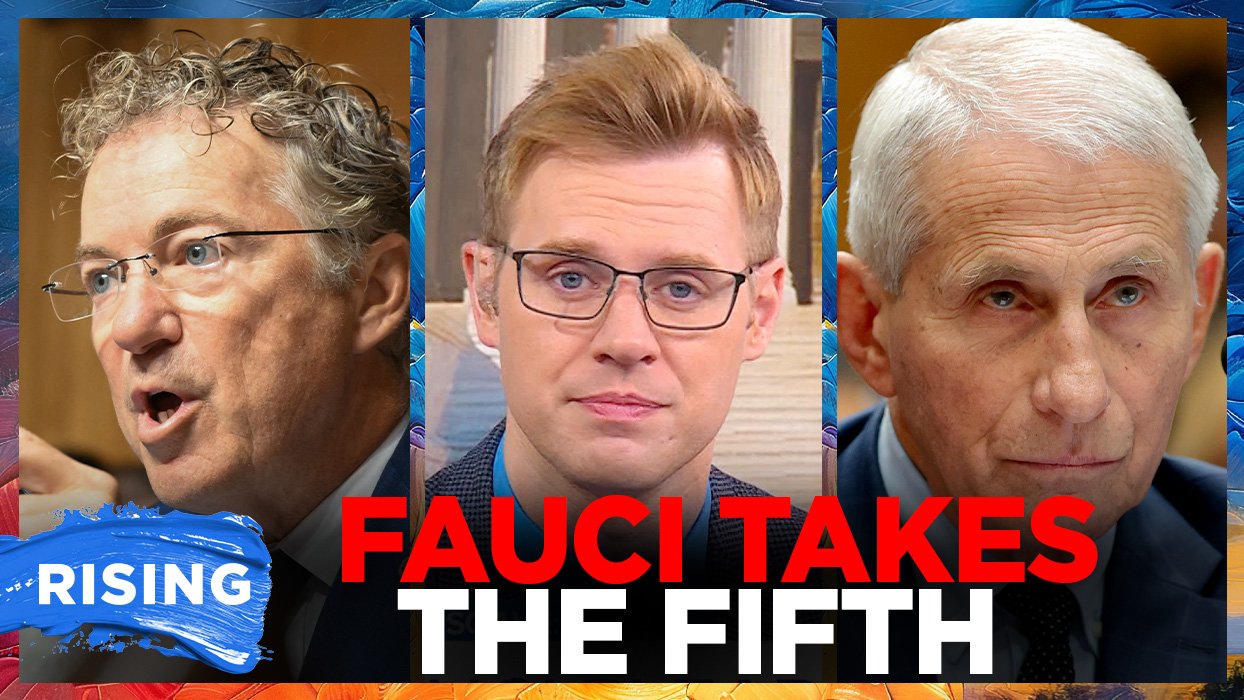
Dr. Anthony Fauci's appearance before Congress on Tuesday was a masterclass in political theater and legal strategy. The former top infectious disease official invoked the Fifth Amendment 111 times, refusing to answer any questions from lawmakers, including a pointed inquiry from Senator Rand Paul (R-KY) about the origins of COVID-19 and the federal pandemic response. The move effectively shut down the hearing but opened a new front in the ongoing battle over his legacy.
Senator Paul, who has long sought to hold Fauci accountable, immediately questioned whether the Fifth Amendment plea was valid given that President Joe Biden had issued Fauci a blanket pardon earlier this year. Paul hinted at a potential contempt vote, arguing that a pardon eliminates the legal basis for refusing to testify. The clash sets up a constitutional standoff that could test the limits of executive clemency and legislative oversight.
The partisan divide was on full display. While Republicans painted Fauci as a figure who evaded accountability, Democrats rushed to his defense. Senator Dick Durbin (D-IL) called Fauci “a deeply caring physician, a brilliant scientist, an extraordinary public servant, a humanitarian, and a patriot,” and dismissed the hearing as a circus of “bogus conspiracy theories.” Activist Harry Sisson echoed the sentiment on social media, calling Fauci “an American hero.”
At the heart of the dispute is the question of COVID-19's origins. Fauci has long promoted the theory that the virus emerged from a wet market in Wuhan, China, a position critics say he pushed to deflect blame from his own role in funding gain-of-function research at the Wuhan Institute of Virology. The original article argued that this is not a conspiracy theory but a legitimate scientific debate that Fauci and his allies have suppressed.
Beyond origins, the article took aim at Fauci's pandemic guidance itself. It pointed to a natural social experiment that unfolded in the summer of 2020, when red states began to diverge from Fauci's recommendations on lockdowns, mask mandates, and social distancing, while blue states followed them closely. According to the analysis, there was little difference in overall mortality between the two groups during that period. Only after vaccines became available did a divergence emerge—and that was driven by vaccination rates among vulnerable populations, not by adherence to Fauci's earlier policies.
“Mask mandates. Social distancing. School closures. Lockdowns,” the article stated. “States that took a pass on all of that were no worse off than states that followed Fauci’s commands.” The piece concluded that this was a “huge indictment” of public health experts and of Fauci himself, who “whispered in the ears of two presidents, encouraging them to violate our liberties in dramatic ways—largely for nothing.”
The hearing has already sparked multiple offshoots. Florida's attorney general has launched a probe into Fauci's conduct, and media figures like Bill O'Reilly have called him a “swamp creature.” Meanwhile, some Democrats, like Senator John Fetterman (D-PA), have criticized Fauci's ego but argued that the GOP's grilling went too far. The coming weeks will likely see a push for a contempt vote and further legal battles over the scope of the pardon.