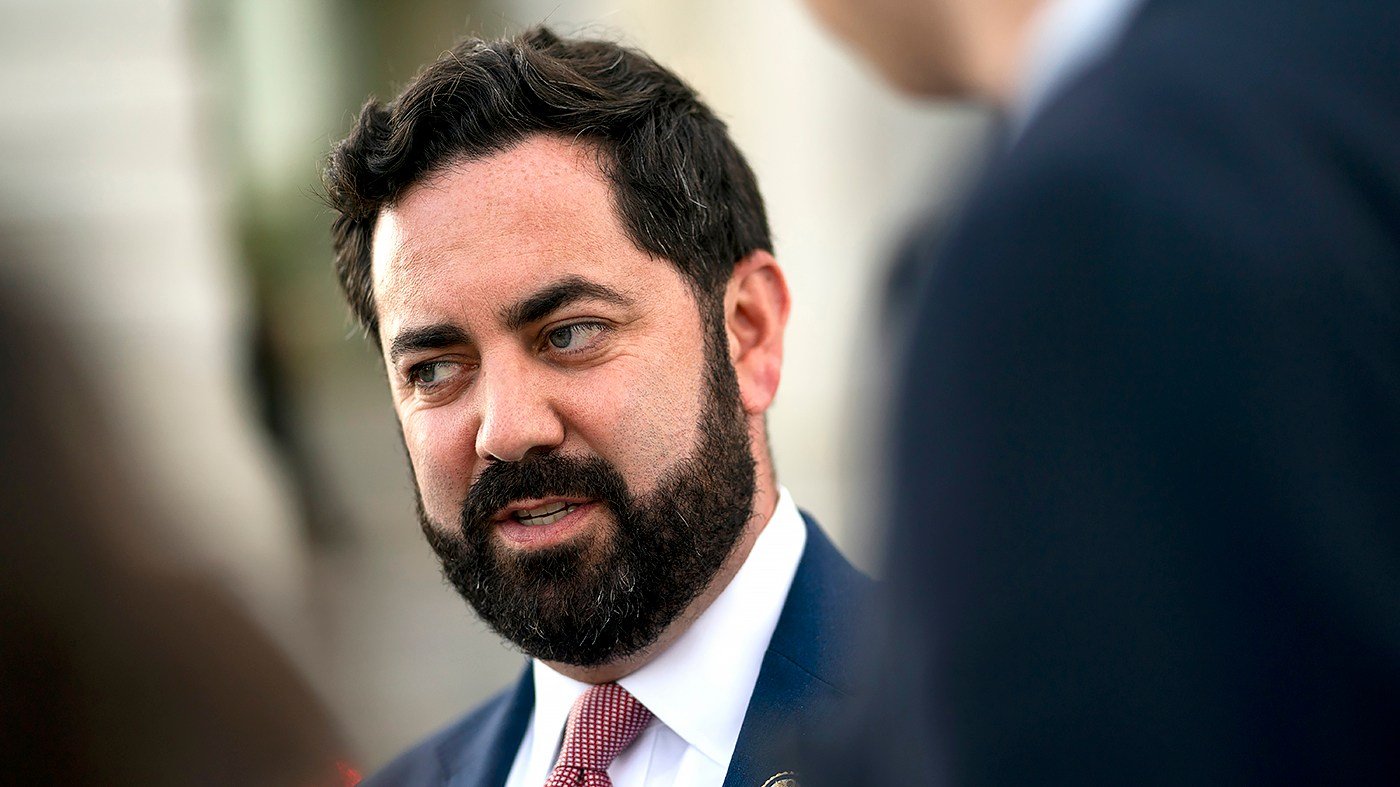
Rep. Mike Lawler (R-N.Y.) added his voice Sunday to a growing chorus of Republican lawmakers expressing fiscal concerns about President Trump's proposal to distribute $5,000 to every American adult.
During an interview on ABC's "This Week," Lawler initially sidestepped a direct answer on whether he backs the president's dividend plan, instead emphasizing his broader support for returning money to taxpayers. "I support putting money back in the pockets of hard-working Americans," he told host George Stephanopoulos, citing his backing of the One Big Beautiful Bill Act, which raised the state and local tax deduction cap from $10,000 to $40,000.
Trump unveiled the dividend pledge Wednesday at the GOP's midterm convention in Dallas, promising to send $5,000 to roughly 270 million U.S. adults if Republicans maintain their slim congressional majorities. He said recipients could only spend the funds domestically but offered no further details on funding or implementation.
Pressed on the proposal's viability, Lawler pointed to past stimulus checks issued during the COVID-19 pandemic under both Trump and former President Biden. "The question is, how do you pay for it? How do you be able to pass the legislation to put more money back in the pockets of hard-working Americans? That's the objective," he said.
The New York Republican later underscored the urgency of fiscal discipline, noting the nation's $40 trillion debt. "Whether you call it a stimulus check or a dividend, the question is, how do you pay for it? That's my focus," he said. "We have a $40 trillion debt and we have to be serious about tackling that."
Lawler's hesitation mirrors skepticism from other GOP members. Outgoing Rep. Chip Roy (R-Texas) has argued such payments would foster government "dependency," which he called evil. Several other Republicans have also voiced doubts, as similar concerns emerged during a Kansas Senate debate.
Administration officials have floated alternative funding sources. Vice President Vance suggested on Fox News's "Hannity" that tariff revenue could finance the program, while Commerce Secretary Howard Lutnick told NBC News that taxpayer money would not be used. Lutnick pointed to the yet-to-be-launched Trump Platinum Card for immigrants as a potential funding stream. "Together we're going to deliver that plan and we're going to pay that money to the Americans, and not from taxpayer money," he said.
The proposal has also ignited broader debates over spending priorities, with some lawmakers urging caution amid economic headwinds before the midterms. Lawler's comments highlight the tension between Trump's populist appeal and Republican fiscal conservatism, a dynamic that could shape the party's legislative agenda.