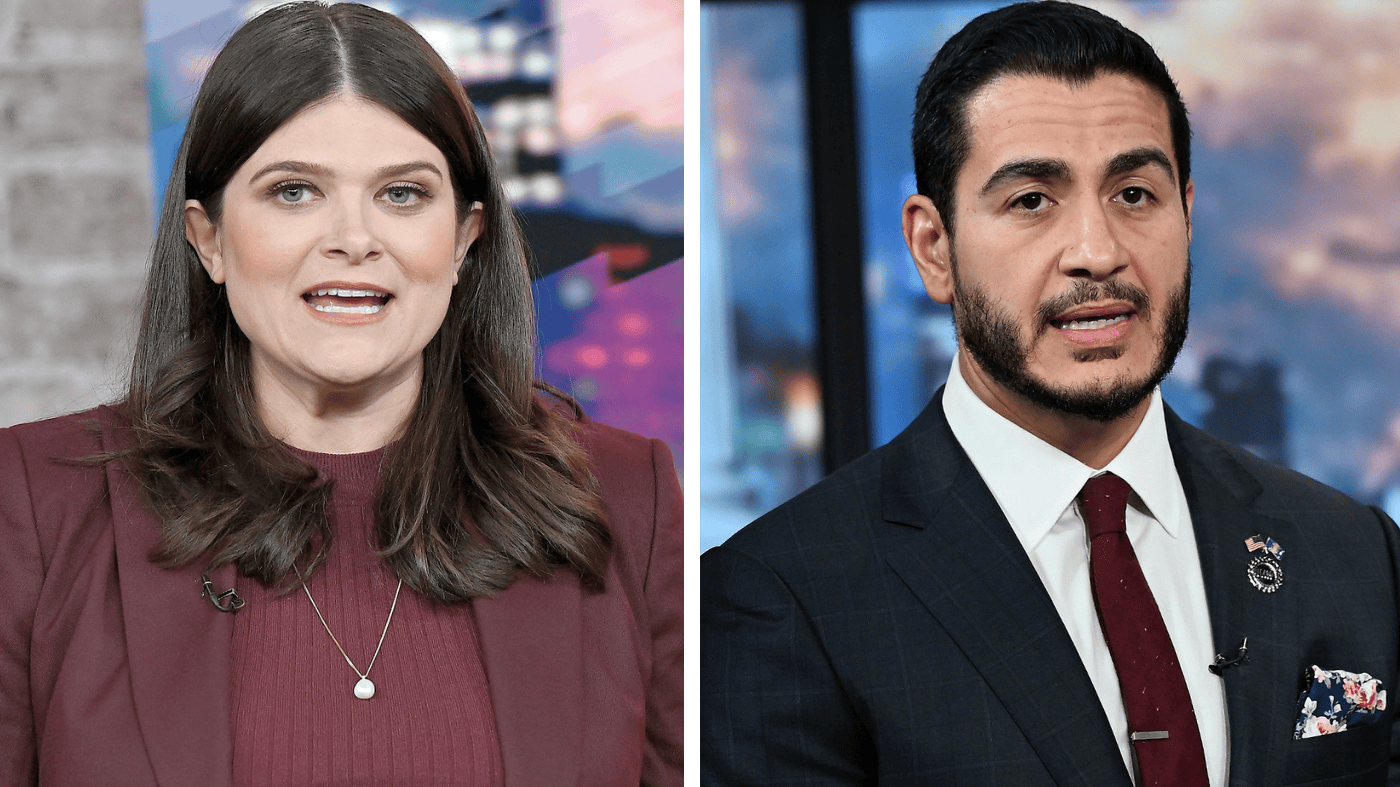
Michigan Senate candidate Abdul El-Sayed on Wednesday dismissed the decision by his former primary opponent's fiancé to back his Republican rival, framing the race as a battle for Senate control and a check on President Trump.
Speaking at a campaign event, El-Sayed said he is focused on building a broad coalition to counter the administration's agenda, adding that individual endorsements are less important than the larger mission. "Well, I'm building a movement to take on the challenges that Donald Trump is facing. If folks have issues that are more important to them than that, that's fine," he said. "That's their choice. But to me, this election is about control of the United States Senate."
The Democrat, who defeated Rep. Haley Stevens (D-Mich.) in the August primary, stressed that the race is about "putting a check on" the president and "addressing his effort to try and take away everything from religious freedom to our voting rights to union rights to healthcare." He welcomed "a big tent of folks to come together around the effort to push back on Trump."
El-Sayed's comments came after Jason Turkish, Stevens's fiancé, told The Detroit News that the candidate has used antisemitic language and acted "recklessly toward the safety of Jews in the community." Turkish's endorsement of former Rep. Mike Rogers (R-Mich.) adds a personal twist to a race already marked by tensions within the Democratic ranks.
Stevens has publicly backed El-Sayed since losing the primary but has not campaigned with him recently. When pressed on CNN this week, she stopped short of a full-throated endorsement, saying, "Look, I'm on the Democratic ticket. You know, I can't say that I agree with everything that's gone on. I wish that first debate had been more about you know that rubber stamp for Trump because we got a lot of chaos in Michigan."
The race to replace retiring Sen. Gary Peters (D-Mich.) is rated a "toss up" by The Cook Political Report. Decision Desk HQ, The Hill's partner, currently gives El-Sayed a 69 percent chance of winning, compared to Rogers's 31 percent.
El-Sayed's campaign has sought to unify Democrats while fending off attacks from the right. The rivalry with Rogers has intensified in recent weeks, with both camps trading barbs over endorsements and messaging. The Democratic nominee has also faced scrutiny over his rhetoric on Israel, which some critics, including fellow Democrats, have called divisive.
Republicans, including JD Vance, who has campaigned in Michigan, are hoping to flip the seat as part of a broader push to retake the Senate. Meanwhile, Trump's attacks on El-Sayed may be a double-edged sword in a state with a significant Arab American population.
El-Sayed remained optimistic about his ability to bring people together despite the endorsement dust-up. "There are always going to be some folks who have different opinions, and they're welcome to that. That's the beauty of democracy," he said.