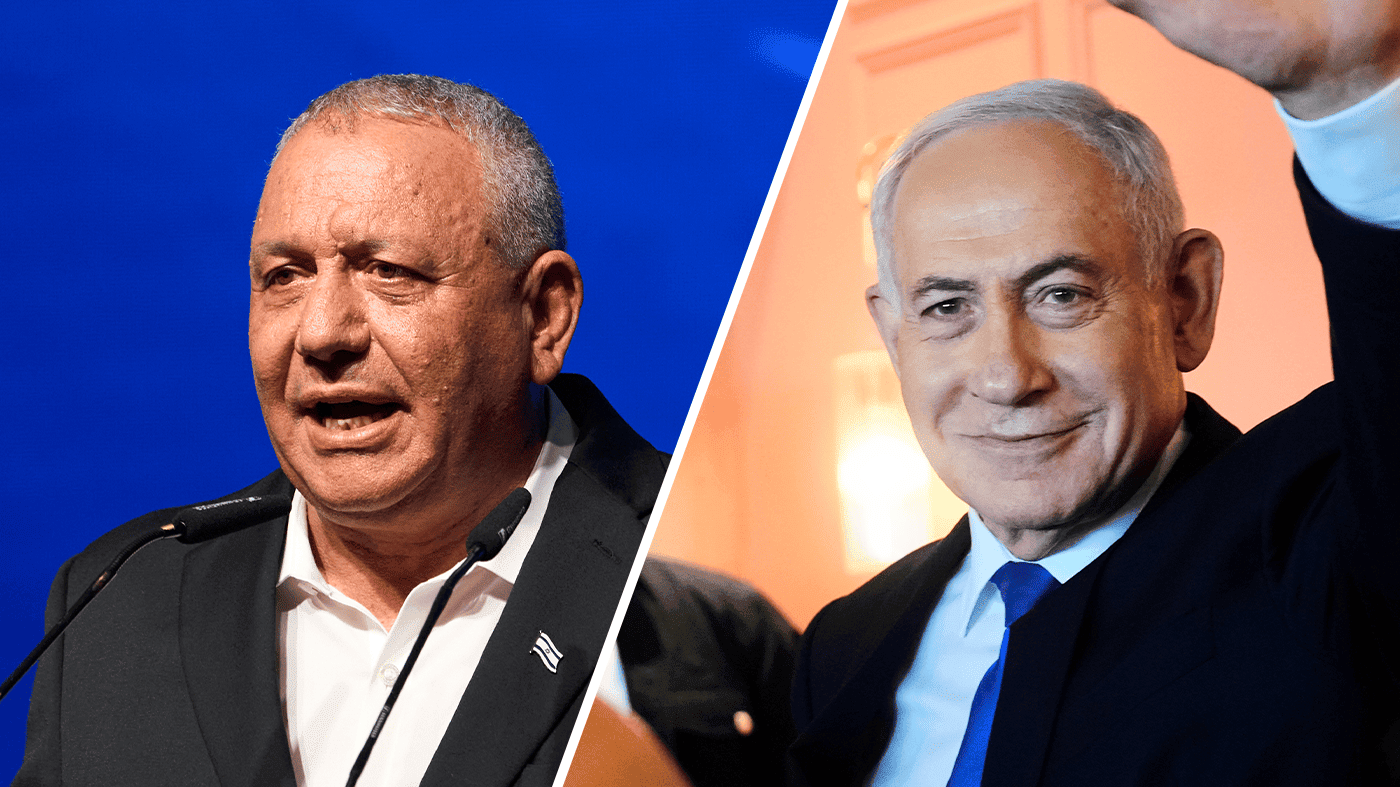
As Israel heads into a pivotal election, former military chief Gadi Eisenkot is positioning himself as the primary challenger to Prime Minister Benjamin Netanyahu. With voters increasingly frustrated with the current government's handling of security and governance, Eisenkot is leveraging his four-decade military career and a message of accountability to appeal to a public still reeling from the October 7, 2023 attacks.
Eisenkot, who served 41 years in the Israel Defense Forces before becoming its chief of staff, has been sharply critical of Netanyahu's leadership. In a recent interview with The Times of Israel, he labeled the prime minister an “anti-leader” and warned that another victory for the right-wing coalition would push Israel toward “dark directions” already visible in current policies.

The campaign has been defined by security failures, particularly the attempted hijacking of a Flydubai flight, which Eisenkot called a “massive security failure” that Netanyahu “shamelessly leverages for a photo op.” He has framed the election as a simple choice: “between responsibility and running away from responsibility.”
This is the first election since the Hamas-led attacks on October 7, 2023, which killed about 1,200 people. Netanyahu has faced widespread criticism for the intelligence and military failures that allowed the assault, as well as for his management of the subsequent war with Iran. Eisenkot has promised to establish a “formal state commission of inquiry” into the attacks, a move Netanyahu has reportedly blocked. According to Anadolu, former Israeli intelligence officer Barak Seri accused Netanyahu of having been warned about the attack but “ignored it all.”
Eisenkot joined Netanyahu's emergency war cabinet after the attacks but resigned in 2024, citing the infiltration of “outside considerations and politics” into critical discussions. His personal stake in the conflict is deep: his son and two nephews were killed fighting in Gaza. The Associated Press notes that this gives him a unique credibility with voters who see his family's sacrifice as evidence of his commitment to national security.
On the issue of Palestinian statehood, both candidates oppose it, but Eisenkot has said he would halt Israeli annexation of the West Bank. He argues that imposing full sovereignty over the area, which would bring 2.8 million Palestinians under Israeli control, would endanger the Jewish demographic majority and the Zionist project itself.
Eisenkot's candidacy is historic in another way: if elected, he would be Israel's first prime minister of Mizrahi descent, the Jewish ethnic group with roots in the Middle East and North Africa, which is believed to be the largest such group in the country.
To secure victory, Eisenkot must cobble together a coalition of at least 61 members in the 120-seat Knesset. Current polls suggest that may be difficult, and if he and other candidates fail, President Isaac Herzog could hand the mandate to another lawmaker, who would have 28 days to form a government. Failure would trigger yet another election, prolonging the political uncertainty.
As the race tightens, with record turnout reported and Netanyahu facing a referendum on his leadership, Eisenkot's message of responsibility and his military pedigree may resonate with a public seeking a break from the status quo. The outcome remains uncertain, but the stakes could not be higher for Israel's future.