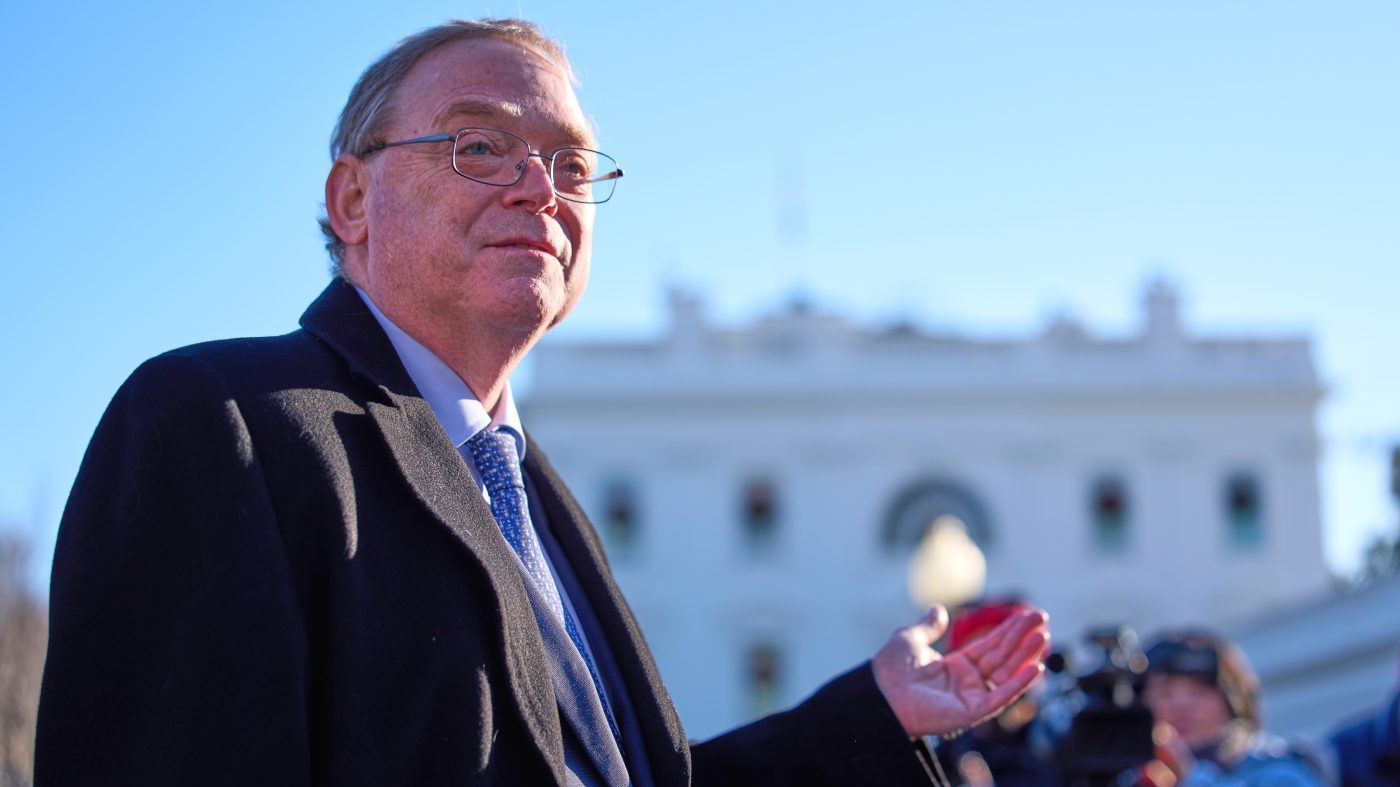
White House economic adviser Kevin Hassett on Sunday sought to temper President Trump's recent threat to halt trade with certain countries unless the Federal Reserve cuts interest rates, suggesting the president's comments were more about pressing his case than an actual policy shift.
"I don't expect the trade's going to go to zero, but I do think that the president has a very strong opinion that interest rates could be a lot lower. And we'll just have to wait and see what the Fed decides," Hassett told CNN's Jake Tapper on "State of the Union."
Hassett, who directs the National Economic Council, was responding to Trump's earlier posts on Truth Social in which the president demanded lower rates and threatened to stop trading with countries running trade surpluses against the United States. "LOWER THE RATE OR I'LL STOP TRADING WITH COUNTRIES WITH WHICH WE HAVE A DEFICIT," Trump wrote, adding that a strong country should command lower borrowing costs.
The president's pressure campaign comes on the heels of a stronger-than-expected August jobs report. The Bureau of Labor Statistics reported that American employers added 162,000 jobs last month, far exceeding the 53,000 that economists had predicted. That resilience in the labor market gives the Fed room to consider rate cuts, but the central bank has so far held rates steady, citing inflation concerns.
Hassett's comments suggest the administration is trying to manage expectations without backing away from Trump's public stance. "The president has a very strong opinion that interest rates could be a lot lower," he reiterated, while signaling that the White House would respect the Fed's independence.
The tension between the White House and the Fed is part of a broader economic landscape marked by rising oil and gas prices linked to the Iran conflict, as well as ongoing trade friction with Canada. Those pressures are weighing on consumer sentiment and could complicate the administration's economic narrative ahead of the midterms.
Republicans are increasingly leaning on Trump to carry them through what could be a difficult election cycle, but economic headwinds are mounting. As GOP strategists note, the party's fortunes may hinge on how voters perceive the economy, and Trump's threats to disrupt trade could add to uncertainty.
Meanwhile, the escalating US-Canada trade dispute has already begun to bite, with tariffs affecting key industries. Hassett's downplaying of Trump's trade threat may be an attempt to reassure markets and allies that the administration's bark is worse than its bite, but the president's history of following through on such threats leaves room for doubt.
For now, the ball is in the Fed's court. The central bank's next policy meeting will be closely watched, and any decision to hold rates steady could reignite Trump's ire. Hassett's remarks suggest the administration is prepared to wait, but the president's own words indicate he is not inclined to patience.