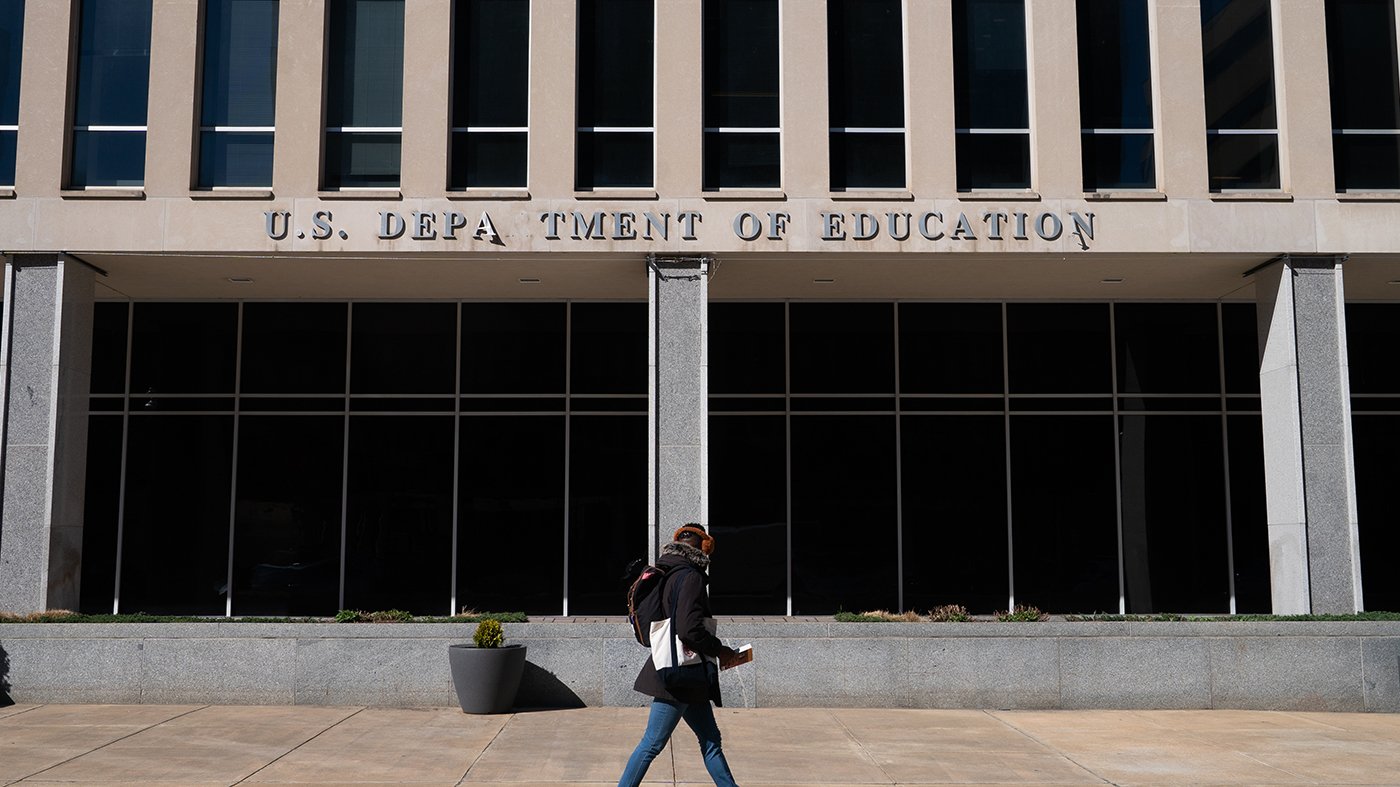
The Trump administration's methodical dismantling of the Department of Education has entered a new phase with the planned closure of the Office of English Language Acquisition (OELA), the federal office responsible for supporting approximately five million English language learners in U.S. schools. This move represents the latest in a series of program eliminations and workforce reductions that have halved the department's staff and scattered its functions across the federal government.
A Diminishing Federal Footprint
According to a February notification to Congress, OELA—which managed nearly $1 billion in Title III funding for language instruction and teacher preparation—will be shuttered. Administration officials frame this as part of a broader philosophy. "The Department of Education is focused on returning education to the states while preserving critical funding and reducing unnecessary bureaucracy," said Kirsten Baesler, assistant secretary for the Office of Elementary and Secondary Education. She argued that integrating English learner support into broader departmental teams "reduces administrative burden and empowers states."

Critics see a catastrophic erosion of federal oversight. "Many students and families across the country will likely suffer many setbacks," said David Hinojosa of the National Center for Youth Law. "No one's there to help provide guidance to those schools that may be intentionally or unintentionally denying access to equal educational opportunities for English learners." The closure follows a year where the department's workforce was slashed from 4,000 to 2,000 employees, affecting enforcement capabilities in offices like the Office for Civil Rights and creating backlogs in cases involving students with disabilities.
The Scattering of Federal Education Functions
The administration's strategy extends beyond simple cuts. Key programs are being transferred to other agencies through interagency agreements. The massive federal student loan portfolio is moving to the Treasury Department, while other education functions have been shifted to the State Department, the Department of Health and Human Services, the Interior Department, and the Labor Department. This fragmentation complicates oversight and service delivery, creating what opponents describe as intentional chaos.
Legal challenges are underway, but the administration continues to execute its plan pending judicial review. "As it's getting broken, it will be harder to rebuild," said Rachel Homer, director of Democracy 2025 and a senior attorney at Democracy Forward, which is involved in litigation against the department. "We are really seeing the impact on states, on schools, on teachers, on students... and it's going to be harder to put back together again." She noted that even a favorable court ruling wouldn't automatically reverse all changes, leaving the specifics of any potential restoration "to be determined."
The Long Road to Restoration
For department employees and advocates, the prospect of rebuilding grows more daunting. "I do think we can and will rebuild, but the how-long or how, I think that's something that a lot of people are trying to figure out right now," said Rachel Gittleman, president of the AFGE Local 252 union representing department employees. The systematic nature of the dismantling—closing offices, firing personnel, and transferring programs—creates significant institutional memory loss and logistical hurdles for any future administration seeking to restore the department's traditional role.
A critical constraint on the administration is that permanent elimination of the department or its core functions would require congressional approval, an unlikely prospect given current political divisions. Consequently, all changes have been implemented at the executive level, meaning a future president could theoretically reverse them. However, the scale of the disruption suggests any restoration would be a massive, multi-year undertaking. This pattern of executive action to reshape agencies is not isolated; similar high-stakes reorganizations are occurring elsewhere, such as when the White House budget chief warned the Homeland Security Department was nearing collapse due to funding and structural pressures.
Broader Implications for Federal Policy
The effort to dismantle the Education Department reflects a fundamental debate over the federal role in education, paralleling conflicts in other policy areas where the administration is testing the limits of executive authority. These include contentious legal battles over social media and emerging technology, where a recent legal precedent on social media harm has prompted calls for an AI moratorium in education. The administration's approach also echoes in other departmental shake-ups, like the controversial plan to renominate ousted FEMA official Cameron Hamilton to lead the agency.
Ultimately, the closure of OELA is more than a bureaucratic reorganization; it is a political statement with immediate consequences for vulnerable student populations. As the department's infrastructure is systematically taken apart, the question for policymakers, educators, and advocates is not just whether it can be rebuilt, but what will be lost in the interim and how the nation's education system will function with a dramatically diminished federal partner. The coming months will test both the legal limits of the administration's strategy and the resilience of the federal education framework itself.