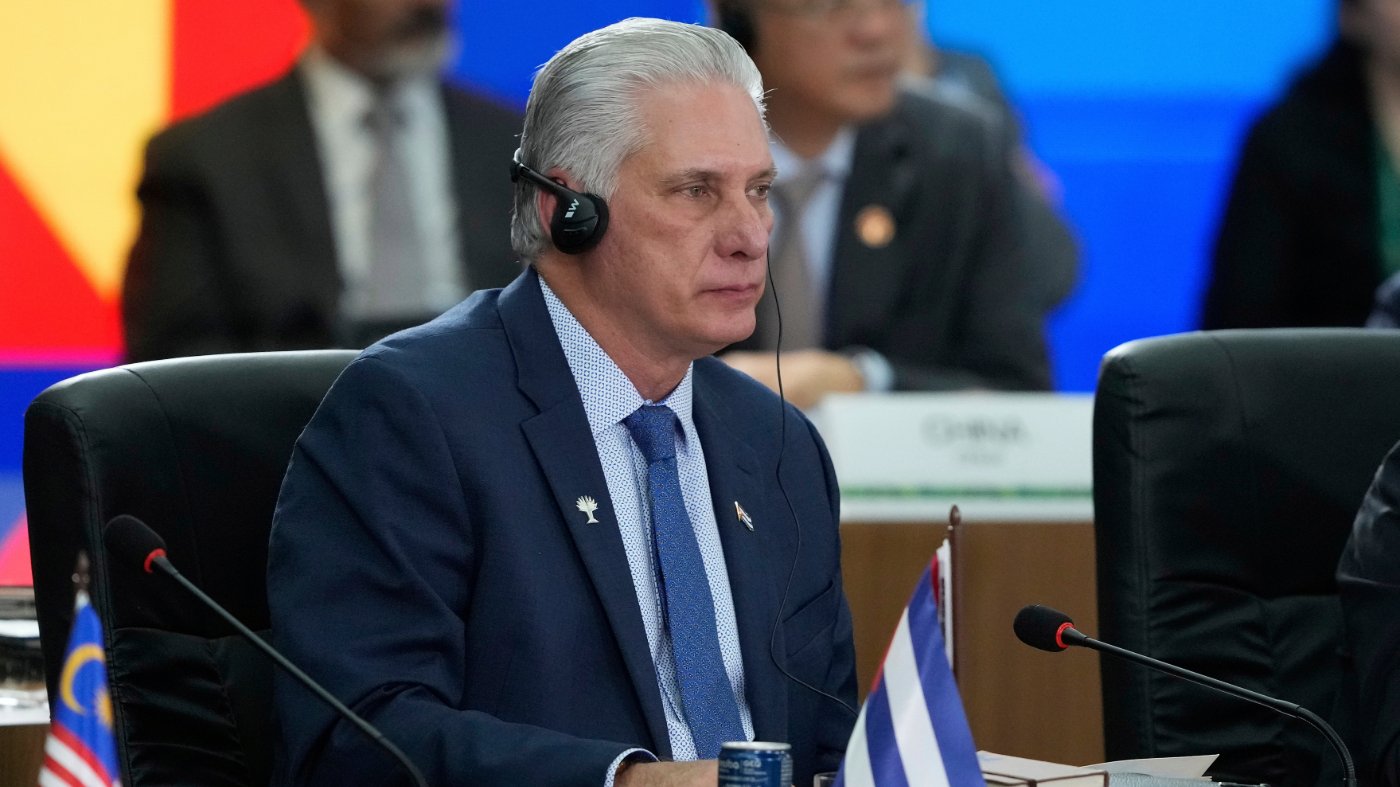
Cuban President Miguel Díaz-Canel has framed the prospect of renewed diplomatic engagement with the United States as a fraught possibility, stating that while dialogue and agreements are attainable, significant obstacles rooted in distrust and past grievances remain. His comments, made during an interview on NBC's 'Meet the Press,' come amid a period of escalating hostility between Washington and Havana, marked by aggressive U.S. rhetoric and actions targeting the Cuban government.
A Foundation of Distrust
Díaz-Canel explicitly cited a history of broken American promises as the core impediment to progress. 'Cuba has always stood by its commitments, and the United States have not fulfilled its part of the deal,' he told interviewer Kristen Welker, adding that this pattern has created 'a lot of distrust' with Washington. This sentiment underscores the challenging diplomatic environment, where past efforts at normalization have been reversed by subsequent U.S. administrations.
The current tensions have been exacerbated by recent U.S. foreign policy moves. The Trump administration's military posturing in Venezuela and Iran, coupled with what Cuba describes as an effective oil blockade against the island, has severely strained relations. These actions reflect a broader pattern of confrontational U.S. trade and foreign policy rhetoric that has defined recent years.
Confrontational Rhetoric from Washington
President Trump has personally escalated the war of words, making extraordinary claims about U.S. prerogatives regarding Cuba. In March, Trump stated he believed the U.S. would have the 'honor' of taking over Cuba and asserted, 'Whether I free it, take it, I think I can do anything I want with it... they’re a very weakened nation now.' This language mirrors the unprecedented civilizational rhetoric his administration has employed against other adversarial states like Iran.
Senior U.S. officials have echoed this confrontational stance. Secretary of State Marco Rubio suggested in March that Cuba's economic troubles necessitate a change in leadership, stating, 'They’re in a lot of trouble, and the people in charge, they don’t know how to fix it, so they have to get new people in charge.' Reports indicate the Trump administration is actively seeking to oust Díaz-Canel from power.
Havana's Defiant Posture
In response, the Cuban president has adopted a defiant, nationalistic posture. Díaz-Canel told Welker he is 'willing to give my life for the revolution' and has 'no fear.' He revealed that Havana is actively preparing for a potential U.S. military attack, a concern that shapes the island's defensive readiness. 'We have a free sovereign state – a free state. We have self-determination and independence, and we are not subjected to the designs of the United States,' he declared, asserting Cuba's right to political autonomy.
This standoff occurs against a complex domestic political backdrop in the United States. While the administration advocates a hard line, public opinion appears skeptical of military intervention. A March poll from The Economist/YouGov found approximately 53% of Americans oppose using military force to instigate regime change in Cuba, with only 23% in support. This disconnect highlights a potential gap between official policy and public sentiment on foreign intervention.
Broader Regional and Global Context
The U.S.-Cuba friction is not an isolated bilateral issue but is intertwined with broader hemispheric and global tensions. U.S. policy toward Venezuela and the pressure campaign on Iran are viewed by Havana as part of a coordinated strategy against allied states. The fragility of international agreements is a recurring theme, as seen in the near-collapse of the U.S.-Iran ceasefire talks, demonstrating the difficulty of sustaining diplomatic gains in the current climate.
Díaz-Canel's conditional openness to dialogue, juxtaposed with his stark warnings and preparations for conflict, paints a picture of a relationship at a dangerous crossroads. The possibility of talks exists, but it is heavily burdened by historical grievance, active hostility from Washington, and a fundamental clash over sovereignty and governance. The path forward would require a significant de-escalation of rhetoric and a demonstrated commitment from the U.S. to honor any future agreements—a prospect that currently seems distant given the entrenched positions on both sides.