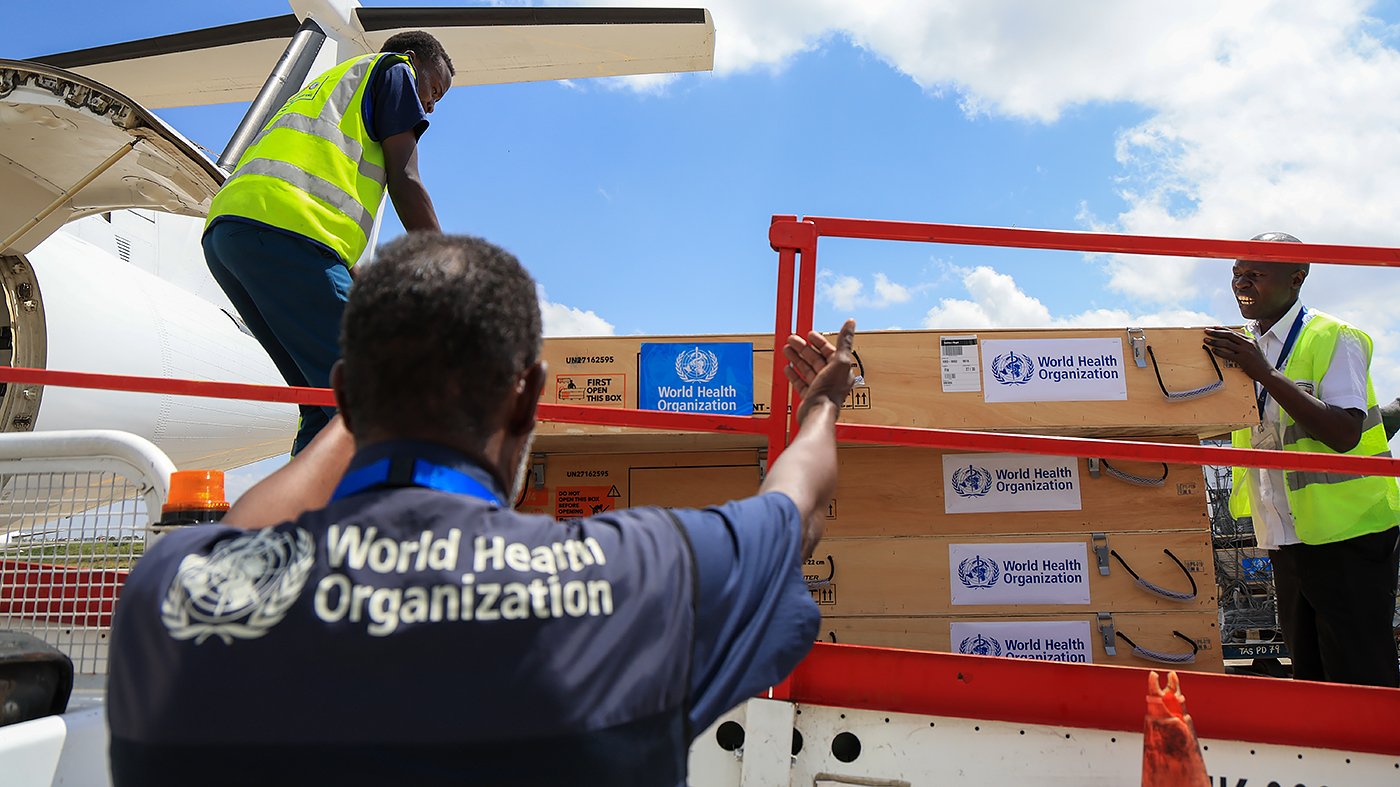
The Trump administration is moving forward with plans to quarantine and treat Americans exposed to Ebola at a new facility under construction in Kenya, an administration official confirmed Wednesday. The move marks a significant shift from previous outbreaks, when infected or exposed U.S. citizens were typically flown back to specialized facilities on American soil.
Public Health Service officers are being prepared for rapid deployment to staff the site, according to sources familiar with the planning. The administration describes the center as a “state-of-the-art facility” designed primarily for Americans who have been exposed to the Ebola virus or face a high risk of infection, as the outbreak in the Democratic Republic of Congo continues to spread.
The rare strain driving the outbreak has now produced nearly 1,000 suspected cases and more than 220 suspected deaths, making it the third-largest Ebola outbreak in history. The World Health Organization has classified the situation as a public health emergency of international concern. There are currently no approved vaccines or treatments specifically for this strain.
“The facility is designed to provide access to high-quality care for Americans who would need to quickly get out of DRC and quarantine without the risks of a lengthy transport back to the U.S.,” the administration official said. The State Department is leading the effort, coordinating with the Departments of Health and Human Services and Defense.
This approach represents a departure from the standard protocol during earlier Ebola crises. In the past, exposed Americans were often evacuated to the U.S. for quarantine or treatment at specialized centers. The Trump administration has shown reluctance to bring infected or exposed citizens back to the country. For instance, an infected American doctor was evacuated to Germany, while another doctor who had been exposed was sent to Prague, Czech Republic.
Centers for Disease Control and Prevention officials explained that the European destinations were chosen because shorter flights reduce risk. Similarly, the administration official argued that the Kenya facility will save time and potentially lives. “Time is of the essence for Ebola patients, and this facility will enable Americans in the region who contract Ebola to receive lifesaving care as quickly as possible without 12-plus hours of medevac flight time,” the official said.
The administration is also tightening entry screening for travelers arriving from affected areas. New airport screening measures have been implemented for passengers from Ebola-hit African nations to prevent the virus from reaching U.S. soil.
During a Cabinet meeting at the White House on Wednesday, Secretary of State Marco Rubio underscored the administration’s stance. “We cannot and will not allow any cases of Ebola to enter the United States,” Rubio said, adding that protecting the American people remains the top priority. The Cabinet meeting also addressed stalled Iran talks and midterm election strategies.
The decision to build the facility in Kenya rather than rely on European hospitals or domestic centers reflects the administration’s broader strategy of containing health threats abroad. Critics, however, note that the policy risks leaving some exposed Americans without immediate access to the highest level of care available in the U.S.
Meanwhile, an American doctor infected with the rare Ebola strain is showing signs of recovery at a Berlin hospital, offering a glimmer of hope amid the outbreak. That doctor’s progress is being closely monitored by U.S. health officials as they finalize plans for the Kenya quarantine hub.