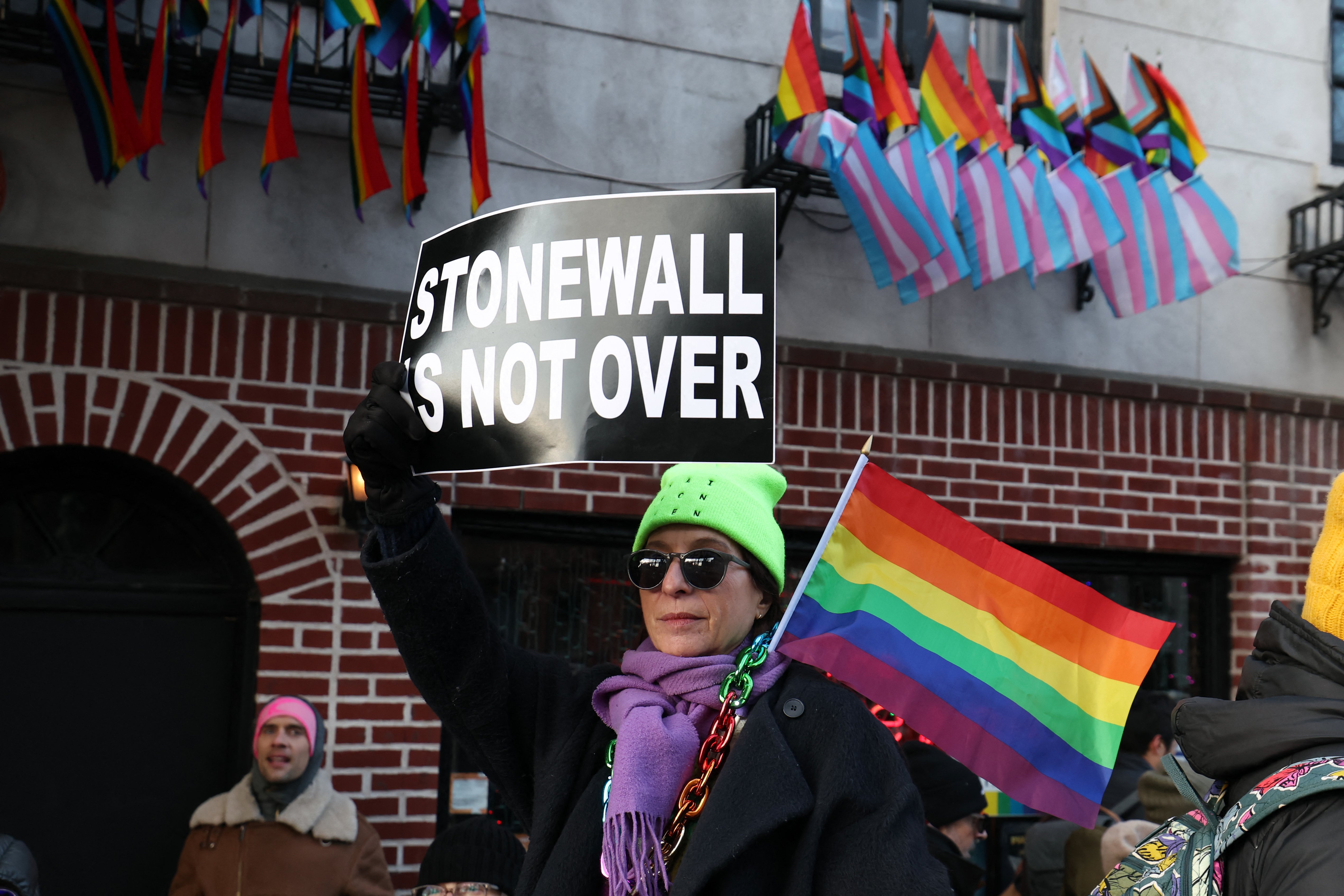
A federal court settlement last week delivered a clear victory for LGBTQ+ representation, compelling the Trump administration to permanently restore the pride flag at Stonewall National Monument. The resolution, stemming from a lawsuit by Lambda Legal and other advocacy groups, forced the government to acknowledge the flag's essential historical context at the site of the 1969 uprising. This legal capitulation, however, casts a harsh spotlight on a more systemic campaign: the deliberate erasure of transgender and queer activism from the monument's own official narrative.
The Settlement and Its Contradictions
The lawsuit was filed after the administration removed the flag in February under a Department of Interior policy restricting "non-agency flags." In settling, the government conceded the flag's historical significance. This admission creates a stark contradiction. If the federal government recognizes the pride flag's rightful place due to its historical importance to the LGBTQ+ community, how can it simultaneously justify scrubbing integral parts of that same community's history from the monument's official National Park Service website?
A Pattern of Historical Erasure
This question is not theoretical. In 2025, the administration systematically removed all references to "transgender" and "queer" from the Stonewall website, replacing "LGBTQ+" with "LGB." It deleted dedicated pages for transgender activists Marsha P. Johnson and Sylvia Rivera, removed a central video series on the Stonewall riots, and stripped over 100 queer and transgender stories from Park Service platforms. These actions followed an executive order and subsequent memos directing agencies to remove content characterized as promoting "gender ideology," effectively erasing the very history the monument was established to preserve.
This purge directly contradicts the 2016 proclamation by President Obama designating Stonewall a national monument, which explicitly directed the National Park Service to interpret the site's connection to the "lesbian, gay, bisexual, and transgender community." The Antiquities Act mandates management in accordance with that founding document.
A Different Legal Battlefield
Challenging the website alterations presents a tougher legal fight than the flag removal. Under the government speech doctrine, federal agencies possess broad discretion over content they author. However, a federal judge ruled in May 2025 that removing third-party content from a federal website on viewpoint grounds violates the First Amendment. Some purged Stonewall materials, like the community stories and video series, may fall into this category. While no lawsuit has yet been filed specifically on the website changes, the administration's settlement admission weakens its position for defending the deletions.
Part of a Broader National Effort
The Stonewall case is not isolated. It reflects a coordinated national effort to restrict LGBTQ+ expression across institutions. In 2025, federal actions targeted LGBTQ+ content at cultural venues, restricting funding and canceling performances. The campaign has intensified in 2026, with legislation like Rep. Mary Miller's bill to prohibit federally funded schools from using materials on gender identity, and nearly identical bills in at least six states criminalizing drag performances. These moves echo the broader pattern of cultural and political conflict defining the era.
This political climate, where officials like Rep. Mike Waltz defend extreme policy positions, fosters an environment where the erasure of marginalized histories can be pursued as official policy. Meanwhile, other branches of government face their own controversies, as seen when FBI Director Patel filed a defamation suit over allegations about his conduct.
The Stonewall Legacy Endures
The 1969 Stonewall uprising was a direct response to state-sanctioned erasure and violence. The community's response to the flag's removal in 2026—organizing protests within days and filing suit within eight—proves that legacy of resistance persists. It is a refusal, generation after generation, to accept deletion as the final word. In October 2025, 72 lawmakers demanded the restoration of transgender and queer references to the Stonewall website. The administration ignored them, but last week's settlement significantly bolsters the legal and moral urgency of that demand.
The settlement demonstrates that concerted legal and advocacy pressure can force governmental accountability on symbolic issues. Yet it also reveals the limits of such victories when confronting a broader, ideologically driven administrative campaign to reshape historical narrative. The fight over Stonewall's physical flag is won, but the battle for its complete history—and against the kind of political brinkmanship that often accompanies these cultural fights—remains very much alive.