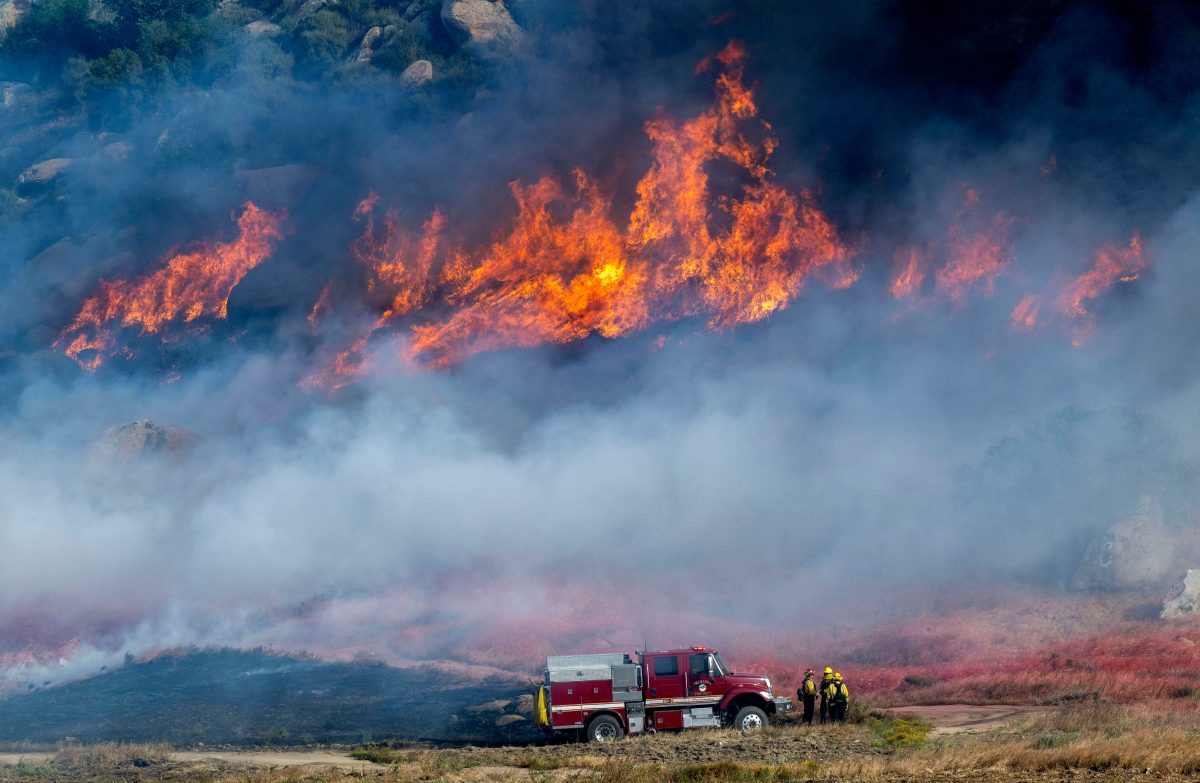
Firefighters made substantial progress Saturday against a wildfire burning in Southern California's Riverside County, increasing containment to 45% as calmer winds aided suppression efforts. The blaze, known as the Springs Fire, has scorched approximately 6.3 square miles in a populated recreational area east of Los Angeles near Moreno Valley.
Containment Improves with Weather Shift
Officials reported containment had nearly doubled from 25% on Friday, a development attributed to diminishing winds and strategic firefighting. "We're feeling confident. The winds have died down so it's assisting us in making more progress," said Terra Fernandez, a public safety information specialist for the Riverside County Fire Department. While forecasts had predicted gusts up to 45 mph, Fernandez noted winds had "dissipated a bit" since the fire's outbreak.
The firefighting operation involves approximately 260 personnel from across the region, including aerial crews that began dropping water and retardant early Saturday. Ground crews focused on building and strengthening containment lines around the fire's perimeter, utilizing existing equestrian trails for access. "We have natural equestrian trails around where a lot of the structures are and so that helps our firefighters make access," Fernandez explained.
Evacuation Status and Structural Protection
Mandatory evacuation orders remain in effect for fewer than a dozen zones within the county, though officials lifted warnings for other areas. The exact number of households affected by the orders was not immediately available. Despite the fire's proximity to populated areas, no structures have been reported damaged or destroyed—a significant achievement given the region's vulnerability to wildfires, a persistent policy challenge for California's leadership.
The fire's location in an unincorporated part of Riverside County presents particular challenges, occurring in a recreational area adjacent to Moreno Valley, a city of roughly 200,000 residents. The incident underscores the ongoing tensions between state and federal approaches to resource management and environmental policy.
Fernandez expressed optimism about continued progress, citing expected increases in humidity Saturday evening as another favorable factor. The cause of the fire, which broke out Friday, remains under investigation by authorities.
The response to this wildfire occurs against a backdrop of complex state political dynamics where disaster management often intersects with gubernatorial accountability and resource allocation debates. California's frequent wildfire seasons have become a defining issue for its governors, testing emergency response systems and highlighting the state's contentious relationship with federal land and resource policies.
As crews continue their work, the incident serves as a reminder of California's persistent wildfire threat, which has prompted numerous policy debates over forest management, climate change, and emergency funding. The state's approach to these recurring crises continues to evolve amid political and environmental pressures that shape both immediate response and long-term prevention strategies.