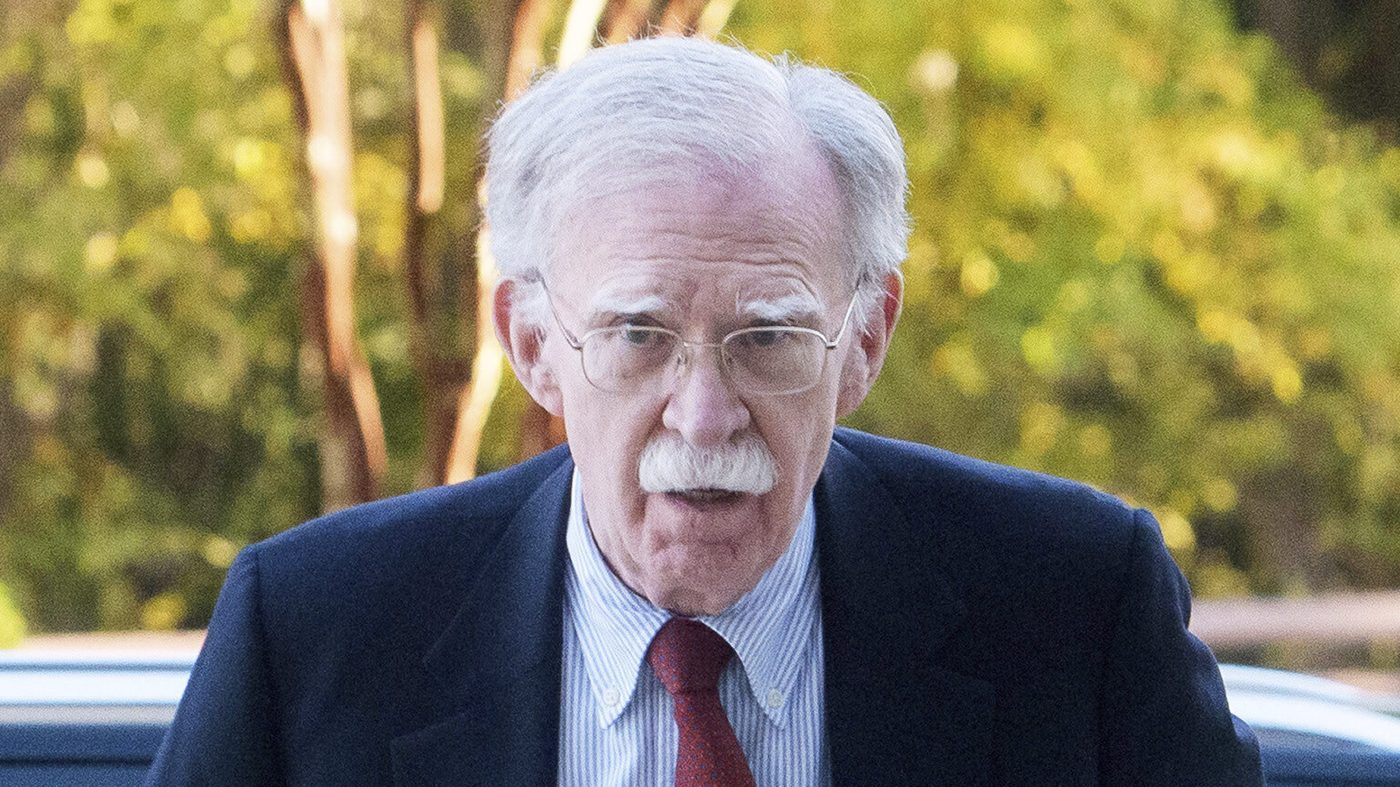
Former National Security Adviser John Bolton asserted on Monday that President Donald Trump's decision to repeatedly push back a deadline for Iran to comply with demands undermines the credibility of U.S. military threats. Bolton argued the shifting timeline signals to Iranian leadership that Trump is "not really serious" and is too hesitant to execute promised strikes.
"Who knows whether he's going to follow through. I don't think even he knows he's going to follow through," Bolton said during an appearance on MSNBC's "Morning Joe." He was discussing the president's public threat to attack Iranian infrastructure, including power plants and bridges.
Bolton specifically pointed to a Truth Social post from Trump on Easter Sunday, in which the president issued a profane ultimatum concerning the Strait of Hormuz and declared a coming "Power Plant Day, and Bridge Day" for Iran. "The idea that he's extended his deadline, yet again... says to whoever's in control in Tehran that he's not really serious about it," Bolton added. "He's too nervous. He may make the threat, but he won't carry through on it."
Trump's Public Ultimatum and Shifting Timeline
In his Sunday post, Trump threatened to strike Iranian infrastructure and demanded the country open the Strait of Hormuz, a critical global oil transit route. The message included the phrase, "Open the F---in' Strait, you crazy bastards, or you'll be living in Hell." The president signed the post "Praise be to Allah. President DONALD J. TRUMP."
On Monday, Trump reiterated that Iran faced a deadline of 8 p.m. Eastern Time on Tuesday to reach an agreement. "We think in good faith, we're going to find out," he said. "We're giving them til tomorrow, 8 o'clock Eastern time, and after that, they're going to have no bridges. They're going to have no power plants." The president also noted that Iran was "negotiating."
This public brinkmanship follows the administration's decision to extend a Pentagon pause on strikes against Iranian energy infrastructure to Monday, a move reportedly made after a request from Tehran. The repeated extensions have drawn criticism from foreign policy hawks and raised questions about the administration's strategic consistency. This episode echoes previous tensions, such as when Trump dismissed an Iranian ceasefire proposal as insufficient while maintaining a threatening posture.
Broader Political and Strategic Context
The escalating rhetoric occurs amid broader regional instability. Notably, Israeli forces recently struck a major Iranian petrochemical facility, highlighting the multi-front pressure on Tehran. Bolton's critique reflects a growing concern among some foreign policy veterans that public, erratic deadlines could embolden adversaries by revealing a reluctance to act.
The situation has also sparked domestic political reactions. Prominent figures like Stephen A. Smith have criticized the president's profane language as a diplomatic liability. Meanwhile, Senator Bernie Sanders has demanded congressional action in response to the threats, arguing that war powers reside with the legislative branch.
The White House has not publicly commented on Bolton's specific remarks. The ongoing confrontation underscores the volatile nature of U.S.-Iran relations and the challenges of a pressure campaign that relies heavily on public, time-bound threats. As the Tuesday deadline approaches, the international community is watching to see whether the administration will follow through on its warnings or continue to adjust its demands.