Senators Challenge Justification for Russian Delegation's Access
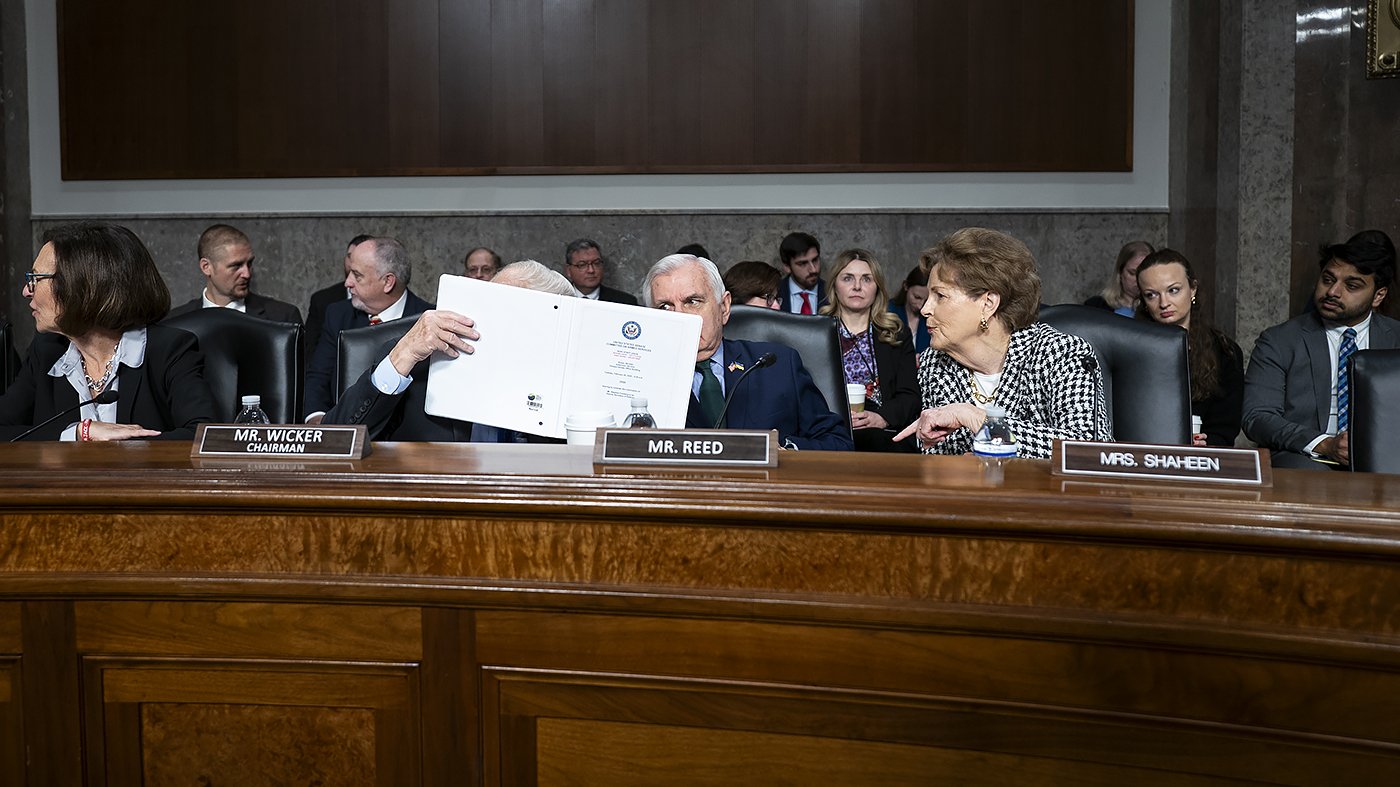
A bipartisan pair of senior senators has formally demanded the Biden administration explain how several sanctioned Russian lawmakers gained access to the U.S. Capitol last month. Senate Armed Services Committee Chairman Roger Wicker (R-Miss.) and Senate Foreign Relations Committee ranking member Jeanne Shaheen (D-N.H.) sent a joint letter to Secretary of State Marco Rubio and Treasury Secretary Scott Bessent on Friday, questioning the security and diplomatic rationale behind the visit.
The delegation was organized by Rep. Anna Paulina Luna (R-Fla.), who has positioned herself as a potential intermediary for peace talks regarding Ukraine. "We are pushing for an ending to the war in Ukraine," Luna told The Hill, stating her goal was to ensure congressional and presidential perspectives were considered in any negotiations.
Visit Labeled a Kremlin Intelligence Operation
In their letter, Wicker and Shaheen dismissed the notion that the visit served legitimate diplomatic purposes. "The delegation came onto U.S. soil for one purpose: to advance the Kremlin's strategic aims — including gathering additional useful intelligence," the senators wrote. "They did not come to engage in dialogue or in pursuit of democratic aims."
The group included prominent members of Russia's State Duma who are under U.S. sanctions for activities deemed harmful to national security. The delegation was led by Vyacheslav Nikonov, chair of the Duma's Foreign Affairs Committee, who in 2023 referred to the United States and NATO as the "Fourth Reich" on Russian state television. Another member, Boris Chernyshov, once described Russian retaliatory strikes in Ukraine as "an expression of our hatred."
Other visiting Duma members included Mikhail Gennadyevich Delyagin, Vladimir Pavlovich Isakov, and Svetlana Sergeyevna Zhurova, representing various Russian political parties. All are sanctioned individuals. "It is troubling that, despite those concerns, the U.S. government would give these individuals access to U.S. government institutions," the senators noted.
Administration Pressed for Specifics
Wicker and Shaheen posed a series of pointed questions to Rubio and Bessent, seeking clarity on what justified waiving sanctions to permit the visit. They requested a complete list of delegation members, details of any meetings held with Trump administration officials, and whether a counterintelligence assessment was conducted prior to granting access. This congressional inquiry follows a similar demand from a bipartisan group of House members just one week earlier.
The visit has exposed clear divisions within the Republican Party. While Luna defended her actions as peace-seeking, several of her GOP colleagues strongly criticized the engagement. Rep. Andy Barr (R-Ky.), who serves with Luna on the House Foreign Affairs Committee, questioned the optics and substance of hosting representatives from an adversarial state. "I don't know her personally," said Rep. Joe Wilson (R-S.C.), a staunch Ukraine supporter. "I just disagree that working in any way with the Putin regime, they have every intent to promote the Iranian goal of death to America, death to Israel."
Wilson offered a particularly stark historical analogy, comparing hosting members of the Russian Duma to "having visitors of the Third Reich." This criticism underscores the deep skepticism toward Russia within significant portions of the GOP, even as some figures like Luna advocate for dialogue. The episode highlights the ongoing tension in U.S. foreign policy between isolating adversaries and maintaining channels of communication, a debate that intensifies as the conflict in Ukraine continues. Recent analysis suggests the Russian military's battlefield advantage may be eroding, potentially influencing calculations about diplomatic outreach.
The senators' letter places direct pressure on the State and Treasury departments to account for their roles in facilitating the visit. The administration's response, or lack thereof, will likely fuel further congressional scrutiny over the enforcement of sanctions and the protocols for engaging with officials from hostile nations. This incident also raises broader questions about congressional oversight of diplomatic access, an issue that occasionally intersects with security concerns over foreign travel by U.S. officials, as seen in debates surrounding surveillance authority reforms like FISA Section 702.