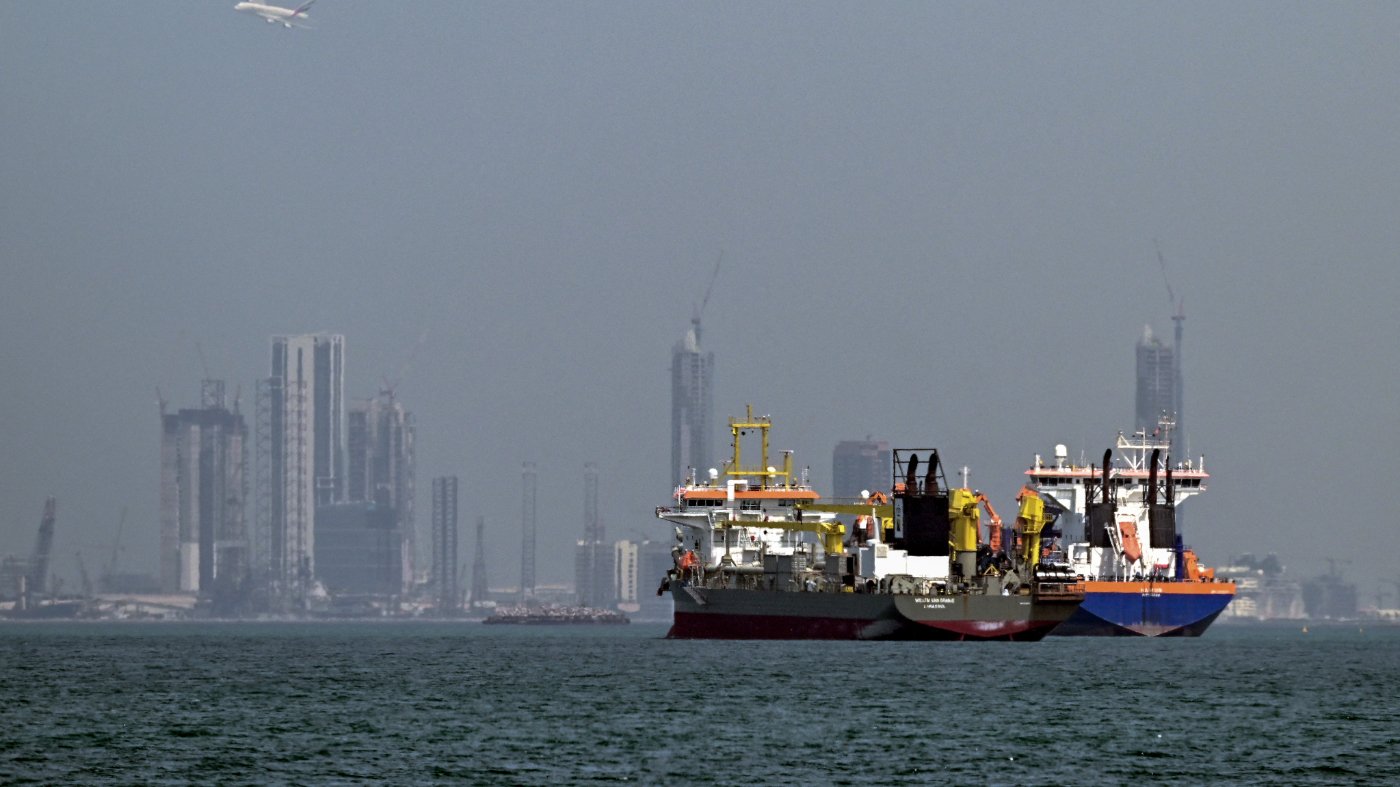
Heightened tensions in the Middle East have returned the Strait of Hormuz to the forefront of strategic planning, with its role in transporting roughly 20% of globally traded oil making it a persistent flashpoint for energy markets and consumer prices worldwide. Yet, fixating on this single maritime passage obscures a more consequential reality for the global economy in 2026. The defining feature is the multiplication of chokepoints—spanning geography, critical industry, digital networks, and finance—that collectively form the vulnerable scaffolding of international commerce and have become the primary terrain for geopolitical contest.
The Architecture of Vulnerability
For years, the pursuit of hyper-efficient, cost-optimized supply chains concentrated production and funneled trade through minimal pathways. While driving economic integration and lower costs, this system engineered profound systemic risks. Over 80% of global trade travels by sea, with disproportionate volumes forced through narrow maritime corridors like the Strait of Malacca, the Suez Canal, and the Panama Canal. Disruption in these zones, as seen when a single ship blocked the Suez Canal in 2021, demonstrates their fragility. Today, blocking a passage doesn't require a navy; it can be achieved through cyberattacks, drone strikes, or insurance premium hikes, making these pressure points easier and cheaper to exploit.
Industrial and Digital Bottlenecks
The most critical chokepoints are often invisible on a map. Industrial capacity is now a primary strategic vulnerability. The global economy relies on intensely concentrated production nodes that are nearly impossible to replicate quickly. For instance, advanced semiconductor manufacturing is dominated by facilities in Taiwan and South Korea, while the most sophisticated chipmaking equipment comes from a single Dutch firm. Rare earth element processing remains overwhelmingly centered in China. These are true chokepoints: their failure would stall entire sectors, which is why tools like export controls and industrial policy have moved to the core of U.S. strategic competition with China.
Parallel vulnerabilities exist in the digital realm. Approximately 95% of international data flows through a network of subsea cables on the ocean floor. Cloud computing infrastructure is concentrated within a handful of major firms and specific geographic locations. Satellite constellations underpin everything from financial transactions to military navigation. The disruption of these invisible systems would carry consequences rivaling the closure of a major canal, yet they rarely feature in traditional security frameworks.
Financial Systems as Strategic Terrain
Finance itself has become a chokepoint. The dominance of the U.S. dollar, the centrality of Western financial institutions, and the role of messaging systems like SWIFT provide Washington and its allies with immense leverage. Modern sanctions have proven that restricting access to the global financial architecture can be as effective as a naval blockade on a physical trade route. This financial dimension adds a powerful, non-kinetic layer to state competition.
Implications for Policy and Power
This landscape demands a fundamental rethinking of U.S. policy. First, economic resilience must be prioritized alongside efficiency. The quest for the lowest-cost supply chain has created dangerous exposure. Diversification through nearshoring, friend-shoring, and domestic investment is now a strategic imperative, not merely an economic choice.
Second, alliances are more crucial than ever. No nation can eliminate all chokepoint exposure alone. Collaborating with trusted partners to build redundancy into critical systems—from chips to cables—is essential to reduce dependence on potential adversaries.
Third, the definition of critical infrastructure must expand. While ports and pipelines remain vital, semiconductor fabrication plants, data centers, undersea cable landing stations, and mineral processing facilities are equally indispensable. Protecting these assets requires integrated strategies combining regulation, investment, and defense planning.
Finally, the United States must recognize that chokepoints are not merely vulnerabilities to be mitigated; they are also direct sources of power. The ability to shape or guarantee access to key technologies, financial networks, and supply chains provides decisive leverage. This is evident in the ongoing tensions, where Iran's conditions for Strait of Hormuz passage underscore how control over flows translates into geopolitical influence.
The lesson of Hormuz extends far beyond one waterway. It reveals an global economy fundamentally dependent on a proliferating set of bottlenecks, and a new era where power is exercised through control over the flows of goods, data, energy, and capital. Understanding and securing these chokepoints will be central to navigating the next phase of strategic competition.