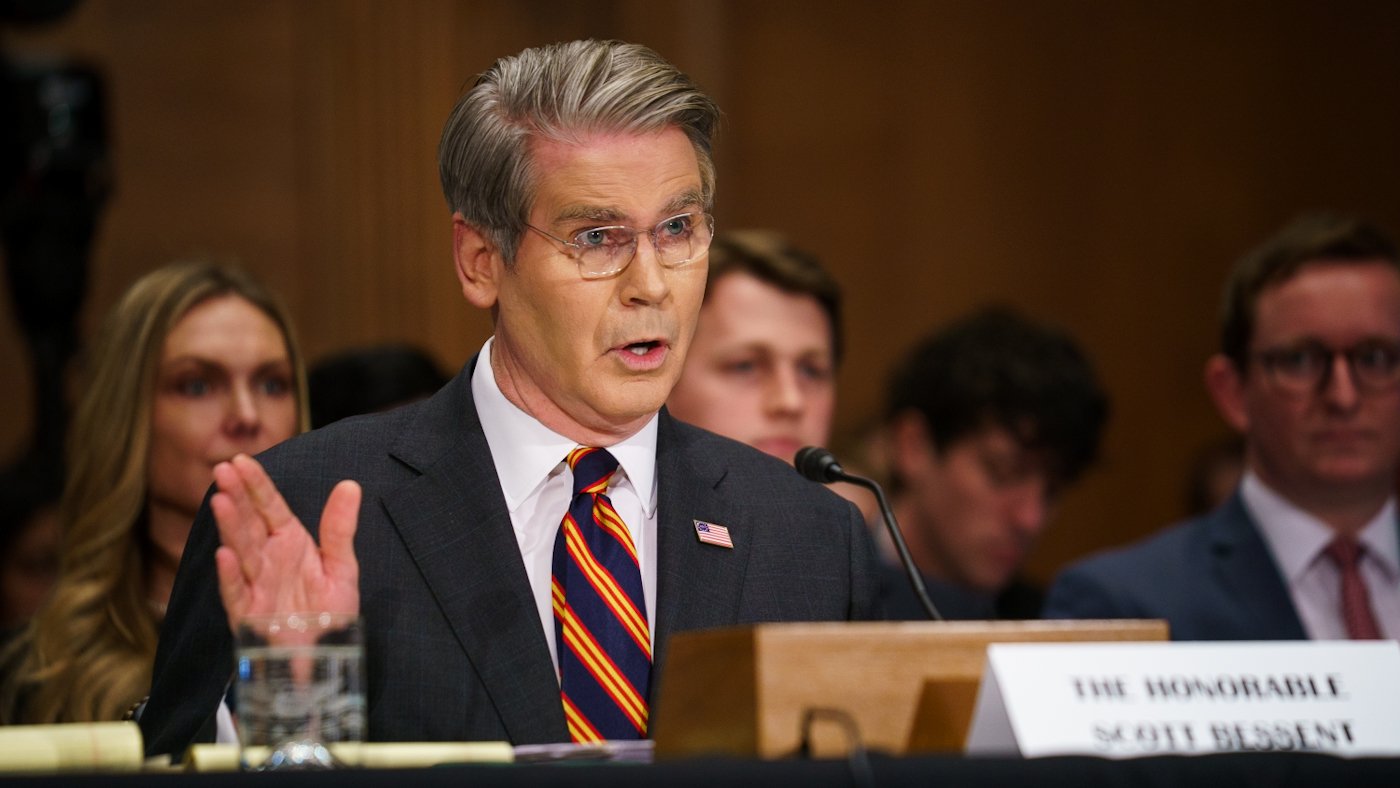
Treasury Secretary Scott Bessent issued a direct challenge to Congress on Wednesday, urging immediate passage of comprehensive cryptocurrency legislation as the proposed Clarity Act remains stalled in the Senate after months of negotiations. In a Wall Street Journal opinion piece, the cabinet secretary argued that regulatory uncertainty is forcing digital asset innovation to move overseas, jeopardizing American financial leadership.
Legislative Paralysis Threatens Innovation
The Clarity Act, which cleared the House of Representatives last July, seeks to establish clear jurisdictional boundaries between securities and commodities regulators for digital assets. While the House advanced a unified bill, Senate committees have pursued separate approaches, creating legislative gridlock that has persisted for nearly a year. Bessent framed the issue as a test of American competitiveness, writing that "the U.S. didn't become the world's financial center by hesitating in moments of technological change."

"Congress needs only to finish the job," Bessent declared, pointing to last year's successful passage of the GENIUS Act, which established a regulatory framework for stablecoins. He argued that similar decisive action is now required for broader market structure legislation. "By passing comprehensive digital-asset market-structure legislation, Congress will ensure that the next generation of financial innovation is built on American rails, backed by American institutions, and denominated in American dollars."
Senate Committees at Odds
The legislative complexity stems from the bill's dual jurisdiction over securities and commodities markets, requiring coordination between multiple congressional committees. While House panels managed to produce unified legislation, Senate committees have struggled to align their approaches. The Senate Agriculture Committee advanced its portion of the bill in late January without Democratic support, while the Banking Committee canceled a planned markup after losing backing from a crucial industry stakeholder.
Negotiations have been frozen for two months over a dispute related to the GENIUS Act. Banking and cryptocurrency interests are locked in conflict over provisions that prohibit stablecoin issuers from offering interest payments directly to customers. The banking industry contends this created a loophole allowing third parties to offer rewards, while crypto advocates argue such incentives are essential for stablecoins to compete effectively in payments markets. This deadlock has persisted despite multiple White House meetings between the opposing sides.
Bipartisan Effort Faces Industry Resistance
Senators Angela Alsobrooks (D-Md.) and Thom Tillis (R-N.C.) appeared to reach a bipartisan compromise late last month, but it remains unclear whether their agreement has sufficient support from both the banking and cryptocurrency sectors. The Treasury Department's decision to appoint BNY Mellon as a financial agent for government digital asset initiatives underscores the administration's push toward institutional adoption, even as legislative progress stalls.
The current impasse reflects broader tensions between traditional financial institutions and emerging digital asset firms. Some cryptocurrency companies are seeking federal bank charters to navigate the fragmented regulatory landscape, testing the boundaries of existing financial oversight frameworks. Meanwhile, international developments continue to pressure American policymakers, with countries like Iran proposing cryptocurrency-based mechanisms for international transactions.
Broader Political Context
The cryptocurrency legislation debate occurs alongside other significant administration priorities, including ongoing discussions about NATO's future and internal cabinet dynamics. While Treasury focuses on financial innovation, other departments face their own challenges, including reported tensions within the Defense Department and health policy controversies.
Bessent's public push represents the administration's most direct effort to break the Senate logjam before the current congressional session concludes. With midterm elections approaching and limited legislative days remaining, the window for passing comprehensive cryptocurrency regulation is narrowing rapidly. The Treasury Secretary's warning about forfeiting financial leadership reflects growing concern within the administration that regulatory uncertainty is becoming a competitive disadvantage as other jurisdictions establish clearer digital asset frameworks.