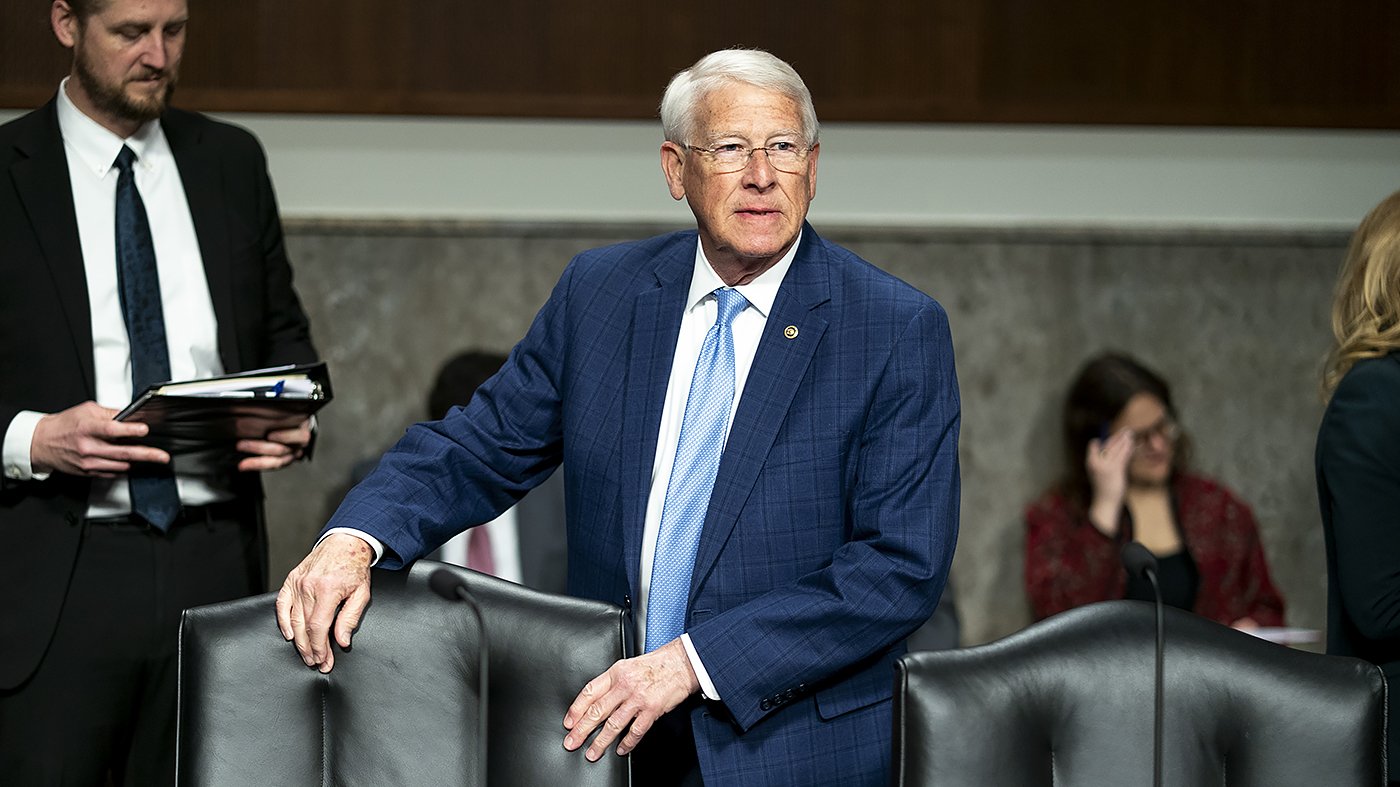
Senate Armed Services Committee Chairman Roger Wicker (R-Miss.) has declared that diplomatic efforts with Iran are no longer viable, reflecting growing Republican skepticism in the Senate that a peaceful resolution to reopen the Strait of Hormuz is possible without additional U.S. military force.
“The time is over for negotiations with Iran’s regime,” Wicker wrote on X. “The radical successors of Khamenei can never be trusted to keep any promise or agreement. Our Commander-in-Chief should direct his skilled military leaders to finish destroying Iran’s conventional military capabilities and eliminating any last remnants of their nuclear program.” He added that this approach is “the only way to ensure lasting stability in the region.”
Wicker’s call comes just as special envoy Steve Witkoff and Jared Kushner, President Trump’s son-in-law, prepare to travel to Pakistan this weekend for a second round of talks with Iranian officials. White House press secretary Karoline Leavitt told Fox News on Friday that Iranian leaders had requested the in-person meeting in Islamabad. “We’re hopeful that it will be a productive conversation and hopefully move the ball forward towards a deal,” she said.
Leavitt described the military operation aimed at preventing Iran from acquiring a nuclear weapon as having “transitioned” into a diplomatic phase. “Ultimately, the goal of Operation Epic Fury was to ensure that Iran can never possess a nuclear weapon, and we’ve now transitioned into this diplomatic phase to get that done through the means of a deal,” she said. She later told reporters that the administration has “seen some progress” from Iran in recent days.
However, defense experts have raised alarms about the rapid depletion of U.S. weapons stocks during the nearly two-month conflict. According to The New York Times, the United States has expended roughly 1,100 long-range stealth cruise missiles and over 1,000 Tomahawk cruise missiles—far exceeding the annual procurement rate for these systems.
The timeline of the conflict is also drawing scrutiny from lawmakers. Some Republican senators are pushing for a conclusion before the 90-day mark, the limit set by the 1973 War Powers Act on the president’s authority to deploy troops in combat without congressional authorization. Senators Susan Collins (R-Maine), John Curtis (R-Utah), and Thom Tillis (R-N.C.) have argued that Congress must vote to authorize continued military action beyond that window. The law provides an additional 30 days after the initial 60 days for troop withdrawal.
As the administration balances diplomatic outreach with military pressure, Wicker’s blunt rejection of talks underscores a deepening divide within the GOP over how to handle Tehran. The outcome of the upcoming Islamabad talks could determine whether the conflict escalates further or moves toward a negotiated settlement.