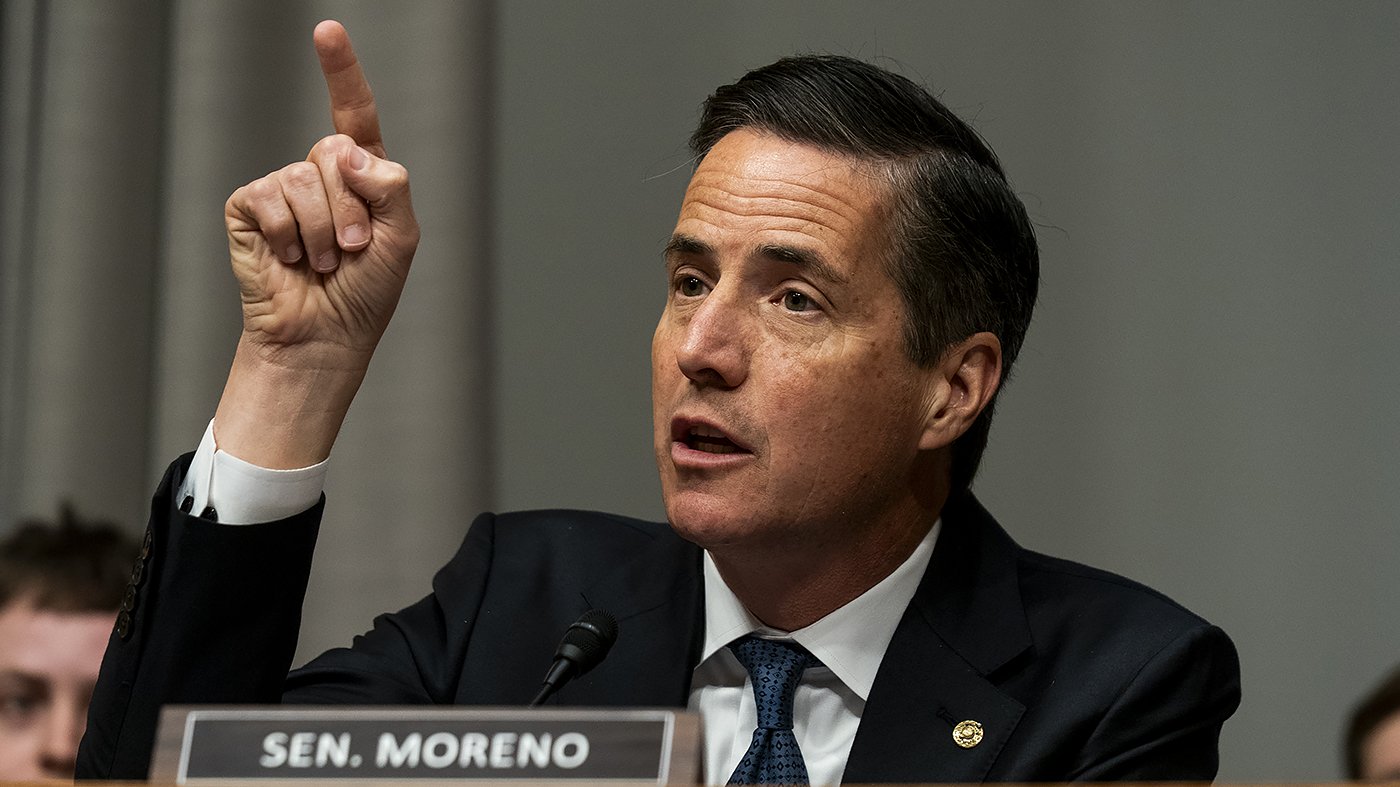
Sen. Bernie Moreno (R-Ohio) on Friday introduced a resolution that would bar senators from participating in prediction markets, the latest sign of growing unease on Capitol Hill about the potential for lawmakers to exploit nonpublic information for financial gain on these platforms.
The measure would amend Senate rules to prohibit members from entering into any contract, agreement, or transaction whose payout hinges on the outcome of a specific event. In a post on X, Moreno declared, “Any Senator who came to DC to cash in, game prediction markets, or treat public office like a side hustle is betraying the oath they swore to their country.” He called for the resolution to pass unanimously.
Prediction markets allow users to wager on everything from sports to political races to economic indicators. But scrutiny has intensified after a series of well-timed bets tied to sensitive U.S. military operations, including the raid that ousted former Venezuelan President Nicolás Maduro and developments in the Iran conflict. Critics warn that these platforms are vulnerable to manipulation and insider trading.
The push gained momentum after a Fort Bragg soldier, Gannon Ken Van Dyke, 38, was indicted Thursday for allegedly using classified information about the Venezuela operation to place bets on Polymarket. Prosecutors say he netted nearly $410,000 from wagers on the Maduro raid and capture before the Jan. 3 mission became public. The case has drawn attention to how easily confidential data can be leveraged on unregulated markets.
Two Republican lawmakers—Rep. Anna Paulina Luna (Fla.) and Rep. Jimmy Patronis (Fla.)—have called on President Trump to pardon Van Dyke, arguing that prosecuting him while members of Congress face no consequences for similar behavior amounts to selective enforcement. Luna wrote on X, “Unless the DOJ plans on going after all the crooks in congress currently insider trading, this is simply skewed justice.” Patronis added that Van Dyke should forfeit his winnings but that the charges reflect “selective enforcement, not justice.”
In response to mounting pressure, major prediction market operators have tightened their rules. Kalshi announced in March it would deploy “new technological guardrails” to block politicians, athletes, and other relevant individuals from trading in certain markets. The company also issued five-year suspensions to three political candidates—Minnesota state Sen. Matt Klein (D), former Texas congressional candidate Ezekiel Enriquez (R), and Virginia Senate candidate Mark Moran (I)—for betting on their own races.
Polymarket unveiled “updated market integrity rules” last month that explicitly prohibit trading on stolen confidential information or illegal tips, as well as trading by those who can influence an event’s outcome. The company hailed Van Dyke’s arrest as “proof” its system works, stating, “When we identified a user trading on classified government information, we referred the matter to the DOJ & cooperated with their investigation. Insider trading has no place on Polymarket.”
The resolution also comes amid broader legal battles over prediction markets. New York Attorney General Letitia James recently sued several crypto-based prediction market operators, accusing them of running illegal gambling operations. Meanwhile, a soldier’s indictment has reignited debate over whether Congress should impose its own ethics rules before regulators step in.
Moreno’s proposal is likely to face skepticism from some members who view prediction markets as a legitimate tool for forecasting, but the bipartisan unease over insider trading could give it unexpected traction. The resolution would need a two-thirds majority to amend Senate rules, a high bar in the closely divided chamber. For now, it serves as a warning that lawmakers are watching how their colleagues—and the platforms themselves—handle the line between informed speculation and illegal betting.