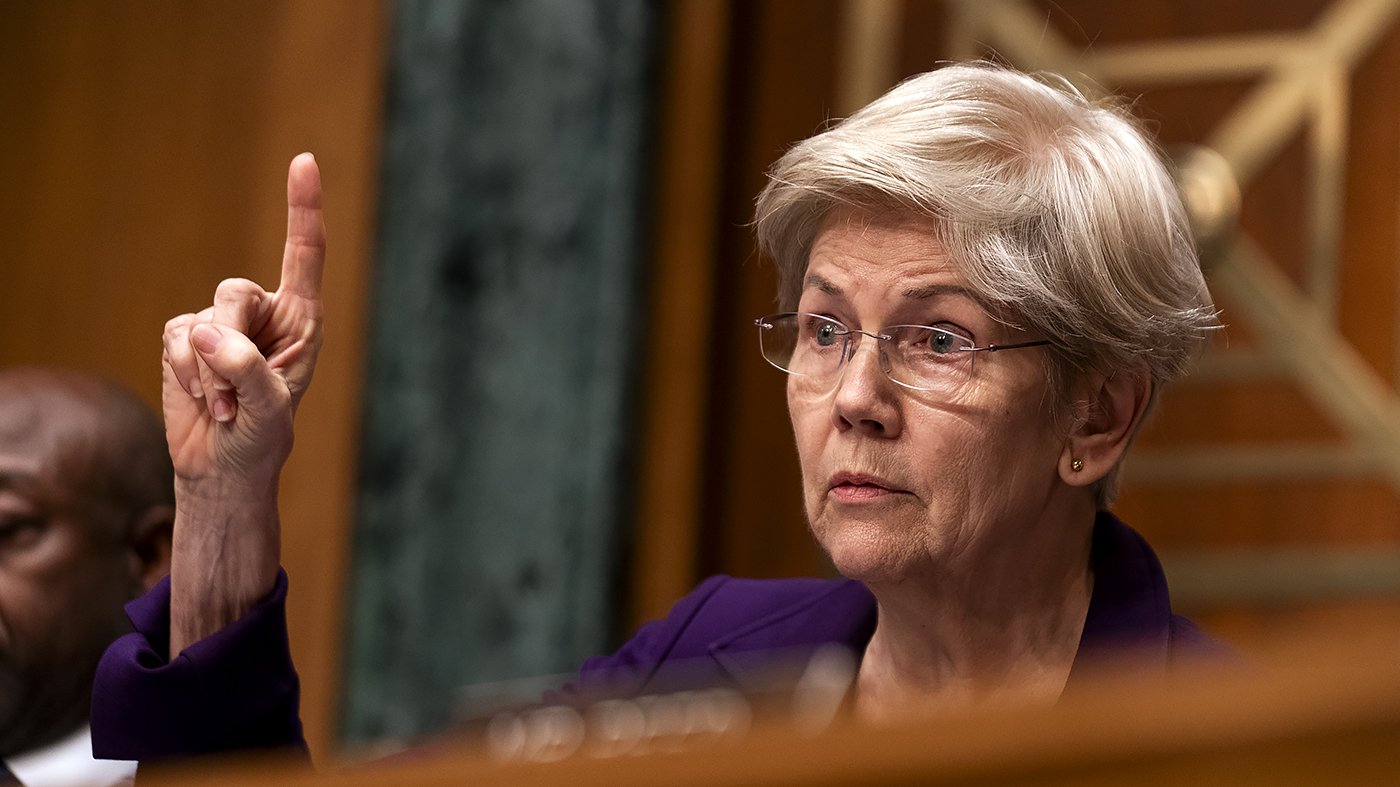
Sen. Elizabeth Warren (D-Mass.) sounded the alarm Thursday, warning that the artificial intelligence investment boom is careening toward a financial disaster that could mirror the 2008 housing collapse. Speaking at a Vanderbilt Policy Accelerator event, the senator argued that reckless spending by billionaires and Big Tech CEOs is turning a promising technology into a systemic threat.
“The parallels to the 2008 financial crisis are striking: the reckless behavior of a few billionaires and Big Tech CEOs has turned a promising technology into a structural risk to our financial system,” Warren told attendees. She called for immediate structural reforms to protect families, workers, and small businesses from a potential crash.
Warren highlighted what she described as AI companies’ “growing addiction to debt,” pointing to massive borrowing to fund data centers, chips, and other infrastructure. “To fund their habit, these companies have turned to shadowy lenders, like private credit funds, and started using convoluted debt structures,” she said. “Giant banks are also helping finance AI companies both directly through their own loans and indirectly through lending to private credit funds that lend to AI.”
The senator argued that this opaque financing “deliberately obscures both how much risk is building in the system and exactly where those risks will fall when a crash comes.” Her remarks come as a Vanderbilt University paper warns that trillions of dollars in AI infrastructure spending create a “math problem” that could trigger a market correction far beyond the tech sector.
Asad Ramzanali, director of AI and Technology Policy at the Vanderbilt Policy Accelerator, wrote that “even as painful as a sectoral bubble bursting would be, the market correction could go beyond the narrow containment of the technology industry because of both the scale of investment and the distortive features of financial arrangements involved, causing a much deeper and widespread economic crash.” The paper draws direct comparisons to the 2008 recession, when household net worth plummeted from $69 trillion to $55 trillion and millions lost their homes.
Warren warned that an AI crash “threatens our entire economy,” with risks of evaporating life savings and frozen credit markets if the banking sector is jeopardized. “AI companies are aware of these risks—very aware,” she said. “Instead of reducing their borrowing, slowing their rate of growth, and cleaning up their balance sheets, they are making the classic billionaires’ move: they are quietly lining up for a handout.”
The senator urged Congress to “lay the groundwork for future reform,” calling for a new digital regulator to enforce antitrust, consumer protection, and data privacy laws. She also backed boosting domestic AI chip production and ending what she called “bailouts.” Her push for a digital regulator echoes broader debates about technology oversight, similar to the White House reconsidering its stance on powerful AI models amid federal interest.
Warren’s warnings also come as Congress grapples with other financial vulnerabilities, such as the ongoing DHS funding crisis and the challenge of making federal budget numbers comprehensible to voters—a democracy crisis in its own right. “American families and workers cannot afford another economic catastrophe,” Warren concluded. “This time around, Congress needs to be ready with a durable reform agenda to prevent the next big crash and the courage to get it done.”