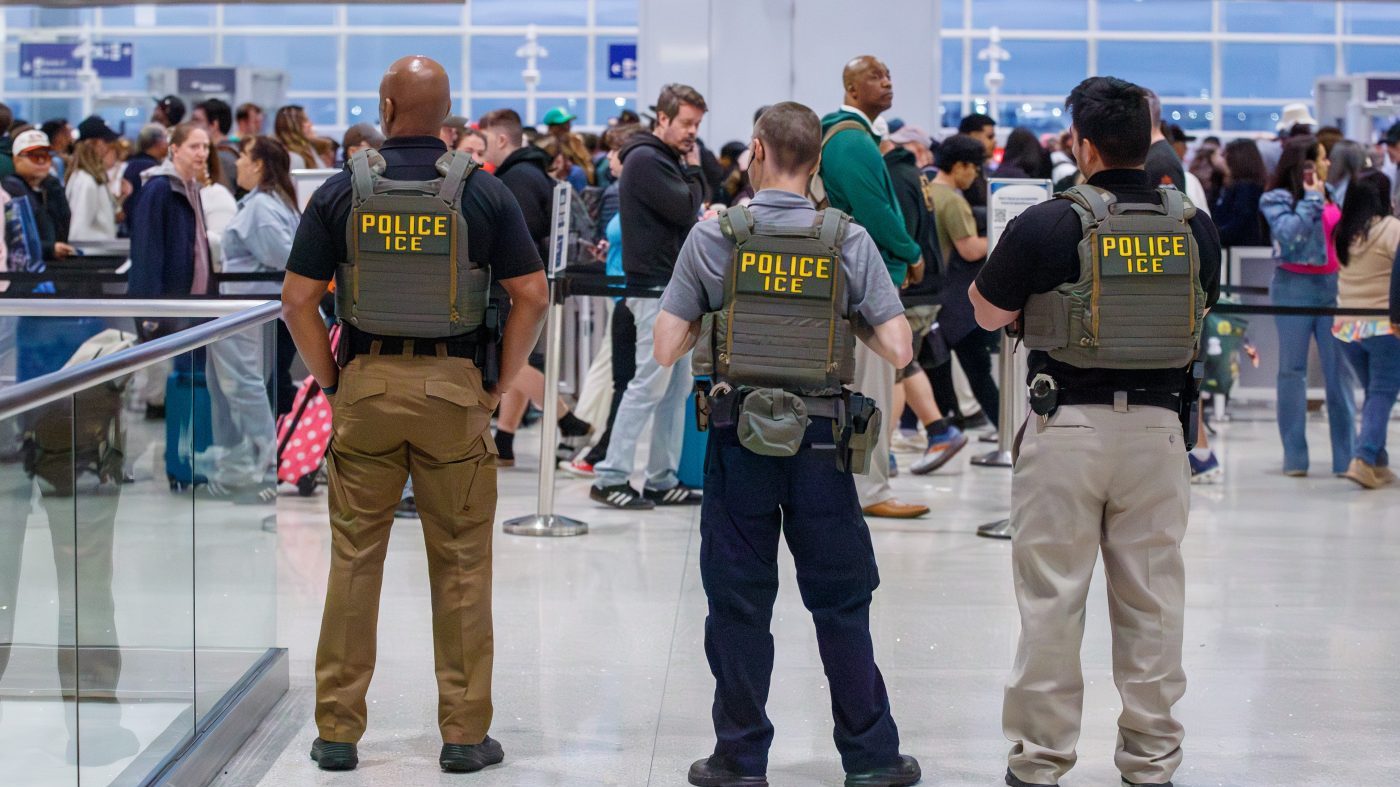
The Department of Homeland Security is preparing to spend $7.5 million in the next fiscal year on a new generation of “smart glasses” that would give federal immigration agents real-time biometric identification capabilities, according to budget documents obtained by NewsNation. The initiative, tucked inside President Trump’s fiscal year 2027 budget proposal, is designed to help officers spot migrants who are in the country illegally during field operations.
The project falls under the Research, Development and Innovation portion of the budget and calls for operational prototypes to be ready by the first quarter of 2027. Once deployed, the glasses would provide agents with “real-time access to information and biometric identification capabilities in the field,” the documents state. The White House describes the technology as a critical tool to strengthen DHS’s ability to “encounter, transport, detain and remove migrants who are in the United States illegally.”
A DHS spokesperson clarified that no funds have been committed yet for any specific smart glasses product. However, the agency’s Science and Technology Directorate is “constantly assessing” the needs of Immigration and Customs Enforcement and other components, and is in ongoing discussions with attorneys to ensure any technology used is “within the full scope of the law.” The budget justification argues that these improvements will directly enable “efficient and effective immigration enforcement, removal operations and fulfillment of executive orders and administrative priorities while ensuring public safety and operational excellence.”
The smart glasses concept is not new in the private sector. Meta, the parent company of Facebook, partnered with Ray-Ban and Oakley to release a consumer version in 2025, equipped with AI and video-capturing features. The New York Times reported earlier this year that Meta plans to add facial recognition to those glasses, reviving a feature the company shelved five years ago amid privacy backlash. It remains unclear which manufacturer DHS might contract with for its prototype, and Meta did not respond to a request for comment.
Jason Owens, the former head of Customs and Border Protection under President Biden, voiced support for the technology. “Any tool that helps agents quickly determine who they’re dealing with is a positive step,” he said. “It could be someone with a criminal record or just someone seeking a better life. The sooner agents can make that call, the safer everyone is.” Owens argued that faster identification lets agents return to hunting “real threats” and improves overall safety.
But civil liberties groups are raising alarms. Cody Venzke, an attorney with the ACLU’s speech, privacy and technology project, warned that the use of facial recognition in covert, wearable devices could strip away anonymity in public spaces. “As this technology becomes invisible and you can’t tell it’s happening, you’re surrendering any semblance of anonymity you have even in public,” Venzke said. He pointed to cases where facial recognition has led to wrongful arrests, such as the 108-day imprisonment of a Tennessee grandmother based on flawed AI matches.
The ACLU attorney also expressed concern that the system could be used to track people without their knowledge or consent, whether they are U.S. citizens or migrants. “This could be the first step toward widespread government surveillance,” Venzke added. DHS officials have stated that biometric technology will be used at every stage of immigration enforcement, from initial encounters to deportations, and that it will help close data gaps and improve interagency coordination.
The budget proposal comes as the Senate GOP recently passed a budget blueprint for immigration funding after an overnight session, underscoring the political push behind Trump’s enforcement agenda. Meanwhile, the immigration court system is already struggling with a backlog of over 3.3 million cases, raising questions about how new technology would integrate with an overburdened legal process.